%20%20--%3E%0A%3Csvg%20version%3D%221.1%22%20id%3D%22Layer_1%22%20xmlns%3D%22http%3A%2F%2Fwww.w3.org%2F2000%2Fsvg%22%20xmlns%3Axlink%3D%22http%3A%2F%2Fwww.w3.org%2F1999%2Fxlink%22%20x%3D%220px%22%20y%3D%220px%22%0A%09%20width%3D%2239px%22%20height%3D%2240px%22%20viewBox%3D%220%200%2039%2040%22%20enable-background%3D%22new%200%200%2039%2040%22%20xml%3Aspace%3D%22preserve%22%3E%0A%3Cpath%20fill%3D%22%23FFFFFF%22%20d%3D%22M38.5%2C7H28.2v26h10.3V7z%22%2F%3E%0A%3Cpath%20fill-rule%3D%22evenodd%22%20clip-rule%3D%22evenodd%22%20fill%3D%22%23FFFFFF%22%20d%3D%22M26.1%2C25.5c0%2C5.8-4.1%2C7.5-12.9%2C7.5C3.9%2C33%2C0%2C31.2%2C0%2C25.2v-1.1h11.6%0A%09v2.4c0%2C0.7%2C0.1%2C1.4%2C1.2%2C1.4c1%2C0%2C1.2-0.4%2C1.2-1.3v-0.9c0-1.6-0.9-1.6-3.5-2.2C2.2%2C21.7%2C0%2C19.7%2C0%2C15.3v-0.9C0%2C9.3%2C5.5%2C7%2C12.9%2C7%0A%09c10.2%2C0%2C12.8%2C2.6%2C12.8%2C7.4v1.8h-11v-2.9c0-0.6-0.4-1.1-1.2-1.1c-0.6%2C0-1.2%2C0.4-1.2%2C1.1v0.9c0%2C1.5%2C0.9%2C2%2C3.3%2C2.5%0A%09c8%2C1.6%2C10.5%2C3.3%2C10.5%2C7.5V25.5z%22%2F%3E%0A%3C%2Fsvg%3E%0A)
Four Takeaways From the Phillies’ Dramatic Game 2 Comeback Over Braves
In this story:
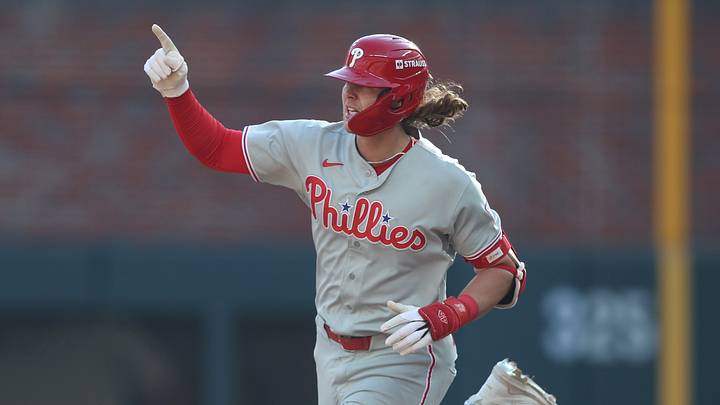
Game 2 of the National League wild-card series between the Phillies and Braves kept fans on the edge of their seats. After multiple lead changes and some big late-game moments, Philadelphia clawed back from down 3–1 and forced extra innings. A go-ahead home run from Alec Bohm was the deciding blow in this one, and that opposite-field blast will send this series to a winner-takes-all Game 3.
Here a few takeaways from Wednesday’s game, with the rubber match of the wild-card series set for Thursday afternoon.
Andrew Painter could take on the Roki Sasaki role for the Phillies
The bullpen has been a thorn in the side of the Phillies all year long, but they may have unearthed a new reliable option during Wednesday’s game. Andrew Painter was expected to be utilized as a follower in relief of Jesus Luzardo, but after Luzardo managed to throw 77 pitches in Game 1, those plans changed. Painter made his postseason debut Wednesday, and he shut the door on the Braves to earn the win. Painter pitched three innings in Game 2, surrendering three hits and one walk while striking out three.
Painter had a rocky season as a starter, but with Philadelphia in dire need of reliable bullpen arms, he delivered a quality outing Wednesday. That presents the Phillies with the opportunity to shorten up their postseason rotation and keep Painter in a relief role as an arm that can be called upon to handle multiple innings, if needed. We saw that transpire with the Dodgers last season, when they sent a struggling Roki Sasaki into the bullpen during the postseason. Sasaki excelled in his role, surrendering just one run across 10 2/3 innings. Similar to Painter, Sasaki was inconsistent during the 2025 regular season, but he helped stabilize a bullpen that was perhaps the only weak point of that team.
Don Mattingly doesn’t have a large pool of reliable relievers at his disposal to insert in high-leverage situations. If the Phillies advance to the NLDS, it’s possible Painter earns his trust to take the ball in those situations.

Regular-season trends don’t always hold up in the postseason
Identifying specific player trends and attempting to exploit them is a standard practice in sports. Regular-season trends don’t always carry over to the postseason, however, and there were a few examples of that in Game 2. For one, Braves star Michael Harris grounded into two double plays on Wednesday, one that ended a bases-loaded threat in the sixth inning and another mini-threat in the eighth. They were disappointing results for Harris, who only grounded into three double plays in the entire regular season. For a speedy player who excelled at avoiding that exact outcome, Harris recorded two ill-timed GIDPs during Wednesday’s game. Those rally killers greatly diminished the Braves’ chances of ending this series. Harris’s first double play decreased Atlanta’s win probablitity from 71.% to 50%, according to Statcast, while his second worsened their odds from 67% to 52.6%.
Additionally, Dylan Lee was called upon to get through the heart of the Phillies’ batting order in the eighth inning, replacing Tyler Mahle, who pitched an outstanding game across seven innings. The southpaw was superb against left-handed hitters during the regular season. Lee didn’t surrender a single home run to a lefty across 102 plate appearances (92 at-bats), and lefties recorded just a .600 OPS against him. Despite those promising numbers, Kyle Schwarber and Bryce Harper uncorked back-to-back home runs off him, instantly erasing Atlanta’s 3–1 lead and making it a tie game.
BRYCE HARPER
— MLB (@MLB) September 30, 2026
BACK-TO-BACK
THIS GAME IS TIED pic.twitter.com/fiIJdIM4oz
The Phillies would go on to secure a go-ahead home run in the top of the tenth inning––an opposite field blast from Alec Bohm. Bohm, who struggled for most of the campaign, hit 15 home runs during the regular season, and only one of those was hit the other way to right field. He was also 0-for-2 against Didier Fuentes during the regular season, striking out in both of his plate appearances against the young Braves reliever. In the end, he delivered an opposite-field blast out of nowhere to give the Phillies the lead in extras and power them to a Game 2 victory.
That all goes to show just how quickly things can turn on their head in the postseason. All the data compiled over the 162-game campaign often goes out the door in October (or in this case late September). It’s an unpredictable game, in the end, and that was on full display on Wednesday at Truist Park.
ALEC BOHM GO-AHEAD HOMER
— MLB (@MLB) September 30, 2026
PHILLIES LEAD IN THE 10TH 🤯 pic.twitter.com/S4wFOFyDq1
Bryce Harper and Kyle Schwarber continue to carry the Phillies’ offense
The Phillies’ offense was disappointing this season, particularly in the second half. While many players endured lengthy slumps, Harper and Schwarber maintained their excellence for most of the season. They were the only two players in the lineup with an OPS above .800, and it was fitting that they delivered two crucial hits, in back-to-back fashion no less, during Wednesday’s comeback victory.
Their back-to-back home runs in the eighth inning kept the Phillies’ season alive. As they did all season long, they put the team on their back and delivered when it mattered most. Alec Bohm hit the go-ahead homer in the 10th inning, but that was only possible thanks to Schwarber and Harper’s heroics––even if Harper did make a costly blunder out in right field that helped Atlanta take the lead in the seventh inning.
Bryce Harper is unable to make the catch and the Braves take a late lead! pic.twitter.com/eK4uPkBnM5
— Jomboy Media (@JomboyMedia) September 30, 2026
Harper and Schwarber are the heartbeat of the Phillies’ offense, and also two of the team’s most experienced postseason performers. Schwarber is third in MLB history with 24 postseason home runs, and that familiarity in the big moment served him well in Game 2. Harper moved into a multi-player tie for 10th all-time with his 18th postseason blast, putting him in a deadlock with players like Carlos Correa, Nelson Cruz, Reggie Jackson, Giancarlo Stanton and Mickey Mantle.
ABS is here to stay
What better way to end a postseason game in 2026 than via an impressive ABS challenge from a player making their postseason debut? Painter picked up the win after pitching the last three innings for the Phillies, and the youngster didn’t hesitate to tap his head on the game’s final call from home plate umpire Adam Beck. Painter disagreed with the called ball from Beck, and he opted to challenge the decision, which was overturned and ruled a called third strike, which ended the game. With this being the first year ABS has been implemented in MLB, it marked the first time a postseason game had ever ended with an ABS challenge.
Phillies are the first team to win a postseason game on an ABS challenge pic.twitter.com/UF4O9rBomu
— Talkin' Baseball (@TalkinBaseball_) September 30, 2026
 Add us as a preferred source on Google
Karl Rasmussen is a staff writer for Sports Illustrated. A University of Oregon alum who joined SI in February 2023, his work has appeared on 12up and ClutchPoints. Rasmussen is a loyal Tottenham, Jets, Yankees and Ducks fan.
Follow Karlras920