%20%20--%3E%0A%3Csvg%20version%3D%221.1%22%20id%3D%22Layer_1%22%20xmlns%3D%22http%3A%2F%2Fwww.w3.org%2F2000%2Fsvg%22%20xmlns%3Axlink%3D%22http%3A%2F%2Fwww.w3.org%2F1999%2Fxlink%22%20x%3D%220px%22%20y%3D%220px%22%0A%09%20width%3D%2239px%22%20height%3D%2240px%22%20viewBox%3D%220%200%2039%2040%22%20enable-background%3D%22new%200%200%2039%2040%22%20xml%3Aspace%3D%22preserve%22%3E%0A%3Cpath%20fill%3D%22%23FFFFFF%22%20d%3D%22M38.5%2C7H28.2v26h10.3V7z%22%2F%3E%0A%3Cpath%20fill-rule%3D%22evenodd%22%20clip-rule%3D%22evenodd%22%20fill%3D%22%23FFFFFF%22%20d%3D%22M26.1%2C25.5c0%2C5.8-4.1%2C7.5-12.9%2C7.5C3.9%2C33%2C0%2C31.2%2C0%2C25.2v-1.1h11.6%0A%09v2.4c0%2C0.7%2C0.1%2C1.4%2C1.2%2C1.4c1%2C0%2C1.2-0.4%2C1.2-1.3v-0.9c0-1.6-0.9-1.6-3.5-2.2C2.2%2C21.7%2C0%2C19.7%2C0%2C15.3v-0.9C0%2C9.3%2C5.5%2C7%2C12.9%2C7%0A%09c10.2%2C0%2C12.8%2C2.6%2C12.8%2C7.4v1.8h-11v-2.9c0-0.6-0.4-1.1-1.2-1.1c-0.6%2C0-1.2%2C0.4-1.2%2C1.1v0.9c0%2C1.5%2C0.9%2C2%2C3.3%2C2.5%0A%09c8%2C1.6%2C10.5%2C3.3%2C10.5%2C7.5V25.5z%22%2F%3E%0A%3C%2Fsvg%3E%0A)
How the NBA’s Kawhi Leonard-Clippers Punishment Compares to Other Penalties in Sports History
In this story:
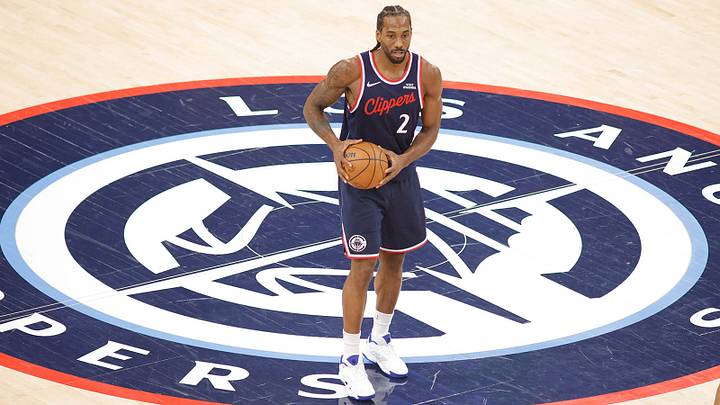
The long investigation into the Clippers and Kawhi Leonard for potential salary cap circumvention concluded with the NBA bringing the hammer down.
Per the league, its investigation conducted by law firm Wachtell, Lipton, Rosen & Katz found a pattern of misconduct and multiple significant violations by the Clippers—a prior offender of salary cap circumvention rules. The process was sparked by the Pulitzer Prize-winning investigation by Pablo Torre Finds Out into the Clippers and owner Steve Ballmer that alleged the team facilitated a no-show endorsement deal with a now-defunct tree planting company Aspiration that funneled $28 million to Leonard.
Torre brought other fishy endorsement deals to light over the past year, and Wachtell’s investigation found that the Clippers affirmatively initiated off-court income opportunities between Leonard and four companies doing business with the team: Aspiration, Boingo Wireless, Daktronics, and Lockton Insurance. As such, the penalties are severe.
The Clippers have been stripped of five first-round picks—their 2029, ’30, ’31, ’32, and ’33 selections—and the franchise was fined $30 million. Ballmer is suspended from all team and league activities for a full year for “knowingly seeking to help [Leonard] obtain off-court income opportunities.” Team president Lawrence Frank was suspended six months for his role, while Gillian Zucker, the team’s president of business operations, was suspended without pay for a year. The franchise is subject to a compliance and monitoring program overseen by the league office for the next five years, too.
Leonard was fined $700,000 while his uncle and former business manager Dennis Robertson is banned from conducting business or otherwise engaging with NBA teams and their affiliates on behalf of or with respect to any player, employee, or other league or team personnel for five years.
It’s a severe slew of punishments that the Clippers will feel well into the next decade.
There is precedent for similar violations across sports, however it’s fair to consider the Clippers’ penalties as some of the most severe in sports history. We went across leagues to put together a list of the harshest disciplines from past wrongdoings; here’s a look:
NBA: Joe Smith, Timberwolves cap circumvention case (2000) sets stage for Leonard-Clippers punishments

Let’s stay in the NBA for a moment. Back in 2000, the NBA discovered an under-the-table agreement the Wolves had with Joe Smith to sign him to a series of one-year deals at a small amount. Over that time, Minnesota would obtain Smith’s Bird rights (which allows franchises to go over the salary cap to sign their own players) and at the end of the third one-year deal, Smith would get a huge $86 million contract. The NBA brought down the hammer and voided Smith’s contract, docked Minnesota five first-round picks (later restoring two), fined the team $3.5 million and suspended owner Glen Taylor for a year while general manager Kevin McHale took a leave of absence.
There are slight differences between the Wolves’ outcome in 2000 and the Clippers 26 years later. Smith’s contract was voided while Leonard’s wasn’t, the Clippers received a much larger fine and Los Angeles had three executives suspended opposed to two.
What’s worth pointing out is the NBA later restored two of the Timberwolves’ docked picks. In theory, that could happen with the Clippers, especially as the team vehemently opposed the findings quickly after the investigation results were made public.
MLB: Astros punished for sign stealing scandal (2020)

The most recent team-wide discipline that comes to mind is the Astros’ infamous sign stealing scandal. Early 2020, MLB commissioner Rob Manfred announced results of the long investigation into the matter, which confirmed the Astros had illegally used a video camera system to steal signs during games in 2017 and ’18. That included the regular season and postseason in 2017, when the Astros won the World Series.
As a result, manager A.J. Hinch was suspended for the 2020 season and was ultimately fired by the team (he has managed the Detroit Tigers since 2021). General manager Jeff Luhnow was suspended for the same season and later fired by the team, too. Former assistant GM Brandon Taubman was suspended a year after he was fired for lying about misogynistic comments made toward female reporters after the Astros clinched the American League pennant in 2019.
Houston lost draft capital, too, as the franchise forfeited its first- and second-round picks for the next two seasons. The organization was fined $5 million, the maximum amount allowed under the MLB’s constitution.
NCAA: SMU football’s death penalty (1987)
Improper benefits for student-athletes and subsequent investigations were fairly common in the college world until the institution of NIL. Nearly 40 years ago, the NCAA investigated SMU’s football program for rule violations that spanned a period of several years. The investigation found that SMU made payments to players and their families under the table to get them to come play for the program. As a result, the NCAA imposed the “death penalty” and canceled SMU’s 1987 season. The school decided to sit out the following season as well due to concerns it could not field a competitive team. SMU did not have a full slate of scholarships available until 1992 as part of the punishments, too. SMU’s death penalty played a large part in the eventual dissolution of the Southwest Conference.
NFL: Deflategate (2015)

We couldn’t forget about the deflation of pigskins. The NFL suspended then-Patriots quarterback Tom Brady for four games without pay due to his involvement and knowledge that team employees were deflating footballs, particularly those that were used in New England’s AFC championship game win over the Colts in the 2014 season. Brady appealed and subsequently delayed his suspension for a season, but the ruling was ultimately upheld and he missed the first four games of the 2016 campaign. The Patriots were fined $1 million and lost their first-round pick in 2016 and fourth-round pick in ’17.
NFL: Bountygate (2010)
The Saints were at the center of the NFL’s other infamous “gate.” The league began investigating New Orleans in 2010 after an anonymous player told league officials the Saints targeted players as a result of a bounty program instituted by defensive coordinator Gregg Williams. If a Saints player made a hit that knocked a targeted player out of the game, they were allegedly paid a bonus through a slush fund that operated from 2009 through the ’12 playoffs.
The investigation found credible and significant information that a bounty program was in place, which led to an indefinite suspension for Williams. Then-head coach Sean Payton was suspended for the entirety of the 2012 season. General manager Mickey Loomis was suspended for eight games, while a number of players received punishments as well. Jonathan Vilma was suspended for the 2012 season, defensive tackle Anthony Hargrove was suspended for eight games, defensive end Will Smith was suspended for four games and linebacker Scott Fujita got three games.
On top of the slew of suspensions, the franchise was fined $500,000 and forfeited its second-round draft pick in the next two drafts.
MLB: Black Sox scandal (1920)

Maybe the most infamous sports scandal of them all came over a century ago. Eight members of the 1919 White Sox team were accused of intentionally throwing the World Series against the Reds in exchange for bribes from an organized crime syndicate. The next year, a grand jury indicted eight players and five gamblers, which led to a trial in 1921. The jury found all players not guilty on all charges, but the newly appointed first commissioner of baseball Kenesaw Mountain Landis banned all eight players for their involvement in the fix.
Shoeless Joe Jackson was one of the permanently banned players as he confessed to having taken $5,000 in cash from the gamblers. However, he testified that he played to win the World Series. He led the series with a .375 batting average, made no errors and hit the series’ only home run. Later on, the other accused players said that Jackson was never present at meetings with the gamblers and in 2025, current commissioner Manfred removed Jackson and other deceased players from the MLB’s permanently ineligible list. That posthumously lifts the ban and makes him eligible for the Hall of Fame.
So, where do the Clippers fall in the harshest punishments in sports history?
The Smith-Timberwolves case and subsequent discipline is similar to the punishments against the Clippers and Leonard. Leonard’s contract wasn’t voided, but the penalties Los Angeles faces are the most severe in NBA history. The Wolves were also stripped of five draft picks (in the middle of Kevin Garnett’s prime, nonetheless), but two were later returned.
In the modern day NBA, the loss of any first-round draft pick—let alone that many—is detrimental. The league could decide to return one or multiple picks to L.A. at a later date, but as things currently stand, the franchise has dug itself into a hole that it will continue to climb out of over the next decade.
Free agents won’t want to come to the Clippers, it will be difficult to make trades and L.A.’s rebuild just took a huge hit. That’s much more severe than the Deflategate and Bountygate punishments levied by the NFL. In MLB, the Astros lost draft capital but not nearly as much as the Clippers. If you go all the way back to the Black Sox, certain players acted against the team. The organization wasn’t at fault and the players received discipline individually. Yes, the White Sox potentially lost a World Series because of the scandal and then lost their best player, but the team was able to proceed.
Perhaps the most severe team-wide punishment in sports was SMU’s death penalty. The program was in turmoil for years when it returned. The Clippers face a similar path to turmoil with the league’s findings, but at least they get to play basketball next season.
PODCAST: Listen to SI’s NBA podcast, Open Floor, below or on Apple and Spotify. Watch the show on SI’s YouTube channel.
 Add us as a preferred source on Google
Blake Silverman is a writer at Sports Illustrated, primarily covering the NBA and WNBA. Before joining SI in November 2024 as a breaking/trending news writer, he covered the WNBA, NBA, G League and college basketball for numerous sites, including Winsidr, SB Nation and A10Talk. He’s an alum of both Michigan State and St. Bonaventure University, receiving a master’s degree from the Bonnies’ sports journalism program. Outside of work, he’s a husband, father, yogi and fairly mediocre tennis player who’s open to any tips on how to play defense in EA Sports College Football.
Follow blakesilverman