%20%20--%3E%0A%3Csvg%20version%3D%221.1%22%20id%3D%22Layer_1%22%20xmlns%3D%22http%3A%2F%2Fwww.w3.org%2F2000%2Fsvg%22%20xmlns%3Axlink%3D%22http%3A%2F%2Fwww.w3.org%2F1999%2Fxlink%22%20x%3D%220px%22%20y%3D%220px%22%0A%09%20width%3D%2239px%22%20height%3D%2240px%22%20viewBox%3D%220%200%2039%2040%22%20enable-background%3D%22new%200%200%2039%2040%22%20xml%3Aspace%3D%22preserve%22%3E%0A%3Cpath%20fill%3D%22%23FFFFFF%22%20d%3D%22M38.5%2C7H28.2v26h10.3V7z%22%2F%3E%0A%3Cpath%20fill-rule%3D%22evenodd%22%20clip-rule%3D%22evenodd%22%20fill%3D%22%23FFFFFF%22%20d%3D%22M26.1%2C25.5c0%2C5.8-4.1%2C7.5-12.9%2C7.5C3.9%2C33%2C0%2C31.2%2C0%2C25.2v-1.1h11.6%0A%09v2.4c0%2C0.7%2C0.1%2C1.4%2C1.2%2C1.4c1%2C0%2C1.2-0.4%2C1.2-1.3v-0.9c0-1.6-0.9-1.6-3.5-2.2C2.2%2C21.7%2C0%2C19.7%2C0%2C15.3v-0.9C0%2C9.3%2C5.5%2C7%2C12.9%2C7%0A%09c10.2%2C0%2C12.8%2C2.6%2C12.8%2C7.4v1.8h-11v-2.9c0-0.6-0.4-1.1-1.2-1.1c-0.6%2C0-1.2%2C0.4-1.2%2C1.1v0.9c0%2C1.5%2C0.9%2C2%2C3.3%2C2.5%0A%09c8%2C1.6%2C10.5%2C3.3%2C10.5%2C7.5V25.5z%22%2F%3E%0A%3C%2Fsvg%3E%0A)
Chris Mannix: The Knicks’ Belief in Mikal Bridges Is Paying Off
In this story:
SAN ANTONIO — Three games into New York’s first-round series against Atlanta and Mikal Bridges had to be wondering if this was finally how it ended. After shooting 3 of 10 in a Game 2 defeat, Bridges followed it up with an 0-fer in a double-digit loss in Game 3. The Knicks were two games away from elimination. And fans, frustrated by Bridges’s inconsistency and furious over the price (five first-round picks) they paid for it two years ago, were ready to send him packing.
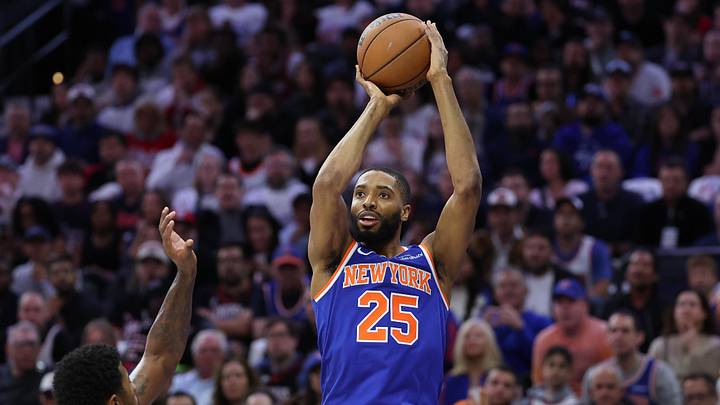
A month later, the Knicks are in the NBA Finals. Bridges is among the reasons why. He averaged 16.6 points during New York’s 11-game winning streak through the conference playoffs, connecting on 62.6% of his shots. During that stretch, he shot 37.5% from three. Defensively, Bridges locked up Nickeil Alexander-Walker and Jalen Johnson, stymied Tyrese Maxey and Paul George and hounded James Harden. In Game 1 against San Antonio, Bridges was part of the defensive effort that limited the Spurs to 36% shooting, including 25.6% from three.
Inside the Knicks’ locker room, no one is surprised. “We know the value he brings to our team,” said Karl-Anthony Towns. Indeed, Bridges’s numbers in New York aren’t bad. He averaged 14.4 points per game this season. He shot 49% from the floor and a respectable 37.1% from three. His ironman streak of playing in every game has reached nine NBA seasons and counting.
“All the chatter outside of that locker room doesn’t mean anything to us,” said Towns. “And it shouldn’t mean anything to him. It’s our job as teammates to continue to uplift him, keep it positive and also remind him how great he is.”
Josh Hart has seen it. Hart played two seasons with Bridges at Villanova. At first, he didn’t like him. “Hated him,” said Hart. Here was this stringy kid who played the same position. Hart recalled tormenting Bridges early in his freshman year, even tossing him to the ground at a practice. The two hashed it out after that, Hart said, and have been close ever since. They won an NCAA championship together, were opponents for a few years and have been teammates for the last two. Hart’s not impressed by Bridges’s recent run. Mostly because he expects it.
“I’ve seen him face adversity and [face] adverse situations head on and come out on top,” said Hart. “He’s a hell of a player, and he’s a winning player. You need a guy like him to win games. I can’t tell you how many games he won in terms of making big shots or big plays defensively, blocks, steals, those type of things. That’s how I know Mikal, and I don’t think he cares too much about the outside world or what they’re saying.”
The inconsistency has been real. Bridges shot 43.1% in March, part of a post-All-Star break swoon. He was under 30% from three in April. Some of that is from the positions he was put in, says Knicks coach Mike Brown. “I could have helped him better,” Brown said. “I could have put him in a better position to have more success this year.” Brown prioritized unlocking Bridges before the season. He reduced his workload (32.8 minutes per game, down from 37 last season) and encouraged him to be more of a facilitator. He saw Bridges struggle. He never saw his confidence waver.
“He’s got a confidence within him that’s amazing,” said Brown. “His confidence, the support system around him, has been remarkable, and it hasn’t seemed like it fazed him much because of those two things.”
Bridges agrees. “I’ve always had great people around me,” he said. They helped him push through the tough stretches in March and April. They kept his confidence up when there were calls for him to be benched in the opening round. “Just not really worry about the outside,” Bridges said, when asked about how he handles criticism. “That’s pretty much always been me for a while. Just worrying about what I’m doing and my team and figuring out sometimes it’s tough for the outside to fully understand what’s going on. You can’t feed into it too much. Just stay who you are, stay levelheaded and just keep working.”
Within the Knicks, everyone is expecting a fierce counterpunch from the Spurs in Game 2. An 0–2 deficit isn’t insurmountable—the 2021 Bucks and ’16 Cavaliers both did it—though it’s a lot more difficult after coughing up two on your home floor. New York will need the best of Bridges. In this game. In this series. And beyond.
More NBA Finals From Sports Illustrated
Listen to SI’s NBA podcast, Open Floor, below or on Apple and Spotify. Watch the show on SI’s YouTube channel.
 Add us as a preferred source on Google
Chris Mannix is a senior writer at Sports Illustrated covering the NBA and boxing beats. He joined the SI staff in 2003 following his graduation from Boston College. Mannix is the host of SI’s “Open Floor” podcast and serves as a ringside analyst and reporter for DAZN Boxing. He is also a frequent contributor to NBC Sports Boston as an NBA analyst. A nominee for National Sportswriter of the Year in 2022, Mannix has won writing awards from the Boxing Writers Association of America and the Pro Basketball Writers Association, and is a longtime member of both organizations.
Follow sichrismannix