%22%3E%0A%3Cpath%20d%3D%22M0%206.0625H8.64197L13.955%2014.7703L19.2681%206.0625H27.9101V30.8506H19.6537V18.56L13.955%2027.3806H13.814L8.11537%2018.56V30.8506H0V6.0625Z%22%20fill%3D%22white%22%2F%3E%0A%3Cpath%20d%3D%22M30.6094%205H38.9316V10.1344H30.6094V5ZM30.7504%2011.5167H38.7906V30.8507H30.7504V11.5167Z%22%20fill%3D%22white%22%2F%3E%0A%3Cpath%20d%3D%22M40.6611%2025.3588V25.2836C40.6611%2021.4281%2043.5292%2019.2653%2048.0242%2019.2653C49.651%2019.2653%2051.7387%2019.6226%2052.5944%2019.9705V19.6508C52.5944%2017.8829%2051.4942%2016.8579%2049.021%2016.8579C47.0368%2016.8579%2045.3724%2017.2811%2043.6703%2017.9581L42.2504%2012.6075C44.479%2011.7611%2047.0274%2011.1875%2050.3939%2011.1875C54.3247%2011.1875%2056.8731%2012.0056%2058.5751%2013.6983C60.0233%2015.1464%2060.5969%2017.0272%2060.5969%2019.8201V30.8318H52.5568V28.8852C51.212%2030.3334%2049.4065%2031.2925%2046.9992%2031.2925C43.2848%2031.2925%2040.6611%2029.1673%2040.6611%2025.34V25.3588ZM52.6696%2023.6944V22.8763C52.2088%2022.6976%2051.5036%2022.5565%2050.8265%2022.5565C49.2279%2022.5565%2048.3439%2023.5157%2048.3439%2024.7194V24.7946C48.3439%2025.9325%2049.162%2026.6753%2050.187%2026.6753C51.607%2026.6753%2052.6696%2025.5375%2052.6696%2023.7038V23.6944Z%22%20fill%3D%22white%22%2F%3E%0A%3Cpath%20d%3D%22M63.0137%2011.5167H71.0538V14.1027C72.2951%2012.5041%2074.2417%2011.0559%2076.8935%2011.0559C79.5453%2011.0559%2081.5295%2012.1938%2082.5921%2014.2438C84.2189%2012.4006%2086.1655%2011.0559%2089.1465%2011.0559C93.2935%2011.0559%2095.8419%2013.7454%2095.8419%2018.0993V30.8506H87.8017V20.61C87.8017%2018.9832%2086.8426%2018.0616%2085.6765%2018.0616C84.5105%2018.0616%2083.4478%2018.9832%2083.4478%2020.61V30.8506H75.4077V20.61C75.4077%2018.9832%2074.4485%2018.0616%2073.2825%2018.0616C72.1164%2018.0616%2071.0538%2018.9832%2071.0538%2020.61V30.8506H63.0137V11.5167Z%22%20fill%3D%22white%22%2F%3E%0A%3Cpath%20d%3D%22M98.1836%205H106.506V10.1344H98.1836V5ZM98.3247%2011.5167H106.365V30.8507H98.3247V11.5167Z%22%20fill%3D%22white%22%2F%3E%0A%3Cpath%20d%3D%22M118.336%206.0625H126.621V14.8079H134.2V6.0625H142.485V30.8506H134.2V21.9641H126.621V30.8506H118.336V6.0625Z%22%20fill%3D%22white%22%2F%3E%0A%3Cpath%20d%3D%22M144.657%2021.2872V21.212C144.657%2015.4381%20148.804%2011.0466%20154.606%2011.0466C161.48%2011.0466%20164.668%2015.8237%20164.668%2021.7104C164.668%2022.1336%20164.668%2022.6319%20164.63%2023.0551H152.199C152.763%2024.7572%20154.108%2025.6411%20155.847%2025.6411C157.295%2025.6411%20158.499%2024.9641%20159.778%2023.6569L164.094%2027.0893C162.185%2029.5719%20159.458%2031.3021%20155.274%2031.3021C148.936%2031.3021%20144.647%2027.2962%20144.647%2021.2778L144.657%2021.2872ZM157.333%2019.5193C157.154%2017.6762%20156.054%2016.6136%20154.644%2016.6136C153.233%2016.6136%20152.34%2017.7514%20152.095%2019.5193H157.333Z%22%20fill%3D%22white%22%2F%3E%0A%3Cpath%20d%3D%22M165.834%2025.3588V25.2836C165.834%2021.4281%20168.702%2019.2653%20173.197%2019.2653C174.824%2019.2653%20176.912%2019.6226%20177.767%2019.9705V19.6508C177.767%2017.8829%20176.667%2016.8579%20174.194%2016.8579C172.21%2016.8579%20170.545%2017.2811%20168.843%2017.9581L167.423%2012.6075C169.652%2011.7611%20172.2%2011.1875%20175.567%2011.1875C179.498%2011.1875%20182.046%2012.0056%20183.748%2013.6983C185.196%2015.1464%20185.77%2017.0272%20185.77%2019.8201V30.8318H177.73V28.8852C176.385%2030.3334%20174.579%2031.2925%20172.172%2031.2925C168.458%2031.2925%20165.834%2029.1673%20165.834%2025.34V25.3588ZM177.842%2023.6944V22.8763C177.382%2022.6976%20176.676%2022.5565%20175.999%2022.5565C174.401%2022.5565%20173.517%2023.5157%20173.517%2024.7194V24.7946C173.517%2025.9325%20174.335%2026.6753%20175.36%2026.6753C176.78%2026.6753%20177.842%2025.5375%20177.842%2023.7038V23.6944Z%22%20fill%3D%22white%22%2F%3E%0A%3Cpath%20d%3D%22M189.493%2024.3714V17.7136H187.227V11.5166H189.493V6.66431H197.533V11.5166H202V17.7136H197.533V22.6035C197.533%2024.0517%20198.21%2024.5877%20199.48%2024.5877C200.222%2024.5877%20201.069%2024.3714%20201.924%2023.9859V30.1829C200.646%2030.8599%20198.737%2031.2831%20196.79%2031.2831C192.041%2031.2831%20189.493%2029.0826%20189.493%2024.3714Z%22%20fill%3D%22white%22%2F%3E%0A%3Cpath%20fill-rule%3D%22evenodd%22%20clip-rule%3D%22evenodd%22%20d%3D%22M211.368%204.36764C217.191%20-1.45588%20226.632%20-1.45588%20232.456%204.36764C238.279%2010.1912%20238.279%2019.6324%20232.456%2025.4559L221.912%2036L211.368%2025.4559C205.544%2019.6324%20205.544%2010.1912%20211.368%204.36764ZM214.009%207.55761C213.948%207.86849%20213.916%208.39718%20213.916%209.14566V10.4189C213.916%2011.1832%20213.948%2011.7198%20214.013%2012.0267C214.078%2012.3317%20214.278%2012.6168%20214.617%2012.8762C214.956%2013.1376%20215.403%2013.3316%20215.958%2013.4623C216.512%2013.593%20217.1%2013.6583%20217.837%2013.6583C218.573%2013.6583%20219.217%2013.591%20219.769%2013.4524C220.322%2013.3158%20220.761%2013.1178%20221.086%2012.8604C221.411%2012.6029%20221.605%2012.3178%20221.666%2012.0069C221.728%2011.6961%20221.759%2011.1674%20221.759%2010.4189V9.14566C221.759%208.38134%20221.728%207.84473%20221.662%207.53781C221.597%207.23287%20221.397%206.94972%20221.058%206.68834C220.72%206.42696%20220.272%206.23291%20219.718%206.10223C219.163%205.97154%20218.536%205.90619%20217.839%205.90619C217.102%205.90619%20216.459%205.97352%20215.906%206.11213C215.352%206.24875%20214.914%206.44677%20214.589%206.70418C214.265%206.9616%20214.071%207.24673%20214.009%207.55761ZM219.276%2024.8638C222.876%2024.8638%20224.557%2024.2064%20224.557%2021.862V21.858V21.3155C224.557%2019.6581%20223.516%2018.971%20220.252%2018.3136C219.278%2018.1136%20218.908%2017.9136%20218.908%2017.3136V16.9414C218.908%2016.6543%20219.177%2016.5117%20219.413%2016.5117C219.749%2016.5117%20219.918%2016.7137%20219.918%2016.9414V18.1136H224.391V17.3988C224.391%2015.4563%20223.347%2014.4266%20219.177%2014.4266C216.15%2014.4266%20213.896%2015.3414%20213.896%2017.3711V17.7433C213.896%2019.5155%20214.805%2020.3155%20218.201%2021.0303C218.28%2021.0472%20218.355%2021.063%20218.427%2021.0781C219.329%2021.2674%20219.647%2021.3341%20219.647%2021.9174V22.2897C219.647%2022.6619%20219.546%2022.8045%20219.142%2022.8045C218.67%2022.8045%20218.637%2022.5471%20218.637%2022.262V21.2897H213.894V21.7471C213.894%2024.149%20215.476%2024.8638%20219.276%2024.8638ZM225.424%2024.5569H229.925V14.7355H225.424V24.5569ZM226.955%2013.5019H229.925V6.06064H227.092V9.411L225.193%206.06064H222.359V13.5019H225.193V10.1199L226.955%2013.5019ZM218.269%2012.152C218.204%2012.2688%20218.055%2012.3262%20217.825%2012.3262L217.827%2012.3282C217.604%2012.3282%20217.459%2012.2767%20217.398%2012.1757C217.336%2012.0748%20217.305%2011.8074%20217.305%2011.3758V7.90068C217.305%207.51852%20217.352%207.28684%20217.445%207.20962C217.538%207.13239%20217.675%207.09279%20217.851%207.09279C218.059%207.09279%20218.198%207.14031%20218.265%207.23734C218.332%207.33239%20218.366%207.55416%20218.366%207.90068V11.3203C218.366%2011.7579%20218.334%2012.0352%20218.269%2012.152Z%22%20fill%3D%22white%22%2F%3E%0A%3C%2Fg%3E%0A%3Cdefs%3E%0A%3CclipPath%20id%3D%22clip0_15229_1538%22%3E%0A%3Crect%20width%3D%22237%22%20height%3D%2236%22%20fill%3D%22white%22%2F%3E%0A%3C%2FclipPath%3E%0A%3C%2Fdefs%3E%0A%3C%2Fsvg%3E%0A)
Can Davion Mitchell Be the Starting Point Guard on a Contender?
In this story:
I want to be careful with how I frame this, because I don’t think there is a simple yes or no answer to this question. I believe that it all depends under a set of conditions. The question of whether a smaller guard can start at the point for a real contender has a fairly rigid answer in today’s NBA, and it hasn’t changed much in the past decade.
There are two doors. You either walk through the first one by being an elite offensive player, the kind of engine that bends a defense so violently that whatever you give up on the other end becomes an acceptable tax, or you walk through the second door by being a genuine problem defensively. The kind of guy who takes the opposing team’s best perimeter option ninety-four feet and makes their offense start 8 seconds late.
Steph Curry in 2022 is the most obvious example of door number one. The gravity that he generated, and continues to, is what warped every possession Golden State played. Jalen Brunson has walked through that same door in New York.
When you’re that good with the ball, the math stops mattering.
Door two is the one that interests me more, because it’s the one that applies here. Kyle Lowry in 2019 was not the engine of that Toronto team, Kawhi Leonard was, and Lowry still started every meaningful game of a championship run. He did it by being an absolute bulldog: taking charges, sitting on ball-handlers, defending up a position when the switch demanded it, and never once needing the offense to run through him to justify his minutes.
Jrue Holiday has made a career out of the same thing, though at 6’3” with that frame I’ve never really considered him small in the way this conversation means. But here’s the part people skip when they invoke Lowry or Jrue as precedent, and it’s the condition that makes or breaks the entire argument.
Neither of those guys was doing it alone.
Trust me, I get it, the 4 examples that I have presented thus far have been MVPs, been named to ALL-NBA teams, All-Defensive teams, and they’ve received All-Star nods. Davion on the other hand hasn’t done any of that. In the past 20 years, the only teams that have won an NBA title without having a starting Point Guard that had accomplished any of those accolades are teams that had ELITE stars that would create and initiate offense so that smaller guards wouldn’t have to.
Teams like the 2020 Los Angeles Lakers, 2012 and 2013 Miami HEAT who had LeBron James or Dwyane Wade running as the defacto lead guards. You also can refer to the 2009 & 2010 LA Lakers with Derek Fisher spotting up while Kobe and, to a lesser degree, Lamar Odom initiated offense. If we go even further back, you can even point to the 1999 San Antonio Spurs with Avery Johnson at the helm. Tim Duncan was the engine of that team on both sides and covered up the deficiencies of that backcourt.

The main point is, if your starting point guard is a defense-first player who isn’t going to carry the offense, then somebody on that roster has to carry it and do it emphatically. Lowry had Kawhi. Jrue had Giannis in Milwaukee and then Tatum and Brown in Boston.
In every successful version of this arrangement, there’s an offensive engine soaking up an enormous usage rate, which allows the point guard to operate as a connector and make the right pass, hit the open three, get the ball moving, and then go do the actual job, which is on defense. Which brings us to Miami, and to why I think this conversation is worth having at all.
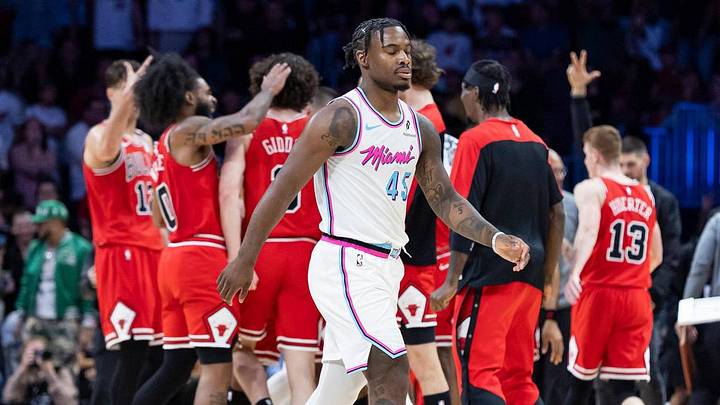
Davion Mitchell now plays with Giannis Antetokounmpo. In terms of usage relief, there isn’t a bigger one in basketball. Giannis will carry the offensive load, draw the walls, the doubles, and the panic rotations as everything downstream of that gets easier for everybody wearing the same jersey. Bam Adebayo is the connective hub and second option.
Erik Spoelstra has spent his career building offenses where guards succeed by making quick, correct decisions instead of by pounding the air out of the ball. The exact architecture that made the Lowry and Jrue arrangements work is sitting right there on Miami’s roster.
What Davion actually is now
The defensive half of the case doesn’t require much argument from me. He earned the nickname “off night”, even in a down defensive year where he admitted to not being at his usual level due to not being in the best shape for the faster style of play Miami implemented.
Also, the three-year impact data backs it: a +0.7 defensive RAPM that sits in the 77th percentile, inside an overall +1.0 RAPM that lands him in the 82nd. Mitchell drew charges at a rate that puts him in the 91st percentile in the league. He plays enough too, as his minutes total ranks in the 87th percentile, which for a guard whose value is built on expending energy matters more than people think.
The offensive picture is where the real change shows up. He shot 39.5 percent from three on 3 attempts a game, which lands in the 87th percentile.
Not to mention, the way he’s being used to generate that is exactly the profile a contender wants. His shot volume sits in the 7th percentile. His on-ball rate is in the 23rd. He is barely touching the ball, barely shooting, and doing enormous damage in the possessions where he does: his spacing playtype, which accounts for 42 percent of his offensive usage, produces a plus-6.1 percent relative true shooting. He passes at a rate in the 98th percentile, his assists generate an effective field goal percentage in the 83rd, and he turns the ball over less than most guards who handle it far less than he does.

That is, almost line for line, the statistical fingerprint of the connector role I described above. Low usage, high efficiency, quick decisions, quality passes, and a real three-point shot. He’s already playing the part. Like any other player, there are the flaws too. He doesn’t rebound or get to the free throw line consistently, with a free throw rate in the 22nd percentile. And his transition offense was genuinely bad last season.
That’s a real hole, and on a Miami team that wants to run, somebody has to be the one finishing those breaks. He can be the one to start the break, but if we’re talking about finishing, it won’t be him. He’s also in better shape than he’s ever been, and for a guard whose entire value proposition is applying pressure across eighty-plus possessions, that’s going to be huge.
Conditioning is what allows a defensive specialist to still be one in the fourth quarter of the sixty-fifth game. It’s also, quietly, one of the biggest inputs into shooting consistency as tired legs miss short, and a man who spends his night chasing has to have the aerobic base to still own his shooting stroke at the end of it.
The Lowry parallel
Kyle Lowry was the 24th pick in the 2006 NBA draft. He broke his wrist as a rookie, sat behind Mike Conley in Memphis, got moved to Houston, sat behind Aaron Brooks, and did not become the player anybody remembers until his fifth season, at 24 years old, when an injury opened a door and he started 71 of 75 games. Before that, the league had him filed as a backup with a bad jumper and a good motor.
Davion is entering his 6th season, also a defense-first guard with a formerly questionable jumper, also built like a fire hydrant, and also just posted the shooting leap that changes what a team can ask of him. He’s a better pure athlete than Lowry was at the same stage.
The difference is age. Lowry got there at 24 while Davion is 27. 27 years old is typically the front end of a prime, and although I expect a Davion leap, I’m not quite expecting an all-star leap like Kyle took back in 2015. What’s more reasonable is a leap like what Lowry had back between 2010-2013 when he averaged from 11-14 PPG and 6 APG. Lowry had six or seven years to compound that leap into All-Star seasons. Davion has fewer.
Davion Mitchell: Quick Crossover #NBAHandlesWeek pic.twitter.com/KblhIxfOM8
— 🌴🇺🇸🇨🇴🌴 (@Birdey954theWin) August 3, 2026
I’m not going to tell you he’s a top-tier starting point guard on a title team. If I’m building the perfect version of a contender, he’s the 6th or 7th man. The energy guy you bring in to strangle a game, close with in specific matchups, and hide offensively when the shooting goes cold. That’s a real, valuable, well-compensated role, and there’s no shame in it.
But the question wasn’t whether he’s THE ideal starting PG on a contender. It was whether he CAN be. And on a roster with an MVP-caliber engine, a hub big man, elite defensive infrastructure behind him, and a coaching staff that doesn’t require its point guard to create everything? Yes. I believe that he can be.
I think there’s another level available to him, and I think the shape of it is fairly specific: 11-12 points and 5 or 6 assists a night, at league-average-or-better efficiency from three, while continuing to eat opposing guards alive for 28-30 minutes. No, that’s not All-Star caliber production but it can be what a starting point guard on a team that wins in June could provide. Is it likely?
I genuinely don’t know. But the conditions that have to be true for this to work are all true in Miami right now. That’s more than most small guards ever get.
 Add us as a preferred source on Google
-9ddcc3694e3da172a30d516180aed7ca.jpeg "Geo Valdez")
Coach Geo (Geovannie Valdez) is a Miami-based performance specialist and NBA analyst who brings a unique lens to the sport: deep expertise in biomechanics, movement, and athlete development combined with years working directly with professional athletes. Drawing from his background in fitness and injury prevention, Coach Geo writes about NBA roster construction, player durability, and the intersection of coaching philosophy and elite performance. His work has appeared on Substack and across social platforms, where he breaks down the science behind NBA narratives with accessibility and rigor. A Miami native, former athlete and lifelong student of the game, Coach Geo believes the best basketball analysis starts with understanding the human body.
Follow coachgeo_