%20%20--%3E%0A%3Csvg%20version%3D%221.1%22%20id%3D%22Layer_1%22%20xmlns%3D%22http%3A%2F%2Fwww.w3.org%2F2000%2Fsvg%22%20xmlns%3Axlink%3D%22http%3A%2F%2Fwww.w3.org%2F1999%2Fxlink%22%20x%3D%220px%22%20y%3D%220px%22%0A%09%20width%3D%2239px%22%20height%3D%2240px%22%20viewBox%3D%220%200%2039%2040%22%20enable-background%3D%22new%200%200%2039%2040%22%20xml%3Aspace%3D%22preserve%22%3E%0A%3Cpath%20fill%3D%22%23FFFFFF%22%20d%3D%22M38.5%2C7H28.2v26h10.3V7z%22%2F%3E%0A%3Cpath%20fill-rule%3D%22evenodd%22%20clip-rule%3D%22evenodd%22%20fill%3D%22%23FFFFFF%22%20d%3D%22M26.1%2C25.5c0%2C5.8-4.1%2C7.5-12.9%2C7.5C3.9%2C33%2C0%2C31.2%2C0%2C25.2v-1.1h11.6%0A%09v2.4c0%2C0.7%2C0.1%2C1.4%2C1.2%2C1.4c1%2C0%2C1.2-0.4%2C1.2-1.3v-0.9c0-1.6-0.9-1.6-3.5-2.2C2.2%2C21.7%2C0%2C19.7%2C0%2C15.3v-0.9C0%2C9.3%2C5.5%2C7%2C12.9%2C7%0A%09c10.2%2C0%2C12.8%2C2.6%2C12.8%2C7.4v1.8h-11v-2.9c0-0.6-0.4-1.1-1.2-1.1c-0.6%2C0-1.2%2C0.4-1.2%2C1.1v0.9c0%2C1.5%2C0.9%2C2%2C3.3%2C2.5%0A%09c8%2C1.6%2C10.5%2C3.3%2C10.5%2C7.5V25.5z%22%2F%3E%0A%3C%2Fsvg%3E%0A)
Lakers-Jazz Trade Grades: How Los Angeles, Utah Made Out in Walker Kessler Deal
In this story:
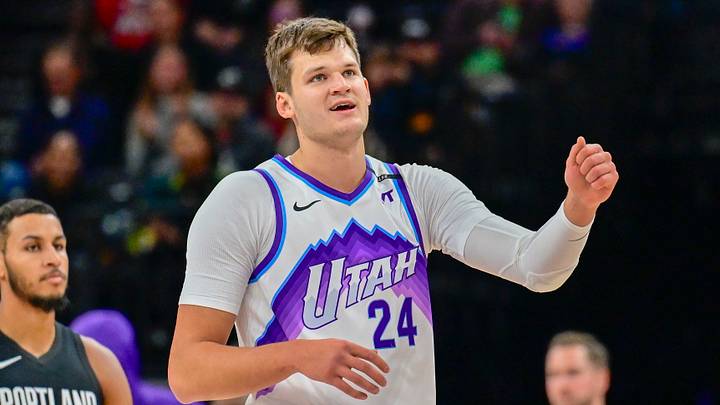
Another big-time NBA trade has hit the wire. This time, it’s the Lakers and Jazz involved.
On Wednesday amid another wave of free agency signings, ESPN’s Shams Charania reported Los Angeles was acquiring center Walker Kessler from Utah in exchange for two unprotected first round picks in 2031 and ‘33, as well as two pick swaps in ‘28 and ‘30. Once the trade is official the Lakers will sign Kessler to a four-year deal worth $130 million, which comes out to a hair over $32 million annually.
L.A. was in dire need of a long-term answer at center as GM Rob Pelinka works to build around the remarkable talents of Luka Dončić. Kessler certainly qualifies entering his age-25 season after establishing himself as a strong rim protector and big-bodied paint presence over his first four years in the league. A shoulder injury kept him out of all but five games last season.
The Jazz, looking to take a step forward this year, get a haul of picks in return for a player who didn’t seem to want to be in Utah any longer. Negotiations between the young center, who is a restricted free agent, and the franchise that drafted him appeared to be getting more contentious by the day.
How did both sides make out in this deal? Let’s break it down by handing out grades for the Lakers and the Jazz.
Jazz

The Jazz made out with some solid assets in this deal. But they never should have let this situation deteroriate in the first place.
Kessler was a homegrown talent who would have made for a fascinating but logical fit with the new-look roster Utah is trotting out next year. He’s a proven frontcourt partner for Lauri Markkanen and his skillset seemed a match for trade acquisition Jaren Jackson Jr., who profiles as more of a stretch four than a true center. Adding another big deal to the books might’ve made things complicated down the road but that’s easy enough to figure out. You never want to move on from young talent due to a poor off-court relationship and that seems to be what happened here.
Insofar as what they actually got from Kessler ... it’s fine. The Lakers’ picks are no longer as coveted as they were pre-Dončić because if Luka sticks around then Los Angeles will be mediocre at worst for the next five or so years. The ‘33 pick is the most valuable trade asset but seven years is a long time to wait for a tangible return when giving up a player who was once seen as an immovable part of their core. The biggest benefit is that Utah doesn’t have to pay Kessler $30-plus million a year, which the franchise was clearly disinterested in from the start.
If Kessler was never going to be part of the organization’s future, this is an acceptable return. The Jazz can wield these draft picks to improve the roster as they try to contend for the first time in a long time. But the situation feels like a self-inflicted wound that helped the Lakers land a center in exchange for draft fodder that might be worth something. Eventually.
Grade: C
Lakers

Luka got his big.
Since the minute he was traded to the Lakers last February, the entire league wondered if Rob Pelinka could actually build a championship roster around Dončić. After locking up Austin Reaves to a four-year max deal, finding a center who could thrive alongside the team’s two star guards was the next goal. Mission accomplished.
Kessler gives L.A. a 7'2" post who is an elite rim protector and rebounder, two things L.A. sorely lacked last season. The 24-year-old is a strong finisher, an ideal lob target for Dončić and has a high basketball IQ when it comes to his offensive positioning. While he is limited as a post creator, he won’t need to generate much office alongside Dončić and Reaves. They’ll create plenty of scoring opportunities for him.
The price for Kessler is two future first-rounders, two pick swaps and a four-year $130 million deal. For a franchise that has never been protective of its draft capital, it doesn’t feel like L.A. gave up too much. If Kessler becomes an elite center, an average annual value of $32.5 million will turn out to be a great move.
The only real concern here is his health. Kessler is coming off season-ending surgery to repair a torn labrum in his left shoulder after appearing in just five games last season. If that proves to be an aberration rather than a trend, this deal checks every box for Los Angeles. During the 2024–25 season, Kessler averaged 11.1 points, 12.2 rebounds, 1.7 assists and 2.4 blocks in 33.0 minutes per game. He stuffs the stat sheet without needing the ball in his hands.
Finding a center was the team’s top offseason need, but keeping Dončić happy has always been the larger goal. Kessler is exactly the type of rim-running, shot-blocking big man who has helped Dončić thrive during his career. This is an ideal fit for now and the future.
Grade: A-
More NBA From Sports Illustrated
Listen to SI’s NBA podcast, Open Floor, below or on Apple and Spotify. Watch the show on SI’s YouTube channel.
 Add us as a preferred source on Google
Liam McKeone is a senior news writer for the NBA team at Sports Illustrated. He has been in the industry covering the NBA and other sports as a content creator starting in 2017. Prior to joining SI, McKeone worked for NBC Sports Boston and The Big Lead. In addition to his work as a writer, he has hosted the Press Pass Podcast covering sports media and The Big Stream covering pop culture. A graduate of Fordham University, he is always up for a good debate and enjoys loudly arguing about sports, rap music, books and video games. McKeone has been a member of the National Sports Media Association since 2020.
Follow liam_mckeone
Ryan Phillips is a senior writer on the Breaking and Trending News team at Sports Illustrated. He has worked in digital media since 2009, spending eight years at The Big Lead before joining SI in 2024. Phillips also co-hosts The Assembly Call Podcast about Indiana Hoosiers basketball and previously worked at Bleacher Report. He is a proud San Diego native and a graduate of Indiana University’s journalism program.
Follow rumorsandrants