%20%20--%3E%0A%3Csvg%20version%3D%221.1%22%20id%3D%22Layer_1%22%20xmlns%3D%22http%3A%2F%2Fwww.w3.org%2F2000%2Fsvg%22%20xmlns%3Axlink%3D%22http%3A%2F%2Fwww.w3.org%2F1999%2Fxlink%22%20x%3D%220px%22%20y%3D%220px%22%0A%09%20width%3D%2239px%22%20height%3D%2240px%22%20viewBox%3D%220%200%2039%2040%22%20enable-background%3D%22new%200%200%2039%2040%22%20xml%3Aspace%3D%22preserve%22%3E%0A%3Cpath%20fill%3D%22%23FFFFFF%22%20d%3D%22M38.5%2C7H28.2v26h10.3V7z%22%2F%3E%0A%3Cpath%20fill-rule%3D%22evenodd%22%20clip-rule%3D%22evenodd%22%20fill%3D%22%23FFFFFF%22%20d%3D%22M26.1%2C25.5c0%2C5.8-4.1%2C7.5-12.9%2C7.5C3.9%2C33%2C0%2C31.2%2C0%2C25.2v-1.1h11.6%0A%09v2.4c0%2C0.7%2C0.1%2C1.4%2C1.2%2C1.4c1%2C0%2C1.2-0.4%2C1.2-1.3v-0.9c0-1.6-0.9-1.6-3.5-2.2C2.2%2C21.7%2C0%2C19.7%2C0%2C15.3v-0.9C0%2C9.3%2C5.5%2C7%2C12.9%2C7%0A%09c10.2%2C0%2C12.8%2C2.6%2C12.8%2C7.4v1.8h-11v-2.9c0-0.6-0.4-1.1-1.2-1.1c-0.6%2C0-1.2%2C0.4-1.2%2C1.1v0.9c0%2C1.5%2C0.9%2C2%2C3.3%2C2.5%0A%09c8%2C1.6%2C10.5%2C3.3%2C10.5%2C7.5V25.5z%22%2F%3E%0A%3C%2Fsvg%3E%0A)
How the Bears Can Survive Without Quarterback Caleb Williams
In this story:
When Ben Johnson was the offensive coordinator of the Lions, I interviewed people close to him for a profile that never quite got off the ground. One of my favorite anecdotes came from his sister, who mentioned that Johnson, as a kid, used to carry around a blank notebook and fill it with ascending numbers. One page would be the numbers 1–123, for example, written out by hand. The next page would be 124–236. And so on.
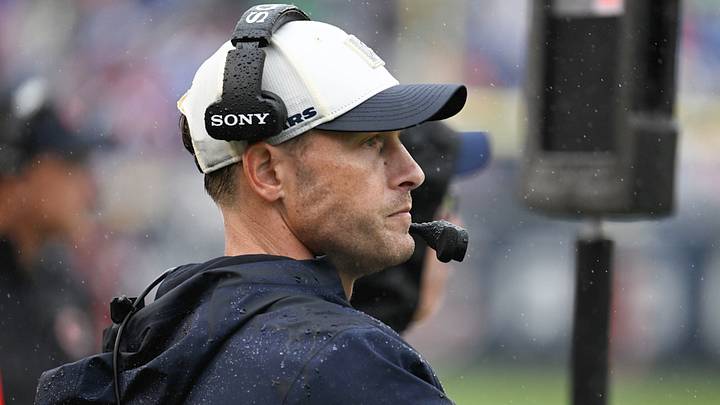
I thought of this when imagining how most people would be sick to their stomachs at the idea of their starting quarterback being out for any significant period of time, as Caleb Williams certainly could be after an ugly-looking hamstring injury in a 9–3 loss to the Vikings on Sunday. But Johnson keeps giving us examples—dating back to childhood, apparently—that he is built differently and consumed by the task at hand. The tired among us are here only when situations are at their optimal. The wired come to life when the pursuit of the NFL scoring record remains on the table, and Tyson Bagent has the keys to the NFL’s most explosive offense for an undetermined amount of time. Seriously, toss away your platitude-filled generic coaching profile about how the guy is a hard worker. Give me the one where he’s so dedicated that it makes you The Strangers-level uncomfortable.
The play on which Caleb Williams was hurt: pic.twitter.com/Wb1945Z1uG
— Adam Schefter (@AdamSchefter) September 20, 2026
We should start with Bagent, a former undrafted free agent out of Shepherd College. Last year, during Johnson’s first season, Bagent signed a two-year contract extension for $5 million per season, putting him toward the upper echelon of the Mitch Trubisky/Mac Jones/Kenny Pickett society. Bagent started four games in relief of Justin Fields in 2023 and, despite a 1:2 touchdown-to-interception ratio, showed promise in a very broken-looking offense piloted by several individuals attempting to stop a full-on tire fire. Bears GM Ryan Poles confirmed this offseason that the team had received trade calls on Bagent and inferred that he thought Bagent was capable of being an NFL starter. The Bears opted not to trade him because the replacement cost was higher than whatever they could have fielded in return.
Poles also mentioned Bagent's developmental cost at the time. He kept getting better, though the improvement under Johnson, specifically, is relegated to the preseason, with him throwing just six regular-season passes in 2024 and '25 combined leading up to Sunday.
Weirdly, we learned—and begrudgingly appreciated the unrestrained hype of—play-callers like Sean Payton after Drew Brees went down and he had to concoct an offense out of Teddy Bridgewater and Taysom Hill. Sean McVay elevated to Roman God status after weaving an offense for Baker Mayfield on the back of a napkin over lunch. Kevin O’Connell’s record with a cavalcade of starters boasting third Jonas Brother-level anonymity is still, in my opinion, not covered enough.

Now, it’s Johnson’s turn.
While I realize this paragraph will make the Bears head coach want to pierce drywall with a fist, there is a subsection of nonbelievers (I, for the record, am not among them). The Bears ranked third in fumble-recovery percentage among teams that faced double-digit fumbles last year (we saw how the inverse of that luck could affect a game like it did against Minnesota in a rainy slopfest on Sunday). Two of the team’s 11 wins were by a point, one was by two points, and four more were by 4–7 points. The Bears were also top 15 in offensive line health percentage, a remarkably underrated stat that shows how often a team’s most utilized lineup is on the field together. Before Chicago, Johnson had a Lions team that featured Jared Goff, Jahmyr Gibbs, Jameson Williams, Sam LaPorta and what was then the second-best offensive line in the NFL. In Johnson’s final season, the Lions were third in the NFL in EPA per play with a success rate just below 50%. Last year, between Johnson’s replacement, Johnny Morton, who was fired at midseason, and Dan Campbell, the Lions finished ninth in EPA per play with a 45% success rate.
Now, Johnson has to rebound from a Minnesota game, that, per SumerSports data, featured his worst offensive success rate as a play-caller, and sixth-worst EPA per play game since Johnson started becoming a regular play-caller, without Williams for at least a little while.
Reporters saw the Bears quarterback walking without a crutch after a game, which would lead us to believe that it may not be the worst-case, Dak Prescott-type hamstring injury, though this is all wild conjecture. All we know at this point is that we’ll get a small sample size with Johnson and Bagent, the first stretch of time in which Johnson is coaching a quarterback that we would all fairly deem “not a top-15 player at the position.” In 2023, Jared Goff threw nearly every pass for the Lions. Linebacker Jalen Reeves-Maybin threw the second-most passes on the team (one). In '24, Hendon Hooker completed six passes, while a combination of David Montgomery, Amon-Ra St. Brown and punter Jack Fox threw another three.
In my mind, it’s a chance to appreciate Johnson for what he truly is: one of the three best play-callers in the NFL; a coach whose numbers are more bulletproof than they seem because they are all accompanied by a massive leap in the efficacy of the run game. That’s not a consolation prize for losing Williams in the short-term, especially with the great promise the season began with, but it’s the kind of peace of mind that transcends single seasons. If Bagent plays well, Bears fans will finally face the most macabre situations, knowing the worst-case scenario is no longer the norm.
 Add us as a preferred source on Google
Conor Orr is a Senior Writer for Sports Illustrated with more than 15 years of experience covering the NFL. His work has been cited in Best American Sportswriting and has won a PFWAA award. Prior to Sports Illustrated, he covered both the Giants and Jets for The Star-Ledger. Conor lives in New Jersey with his amazing wife and three children.
Follow author