%20%20--%3E%0A%3Csvg%20version%3D%221.1%22%20id%3D%22Layer_1%22%20xmlns%3D%22http%3A%2F%2Fwww.w3.org%2F2000%2Fsvg%22%20xmlns%3Axlink%3D%22http%3A%2F%2Fwww.w3.org%2F1999%2Fxlink%22%20x%3D%220px%22%20y%3D%220px%22%0A%09%20width%3D%2239px%22%20height%3D%2240px%22%20viewBox%3D%220%200%2039%2040%22%20enable-background%3D%22new%200%200%2039%2040%22%20xml%3Aspace%3D%22preserve%22%3E%0A%3Cpath%20fill%3D%22%23FFFFFF%22%20d%3D%22M38.5%2C7H28.2v26h10.3V7z%22%2F%3E%0A%3Cpath%20fill-rule%3D%22evenodd%22%20clip-rule%3D%22evenodd%22%20fill%3D%22%23FFFFFF%22%20d%3D%22M26.1%2C25.5c0%2C5.8-4.1%2C7.5-12.9%2C7.5C3.9%2C33%2C0%2C31.2%2C0%2C25.2v-1.1h11.6%0A%09v2.4c0%2C0.7%2C0.1%2C1.4%2C1.2%2C1.4c1%2C0%2C1.2-0.4%2C1.2-1.3v-0.9c0-1.6-0.9-1.6-3.5-2.2C2.2%2C21.7%2C0%2C19.7%2C0%2C15.3v-0.9C0%2C9.3%2C5.5%2C7%2C12.9%2C7%0A%09c10.2%2C0%2C12.8%2C2.6%2C12.8%2C7.4v1.8h-11v-2.9c0-0.6-0.4-1.1-1.2-1.1c-0.6%2C0-1.2%2C0.4-1.2%2C1.1v0.9c0%2C1.5%2C0.9%2C2%2C3.3%2C2.5%0A%09c8%2C1.6%2C10.5%2C3.3%2C10.5%2C7.5V25.5z%22%2F%3E%0A%3C%2Fsvg%3E%0A)
Predicting the First 18 Picks for Non-Playoff Teams in Our Latest 2026 NFL Mock Draft
In this story:
It’s officially draft season for over half the NFL, as 18 teams played their final game this past weekend.
The playoff bracket is set. Several teams that fell short of the postseason fired their coach and/or general manager on “Black Monday,” if not sooner. Interview requests for their replacements have already been submitted.
All the while, the clock keeps ticking toward the 2026 NFL draft, which will be held April 23-25 in Pittsburgh. The Raiders, by having the worst strength of schedule among the four three-win teams, secured the No. 1 pick on Sunday.
The top 18 picks are set. The final 14 will be finalized over the next month-plus. But for those who’ve already moved on to draft season, here’s Sports Illustrated’s prediction of how the first 18 picks will unfold in April.
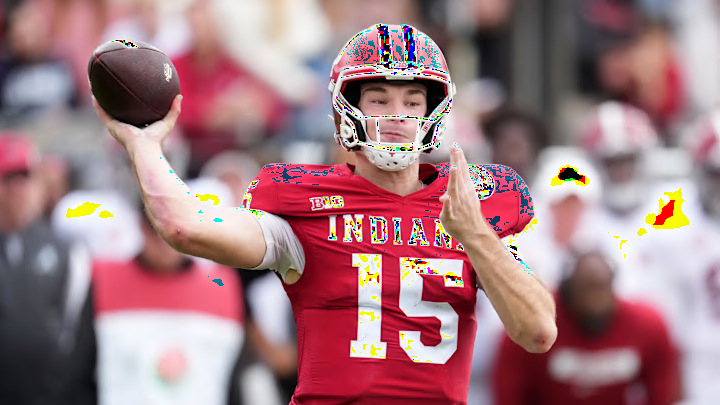
1. Las Vegas Raiders (3–14): Fernando Mendoza, QB, Indiana
The Raiders will be ushering in a new coaching staff after firing Pete Carroll on Monday, and they figure to start a new era under center, as well. Mendoza grew up a Patriots fan, idolizing Tom Brady. In Las Vegas, Mendoza would get to lean on Brady, a minority owner. The 6' 5", 225-pound Mendoza, who won the Heisman Trophy, is the draft’s best quarterback prospect. He’s intelligent, accurate, adept at reading coverage and mobile enough to extend plays with his legs.
2. New York Jets (3–14): Dante Moore, QB, Oregon
Justin Fields and Tyrod Taylor will both likely be off the Jets’ roster next season, and New York needs to overhaul its quarterback room. Moore is ultra-talented, blending arm talent, mobility and creativity outside structure. The redshirt sophomore showed impressive game poise this season, and he’s carried significant expectations throughout his career—a crucial box to check for a future New York signal-caller.
3. Arizona Cardinals (3–14): Francis Mauigoa, OT/G, Miami
Arizona’s quarterback situation promises to be interesting, as the Cardinals’ next coach will have to decide whether Kyler Murray is the solution for 2026. Regardless, Arizona needs to bolster its offensive line, with improvements needed at both guard and right tackle. Mauigoa can be the answer at either. The 6' 6", 315-pound Mauigoa is a road-paving run blocker and sturdy pass protector with a high floor, which lends itself favorably to making an immediate impact on the Cardinals’ line, no matter the position.
4. Tennessee Titans (3–14): Rueben Bain Jr., edge, Miami
The Titans need to give quarterback Cam Ward more help next season, but they should do the same for defensive tackle Jeffery Simmons. Apart from Simmons, no Tennessee defender collected more than five sacks in 2025. Bain is a ready-made difference-maker off the edge. The ACC Defensive Player of the Year uses his 6' 3", 275-pound frame and strong hands to win with power and discard blockers, and he has an expansive arsenal of pass-rush moves. He’s an impressive three-down player.
5. New York Giants (4–13): Caleb Downs, S, Ohio State
The direction New York takes in free agency will be telling, as it has significant questions about its receiving corps and must also improve a defense that finished No. 28 in total yards allowed and No. 26 in scoring. Downs may be the closest thing to a can’t-miss prospect in this class, with three years of tremendous film showing athleticism, instincts and versatility. He can win in the box, in coverage and in pursuit, and he’ll immediately elevate a Giants defense that already has an abundance of capital poured into its defensive line.
6. Cleveland Browns (5–12): Carnell Tate, WR, Ohio State
It’s fair to assume Kevin Stefanski’s successor as the Browns’ head coach will want a quarterback, but there’s none left on the board worth taking here. Tate is a strong place to start for a new coaching staff. An in-state product who starred this fall for the Buckeyes, the 6' 3", 195-pound Tate pairs long arms and reliable hands, giving him among the best ball skills in the draft. He’d be a good complement to the nuanced Jerry Jeudy.
7. Washington Commanders (5–12): Arvell Reese, LB, Ohio State
The Commanders ranked last in the NFL in total defense, allowing 384 yards per game, and were sixth-worst in scoring defense, allowing 26.5 points per game. They need to add a game-wrecker to their front seven, and Reese fits the bill. Though he was quiet in Ohio State’s back-to-back losses to end the season, the 6' 4", 243-pound Reese is explosive, violent and versatile, which should appeal to Commanders coach Dan Quinn.

8. New Orleans Saints (6–11): Jeremiyah Love, RB, Notre Dame
New Orleans has bigger needs than running back, starting on the interior offensive line, but aside from Mauigoa, this class lacks a guard or center worthy of a top-10 pick. The Saints could also opt for a receiver, but after finishing fifth-worst in rushing this season, they’d benefit from adding Love, the draft’s best offensive player. Love is explosive, has tremendous contact balance and is a legitimate threat as a receiver.
9. Kansas City Chiefs (6–11): David Bailey, edge, Texas Tech
The Chiefs could add an offensive weapon, especially if tight end Travis Kelce opts for retirement, but they should also prioritize bolstering their pass rush after notching 35 sacks, tied for the seventh-worst in the NFL. Bailey was the most disruptive pass rusher in college football this season. He has a quick first step, can win around the edge with bend and flexibility, and has the strength to win with power.
10. Cincinnati Bengals (6–11): Peter Woods, DT, Clemson
Cincinnati has the NFL’s worst run defense, second-worst total defense and third-worst scoring defense. The Bengals need help across the board, but especially on the interior defensive line, where the 6' 3", 315-pound Woods ranks as the draft’s best option. Woods didn’t produce at the level most expected in 2025, but he’s laterally quick and athletic, with an intriguing ceiling.
11. Miami Dolphins (7–10): Jordyn Tyson, WR, Arizona State
The Dolphins will have to find an answer at quarterback, whether that means choosing 2025 seventh-round pick Quinn Ewers or turning elsewhere. But, again, there’s no signal-caller worth taking this early after Mendoza and Moore. The next best alternative is elevating the supporting cast, which appears likely to lose Tyreek Hill this offseason. Tyson is a twitchy, fluid mover who’s the best separator in this class. He battled injuries this fall, but when healthy, he has a case as the draft’s top receiver.
12. Dallas Cowboys (7–9–1): Mansoor Delane, CB, LSU
Dallas had the NFL’s worst pass defense this season, allowing 251.5 yards per game while picking off only six passes. The Cowboys need to get more pressure on opposing quarterbacks, but they also must add playmakers in their secondary. Delane is a sticky cover corner who has high-level instincts, enabling him to make plays on the ball. He’s fluid, scheme versatile and competitive, which gives him a chance to start right away
13. Los Angeles Rams (from Falcons): Jermod McCoy, CB, Tennessee
The Rams will likely look for 37-year-old Matthew Stafford’s successor this offseason, but they can afford to wait until their own first-round pick down the board. Los Angeles surprisingly didn’t draft a cornerback in 2025, and the Rams’ secondary has been rocky at times this season. McCoy missed the entire season with a torn ACL sustained in January, but he’ll be healthy to start as a rookie, and his speed, fluidity and ball production—four interceptions in 2024—create an enticing profile.
14. Baltimore Ravens (8–9): Keldric Faulk, edge, Auburn
Baltimore had an abnormally subpar pass rush, ranking tied for third-worst in the NFL with 30 sacks. Though Faulk is still refining his technique and pass-rush arsenal, the 6' 6", 285-pounder has a quality combination of size, smarts and first-step quickness. He’s a heady, high-effort run defender with powerful hands, and he has the length and athleticism to become an effective pass rusher. Faulk was also a captain at Auburn as a true junior, and his toughness underlined his football character.
15. Tampa Bay Buccaneers (8–9): Sonny Styles, LB, Ohio State
The Buccaneers may lose 14-year veteran LaVonte David to retirement, and they’ll need to add young talent to the middle of their defense. Styles enjoyed a strong 2025 season, taking another step in his development during his second year at linebacker after transitioning from safety in the spring of 2024. Styles is physically and athletically gifted at 6' 5" and 243 pounds, and he’s advanced at taking on blocks for a player still new to the position.

16. New York Jets (from Colts): Makai Lemon, WR, USC
Garrett Wilson, who played only seven games this season due to injury, led the Jets in receiving yards with only 395. No New York pass catcher eclipsed 400 yards, an indictment more so on the quarterback play than anything, but a sign that the Jets must add pieces to their receiving corps. Lemon won the Biletnikoff Award after a brilliant season at USC, and the 5' 11", 195-pounder is a sudden, twitchy route runner with fantastic ball skills.
17. Detroit Lions (9–8): Spencer Fano, OT, Utah
Lions left tackle Taylor Decker is contemplating retirement, and while Detroit could—and still may—decide to move right tackle Penei Sewell back to the left side, where he played in college, there’s still a starting spot to fill on the offensive line. The 6' 6", 308-pound Fano has experience playing both tackle spots. He has quick feet to mirror speed rushers and handle counters, and he’s effective pulling and climbing as a run blocker.
18. Minnesota Vikings (9–8): Avieon Terrell, CB, Clemson
The Vikings will have to decide whether to charge forward with J.J. McCarthy as their quarterback or look elsewhere, and they need to add depth along their offensive and defensive lines. But they should also address cornerback, and Terrell has proven to be a reliable, competitive option, having started 31 games in three years at Clemson. At 5' 11" and 180 pounds, Terrell has fluid hips and advanced route anticipation. He’s also physical and willing to mix it up in run support.
More NFL on Sports Illustrated
 Add us as a preferred source on Google
Daniel Flick covers the NFL draft for Sports Illustrated and Indiana University athletics for OnSI. Proudly a former Indiana Daily Student writer and sports editor, Flick also has boots-on-the-ground experience covering the Atlanta Falcons for OnSI.
Follow ByDanielFlick