%20%20--%3E%0A%3Csvg%20version%3D%221.1%22%20id%3D%22Layer_1%22%20xmlns%3D%22http%3A%2F%2Fwww.w3.org%2F2000%2Fsvg%22%20xmlns%3Axlink%3D%22http%3A%2F%2Fwww.w3.org%2F1999%2Fxlink%22%20x%3D%220px%22%20y%3D%220px%22%0A%09%20width%3D%2239px%22%20height%3D%2240px%22%20viewBox%3D%220%200%2039%2040%22%20enable-background%3D%22new%200%200%2039%2040%22%20xml%3Aspace%3D%22preserve%22%3E%0A%3Cpath%20fill%3D%22%23FFFFFF%22%20d%3D%22M38.5%2C7H28.2v26h10.3V7z%22%2F%3E%0A%3Cpath%20fill-rule%3D%22evenodd%22%20clip-rule%3D%22evenodd%22%20fill%3D%22%23FFFFFF%22%20d%3D%22M26.1%2C25.5c0%2C5.8-4.1%2C7.5-12.9%2C7.5C3.9%2C33%2C0%2C31.2%2C0%2C25.2v-1.1h11.6%0A%09v2.4c0%2C0.7%2C0.1%2C1.4%2C1.2%2C1.4c1%2C0%2C1.2-0.4%2C1.2-1.3v-0.9c0-1.6-0.9-1.6-3.5-2.2C2.2%2C21.7%2C0%2C19.7%2C0%2C15.3v-0.9C0%2C9.3%2C5.5%2C7%2C12.9%2C7%0A%09c10.2%2C0%2C12.8%2C2.6%2C12.8%2C7.4v1.8h-11v-2.9c0-0.6-0.4-1.1-1.2-1.1c-0.6%2C0-1.2%2C0.4-1.2%2C1.1v0.9c0%2C1.5%2C0.9%2C2%2C3.3%2C2.5%0A%09c8%2C1.6%2C10.5%2C3.3%2C10.5%2C7.5V25.5z%22%2F%3E%0A%3C%2Fsvg%3E%0A)

00:17:50 |
Up Next
March Madness Fans Go Wild in San Diego | College Road Trip
Mar 23, 2026
Cinderella Is Officially Dead; Sweet 16 Is Loaded | Others Receiving Votes
Mar 23, 2026
Aspiration Scandal Is Top of Mind at Governors Meeting
Mar 24, 2026
We Compare Jeremiyah Love to Other First-Round RBs
Mar 23, 2026
KAT Puts Up Huge Numbers but Still Faces Criticism
Mar 24, 2026
March Madness Fans Go Wild in San Diego | College Road Trip
Mar 23, 2026
Cinderella Is Officially Dead; Sweet 16 Is Loaded | Others Receiving Votes
Mar 23, 2026
Aspiration Scandal Is Top of Mind at Governors Meeting
Mar 24, 2026
We Compare Jeremiyah Love to Other First-Round RBs
Mar 23, 2026
KAT Puts Up Huge Numbers but Still Faces Criticism
Mar 24, 2026
Is Fernando Mendoza the Best Option at Number One?
Mar 23, 2026
The Lakers Could Really Win it All
Mar 24, 2026
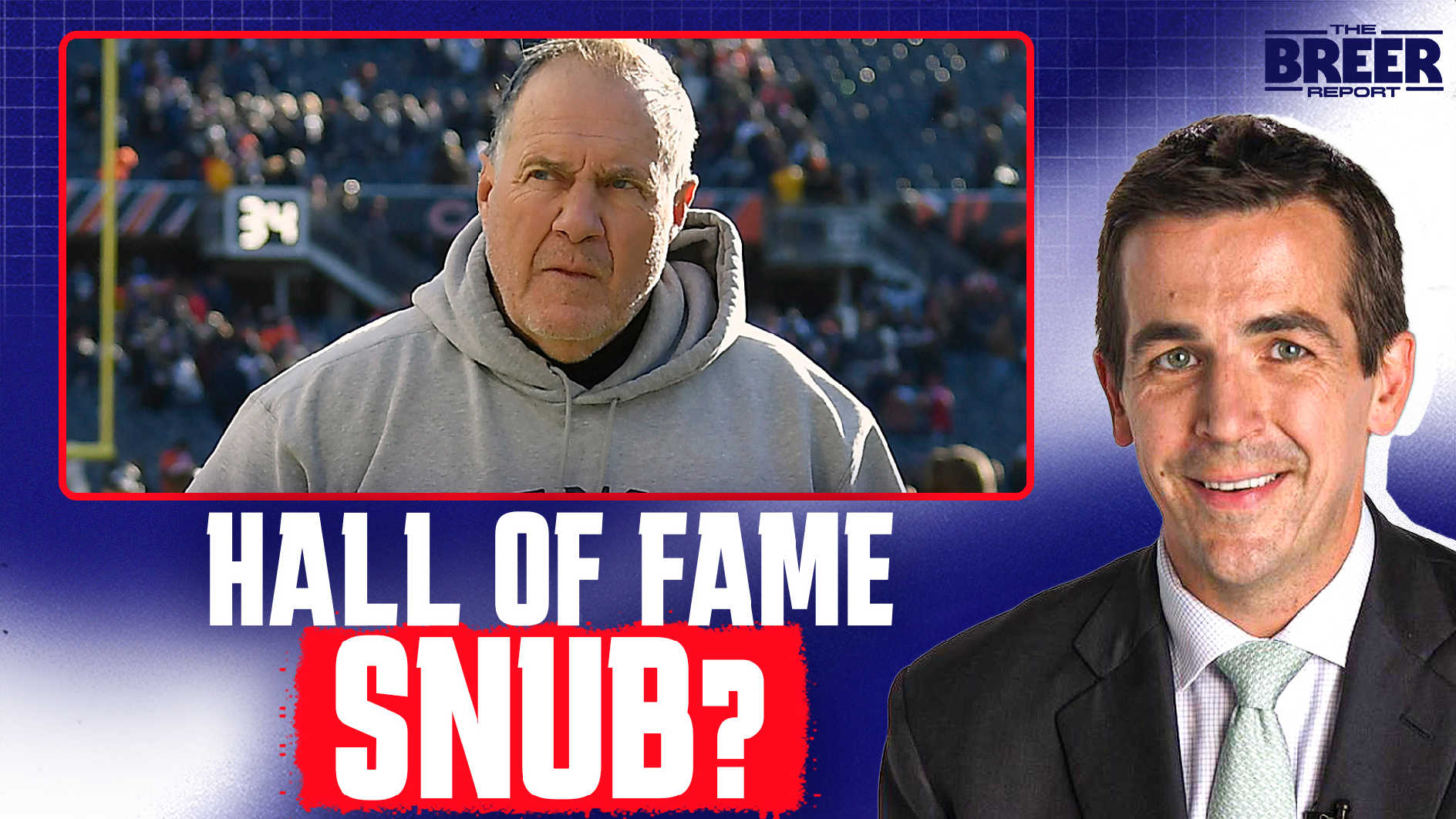
Albert Breer on Belichick’s HOF Snub, Rodgers’ Future, Eagles OC Job
Jan 28, 2026
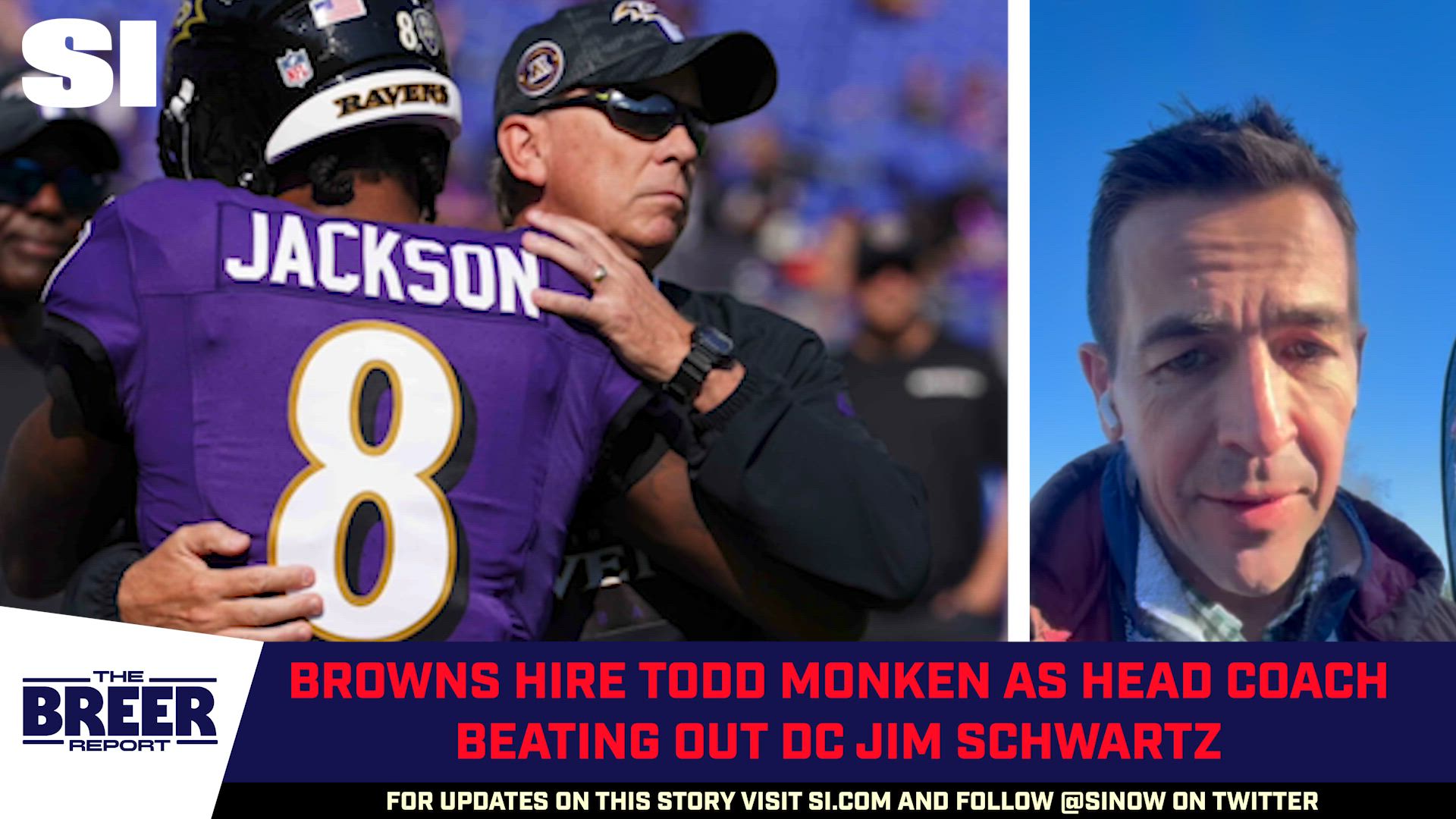
Browns Hire Todd Monken as Head Coach, Beating Out Jim Schwartz
Jan 28, 2026
What’s Next in Golf: SI Golf’s Highlights from the 2026 PGA Show
Jan 27, 2026
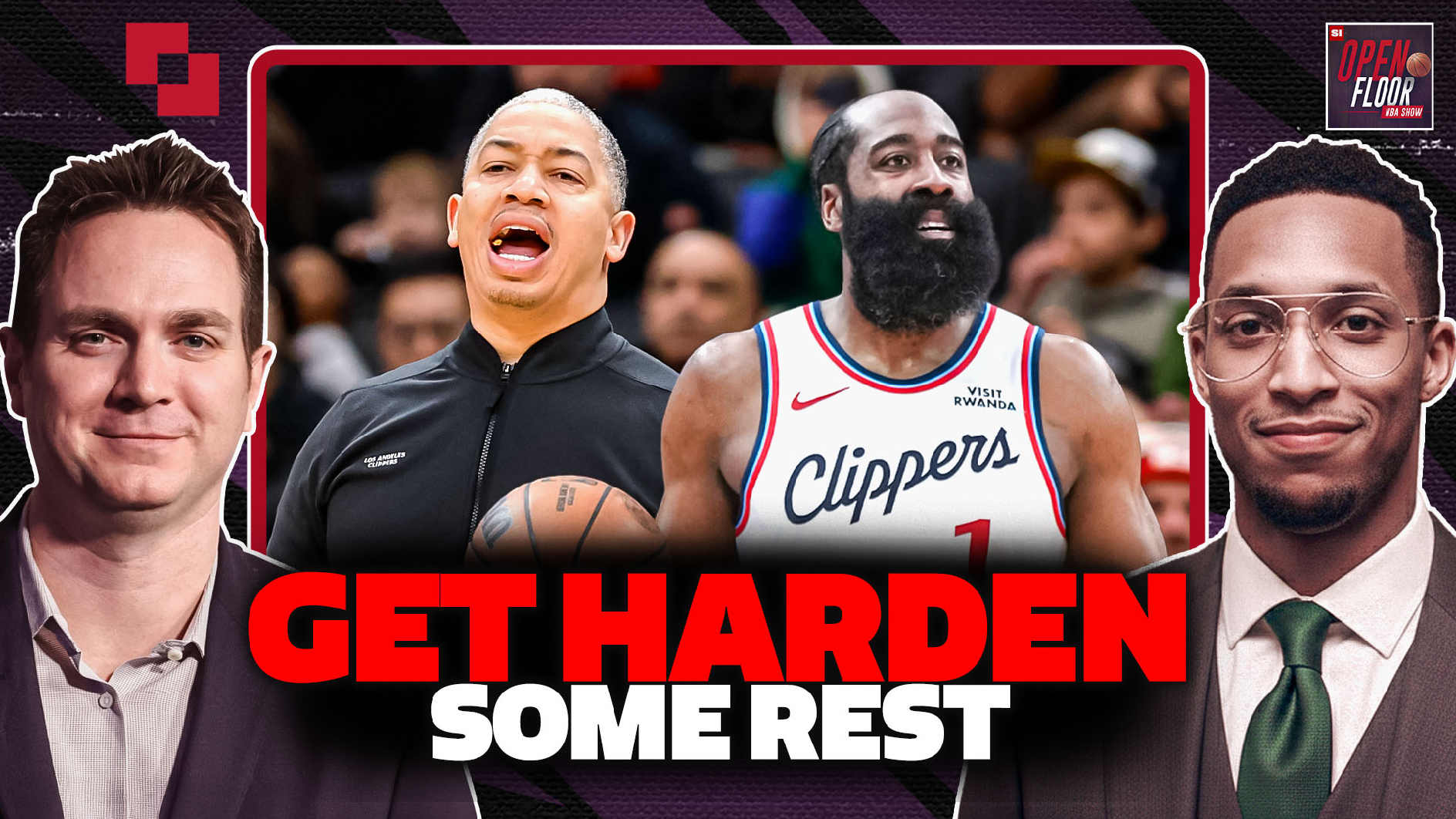
James Harden Can't Gas Out Before the Playoffs
Jan 28, 2026
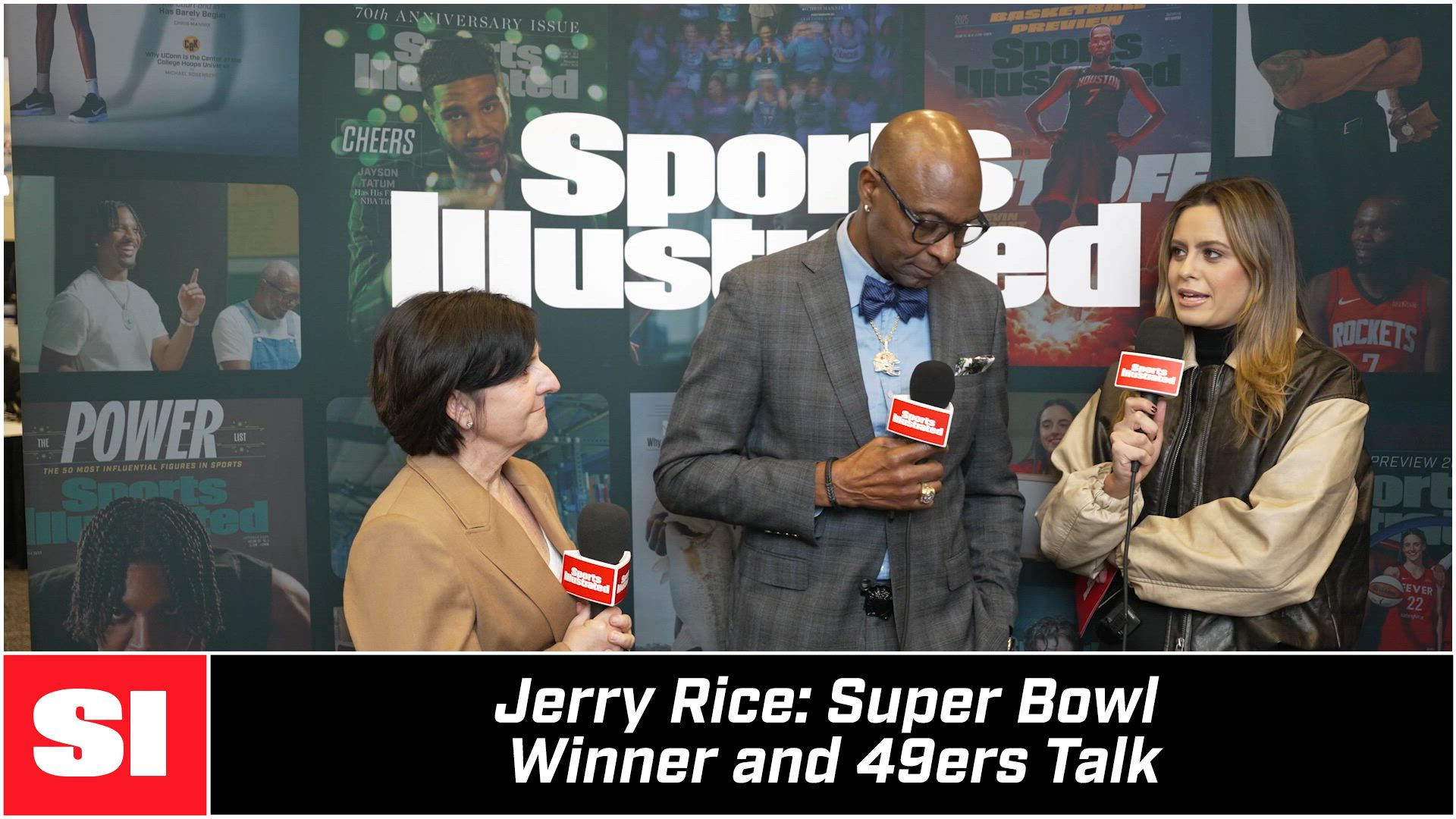
Jerry Rice: 'Darnold and JSN Remind Me of Montana and Me'
Feb 5, 2026
Transcript
I have as much respect for as anybody.
All right.
Welcome in to the Brewer Report for March 25th.
We are days away from the start of the big owners meeting, um, the annual meeting in Phoenix.
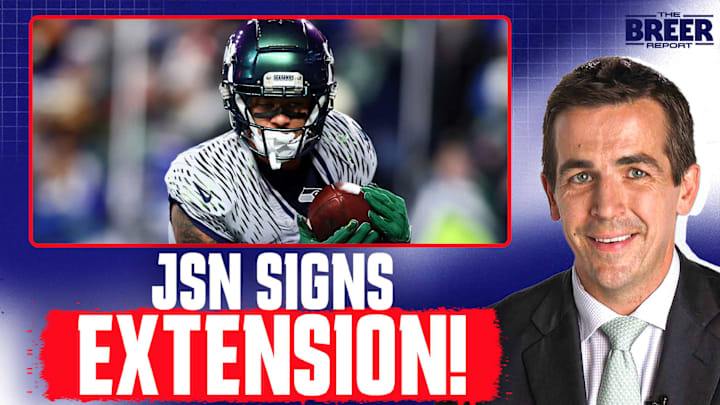
We will be there on the ground for that, but ahead of that, there's plenty to get to today to recap the last few days, and our first topic is going to be the monster contract extension that the Seattle Seahawks did with their star receiver and the Offensive Player of the Year.
Jackson Smith Njigba, who was one of the very best players in football at any position in 2025, of course, now, also a world champion.
So the nuts and bolts of the deal, as it was initially reported, $168 million over four years on the extension.
And so, a couple of things here that people need to understand, just from a team perspective, why it made sense for the Seahawks to do this right now.
Yes, $42.
5 million in new money is a record for receivers.
And so JSN becomes the highest-paid receiver in the history of football.
So, why go this far this early?
He just became eligible for a new contract.
Well, I think explaining that explains why the Seahawks were so aggressive in trying to get a deal done early at a time when the salary cap is rising year over year at an incredible pace.
So, there were two years left on his contract.
And I think too many people look at these deals and say, well, the extension doesn't kick in until 2028.
Well, that isn't really how NFL extensions work because they aren't really extensions.
Basically, you're taking the two existing years of a deal in a case like this and folding them into the bigger contract.
And so, the leverage for the team here is that we still have you under contract for the next two years, so you're gonna include those numbers in whatever contract we negotiate.
So, yes, it's $168.
6 million in new money on 4 new years on a contract that'll run through the 2031 season.
But uh from a practic as a practical matter, this contract is actually a six-year, $195.
2 million dollar deal.
That comes to a total average per year um of $32.
5 million.
And so there's a benefit for the team in doing it this way because not only is the market gonna rise for receivers over the coming years as it has the last few years, and we've seen The way it's jumped, right?
And going from the high 20s to Justin Jefferson getting $35 million per year.
Then a year later, Ja'Marr Chase getting over $40 million per year.
This pace is not gonna slow.
It, the, the, the market is going to keep jumping.
And so, Jackson Smith Njigba is able to take advantage of that.
But the Seahawks also have some benefit here in that they're doing this deal two years early rather than a year early, which is what Chase and Jefferson are doing.
Um, gives them the extra year to fold into the deal and lower the average per year, so they're managing it now over a six-year period.
So if they had waited another year, and this is just an example to use for you, let's say that that number instead of $42.
5 million was now $46 million which is certainly possible with all the other contracts that could get done between now and next year.
Well, now, you'd be talking about only having one year to fold into the deal.
And so, I crunched the numbers here, and if you take the fifth-year option, and you add a 4-year deal at $46 million per year into the equation, Then you're managing a, a, a, a, a, an average per year of $41.
5 million.
So, By doing this a year early, the Seahawks may have actually saved themselves against the salary cap now, around $9 million per year.
And that's gonna allow them to continue to take care of guys internally.
Devin Witherspoon is one that's gonna be up and uh is now eligible for a deal, same draft class, of course, as Jackson Smith and Jig, but you have other guys in that roster.
That in the coming years are going to fall into this category.
They already took care of, of Charles Cross.
Byron Murphy is a name, of course, that we're gonna be looking at going forward.
If you wanna look further down the line, you know, guys like Nick Eman Warri are, are, are gonna be names that they're gonna have to take care of.
So, um, taking care of this early doesn't only save you money on Jackson Smith and Jig, but it also gives you added flexibility.
To continue to build your roster and keep and, and, and retain your roster, um, the way you put it together initially.
Now, as for Jackson Smith and Jigba, this essentially is, and I'm looking at the numbers here.
If you look at the full guarantee, you get $69.
13 million over the next two years .
Well, those two years, Those two years, he was already under contract for, so he's essentially getting a raise of $42.
5 million over the next two years.
So if he had played out the next two years, taking on all that injury risk, he would have made $42.
5 million less than he will now.
That's money that's gonna go into his pocket and be in his pocket now.
He's also getting almost $90 million over the 1st 3 years of this deal, which is a record when you're talking about the amount of money he gets on top of what he had been.
Um, owed, um, or would have made, um, you know, and, and, and, and you look at that number, that's $62.
5 million in new money through the first new year.
That's a half million dollars better than Micah Parsons did on his deal, which was a market mover last year.
In Green Bay.
Um, there's also something to be said for mitigating the injury risk and taking the injury risk off the player and putting it on the team.
And so that's the benefit here.
And if you look at some of the big deals done recently, Justin Jefferson was done as he was going into his 5th-year option.
Ja'Marr Chase was, was done as he was going into his 5th-year option.
Micah Parsons was done as he was going into his 5th-year option year, a whole year early, a whole year later than JSN's deal.
And even Aiden Hutchinson, who did a monster deal, really good deal at $45 million per year with the Lions, he was well into his 4th year.
So, getting that, getting it done early, mitigating the injury risk, pushing the injury risk from the player to the team is a benefit here for sure.
Cash flow is really strong.
So I really look at this.
As a win-win and something that, you know, creates a good partnership between a player who's done everything right over the 1st 3 years of his career on the team, and it sets an example too for everybody else in that building that if you do all the right things, and JSN has done all the right things, that we will reward you.
So, you know, I'd expect Devin Witherspoon to make an effort to get him done.
And now, you know, the Byron Murphy's of the world, the, the, the Nicky Min Warriors of the world can look at what the Seahawks are doing and say, yeah, when it comes to, when, when, when, when, when my time comes, the, the team is gonna take care of me as well.
So, good business by the Seahawks, good business by JSN, uh, not a whole lot else to it.
The Offensive Player of the Year at a premium position is on your roster, you're probably going to extend him and the Seahawks have.
Our second topic, and I wanna Give proper respect here to one of the guys who uh I have as much respect for as anybody, you know, um, in my 20 plus years covering the NFL and that's Lavonte David, who has done so many things right over the course of his career.
And we can go through some of the accolades.
Uh, he's a twelve-time captain, 1 fourteen-year career, twelve-time captain, that's pretty amazing.
Uh, in 11 of his 14 years in Tampa, he was the team's leading tackler.
Just an incredible tribute to his durability, his reliability, a guy who answers the bell at all times.
He played under 5 different head coaches in Tampa, Greg Schiano, Lovevie Smith, Dirk Cutter, Bruce Arians, Todd Bowles.
So that's different systems, adapting, changing.
He was able to do that.
Um, and then to me, maybe the most incredible thing about him and being a one-team guy is what he went through to get there.
It is difficult for any player who plays that long in the NFL to do it all with one team.
I think what's really remarkable about Lavonte David though, is how he stayed in one place and stuck with it through some really lean years.
And so, over his first eight seasons in the NFL from 2012 to 2019.
Zero playoff appearances.
He went through the firing of Greg Schiano, he went through the firing of Lovevie Smith, he went through the firing of Dirk Cutter, and he continued to be a standard bearer for that entire program as Jason Light, the general manager there, um, since 2000.
And 14, um.
As he built the roster up and was a bellwether there as a guy that they could count on that would be reliable for them.
And most guys, I think in, in, in, in Lavonte David's position.
Probably would have wavered or would have wanted to go somewhere else, or can I find a way out of here, and he stuck with it.
And so he became the guy who was kind of the counterpoint to Tom Brady when Tom Brady came in in 2020.
And that you had Tom Brady who was coming in and helping to establish a new standard for the Buccaneers, and you had the old standard bearer there as a guy who had helped the Buccaneers develop a lot of young players.
And in developing that young core of talent attracts somebody like Tom Brady there in the first place.
So, um, we know what's happened in the sixth seasons since.
The Buccaneers have been to the playoffs 5 times, won 4 division titles, and of course, Brady and Lavonte David were there for the championship in 2020.
And to me, if you want to know exactly what Lavonte David means to that organization, it's sitting there in the team's draft room.
Um, and I'll take you inside the draft room in there, there is a silhouette of a Buccaneers player, um, and a saying across the top of it, it says, I am that man.
And underneath, um, I am that man, there are 5 qualities listed, accountable, competitive, confident, passionate, resilient.
And for years, that was up there and no one knew who the silhouette was of.
It was actually a silhouette of Lavonte David.
And even Lavonte David didn't know that until a few years ago, and he got emotional when they told him, no, that's you up there, that's silhouette there, that's a silhouette of you.
And so I think it, it says a lot for Lavonte David, what the organization means to him, that he would get emotional knowing that, that he was that sort of, that, that sort of pacesetter for everybody else in the organization.
And it also says a lot, you know, for, for, for, for Lavonte David, that he was the example of what they look for in players.
Forget about like the individual qualities you might want on a receiver, or running back, or a quarterback or a corner, whoever it is.
When you're talking about the non-negotiables, the, the, the stuff that they were looking for in every single player that they went and drafted, Lavonte David was the example.
And that was a guy that that regime, that scouting department led by Jason Light, was a player they inherited.
It wasn't even somebody they drafted.
Lavonte David was actually drafted by Mark Dominic and Greg Schiano in 2012.
So, again, just an incredible career, glad that he gets to go out on his own terms.
You don't often see that.
Glad that he gets to go out being a one-team guy, you know, and certainly somebody who's gonna have his name up.
In Raymond James Stadium before too long.
OK, finally, our third topic, and this is gonna get into what's happening next week, uh, at the Arizona Biltmore, the NFL's annual meeting, as you guys already know, that's where so many of the rules proposals get voted on and, uh, and discussed.
And so, um, you know, just to kick you guys through it really quick, um, 3 of the 5 rules proposals as far as playing rules go are involving the dynamic kickoff.
I don't think we need to waste any time on that.
This is stuff to clean up, um, the way the kickoff is administrated.
One of them that is, that's notable is that you will be able to Um, go get an onside kick, go, go for an onside kick, you have to declare it, of course, but at any time in the game rather than, than just at the end of the game, um, there's gonna be more, more oversight, um, from, there's gonna be more oversight from New York, um, on top of those three rules, um, on personal fouls, um, and those major penalties.
I think we can agree on that, that's a good thing.
Um, so that'd be the 4th rule change, and then the 5th rule change.
This one's an interesting one to me.
And I'll read the language here.
It's for 1 year only to allow the NFL officiating department to correct clear and obvious misses made by on-field officials that impact the game in the event.
That there is a work stoppage involving the game officials represented by the NFL Referees Association.
Essentially, what the NFL is voting to do here is give itself leverage in the negotiations against the NFLRA.
And if you want to know why they're doing this, all you gotta do is rewind the 2012 and what an abject disaster the ref lockout was that year.
And how embarrassing that was for everyone in football.
And basically what the NFL is saying to everyone, and the NFL did reach out to Division 2 and 3 officials.
The big conference officials, the SEC officials, the Big 10 officials aren't gonna be made available to them.
So they reach out to the Division 2 and Division 3 college officials, um, as they did, um, all those years ago.
They're basically Conceding, it could be embarrassing if we have to lock them out, but we're setting ourselves up to lock them out and just administrate the games from New York.
And so, this would seemingly give them leverage in the negotiations against the NFLRA.
I'm sure that's not gonna go over great with the NFLRA, but I think it does give you an idea of how they're preparing for What could be, again, a pretty embarrassing situation.
One of the rules change that I would want to hit on too before we get out of here, the Browns' proposal that uh you are, you, you could be able to trade draft picks.
Um, within a 5-year period.
The limit right now is within a 3-year period.
And to compare how, compare this to other sports, um, in the NBA you can trade picks as far as 7 years out, but you have to have a first-round pick every other year, which limits your ability to move them.
Teams have found loopholes and, and ways around that and working out pick swaps and those sorts of things.
Um, in Major League Baseball, you can't trade draft picks, period, which is why you see prospects traded.
In baseball, um, so often, and then in hockey, there's no limit on any of it.
Uh, the reason that the three-year limit is in there is because the NFL's interest is in having every team be as competitive as possible, um, on a year to year basis.
Why the trade deadline had been earlier in the calendar before it got pushed back.
That, of course, was the Browns proposal that went through as well, uh, because they don't want teams stripping down their rosters, so at the end of the year.
You have bad teams going out there and, you know, those pieces of real estate, those games late in the season become less valuable pieces of real estate to sell to the TV networks.
Um, you know, and, and in this case, um, what you'd be trying to prevent is a coach or a general manager who is in the hot seat, selling the farm to try to save himself.
Maybe you have an absentee owner who isn't, you know, quite hands-on with everything and allows this sort of thing to happen.
Um, and then that sort of effort doesn't work and now you have a team that's, that's really stripped down and in a bad position and has a hard time competing.
And, you know, again, makes certain NFL games less valuable as, as, as pieces of real estate.
So, I think the Browns' point here is that there should be more flexibility, more flexibility will lead to more player movement, which is good for the league.
I would agree with that.
And what they're asking the league to do and the other owners to do is essentially put the responsibility for this, not in the league's hands, but in the player, but, but, but, but in the team's hands.
So the teams have to be responsible for themselves in these situations , instead of the league creating guardrails that prevent them from tearing themselves apart.
Um , so we'll see what happens.
I don't think the NFL is in a position right now where, uh, they're going to, I, I don't think the NFL, the expectation is the NFL is gonna pass this next week.
When the Browns were looking at this, much like the way they looked at their trade deadline proposal a couple of years ago, they want the discussion to start now.
So maybe in the next year or two, we see some change to those rules, which would, of course, change the way that the NFL and the NFL teams can, can, can do business.
And I do think the Browns are right that it would lead to a little bit more player.
Movement.
Appreciate you guys coming out.
As always, you can leave your comments down below here on the YouTube page or you can get to me on my social media at Albert Breer on Twitter, at Albert R Breer on Facebook, at Albert_Breer on Instagram.
We will have a mailbag edition coming for you Thursday.
Appreciate you guys coming out.
Send in your questions now, and we'll get them, get to them tomorrow.