%20%20--%3E%0A%3Csvg%20version%3D%221.1%22%20id%3D%22Layer_1%22%20xmlns%3D%22http%3A%2F%2Fwww.w3.org%2F2000%2Fsvg%22%20xmlns%3Axlink%3D%22http%3A%2F%2Fwww.w3.org%2F1999%2Fxlink%22%20x%3D%220px%22%20y%3D%220px%22%0A%09%20width%3D%2239px%22%20height%3D%2240px%22%20viewBox%3D%220%200%2039%2040%22%20enable-background%3D%22new%200%200%2039%2040%22%20xml%3Aspace%3D%22preserve%22%3E%0A%3Cpath%20fill%3D%22%23FFFFFF%22%20d%3D%22M38.5%2C7H28.2v26h10.3V7z%22%2F%3E%0A%3Cpath%20fill-rule%3D%22evenodd%22%20clip-rule%3D%22evenodd%22%20fill%3D%22%23FFFFFF%22%20d%3D%22M26.1%2C25.5c0%2C5.8-4.1%2C7.5-12.9%2C7.5C3.9%2C33%2C0%2C31.2%2C0%2C25.2v-1.1h11.6%0A%09v2.4c0%2C0.7%2C0.1%2C1.4%2C1.2%2C1.4c1%2C0%2C1.2-0.4%2C1.2-1.3v-0.9c0-1.6-0.9-1.6-3.5-2.2C2.2%2C21.7%2C0%2C19.7%2C0%2C15.3v-0.9C0%2C9.3%2C5.5%2C7%2C12.9%2C7%0A%09c10.2%2C0%2C12.8%2C2.6%2C12.8%2C7.4v1.8h-11v-2.9c0-0.6-0.4-1.1-1.2-1.1c-0.6%2C0-1.2%2C0.4-1.2%2C1.1v0.9c0%2C1.5%2C0.9%2C2%2C3.3%2C2.5%0A%09c8%2C1.6%2C10.5%2C3.3%2C10.5%2C7.5V25.5z%22%2F%3E%0A%3C%2Fsvg%3E%0A)
Let Canada have the Coyotes

Long ago, late one evening in 1966, I was in a suite at the Royal York Hotel in Toronto with some folks from the National Hockey League. They were all feeling pretty heady. The league was about to double in size, with an incursion into the United States that would take Canada's game as far south as Los Angeles. Since the NHL had long been a huge success in its six franchise cities, all of which were all clustered pretty close to both sides of the Canadian border, everybody was certain that great times lay ahead in the expansion outposts. Also, optomism was fueled by a bottle of good Canadian whiskey.
When the last drop was consumed, someone tossed it onto the floor. "Dead soldier," he said. An old coach pointed at the empty bottle and laughed. "That'll be the National Basketball Association after we start next year." And everybody raised their glasses, confidently.
Of course, it didn't work out quite that way. Within a few short years, Jack Kent Cooke, the Canadian expatriate owner of the Los Angeles franchise, would moan: "They told me there were three hundred thousand Canadians who'd moved to Southern California. How was I to know that they were the three hundred thousand Canadians who didn't like hockey?"
What the NHL found out way back then is that it's hard to export a sport to any place where most residents are unfamiliar with the game. Hockey? The NHL has even tried to move into territory unfamiliar with ice. But the league has pressed on, forever sprinkling franchises into places like Miami and Nashville and Raleigh in a vain effort to be a fully national American television sport. It doesn't ever seem to do any good. NHL ratings are traditionally woeful, especially down south. By contrast, nobody has been dumb enough to try and force grits on the good citizens of Saskatchewan or Nova Scotia.
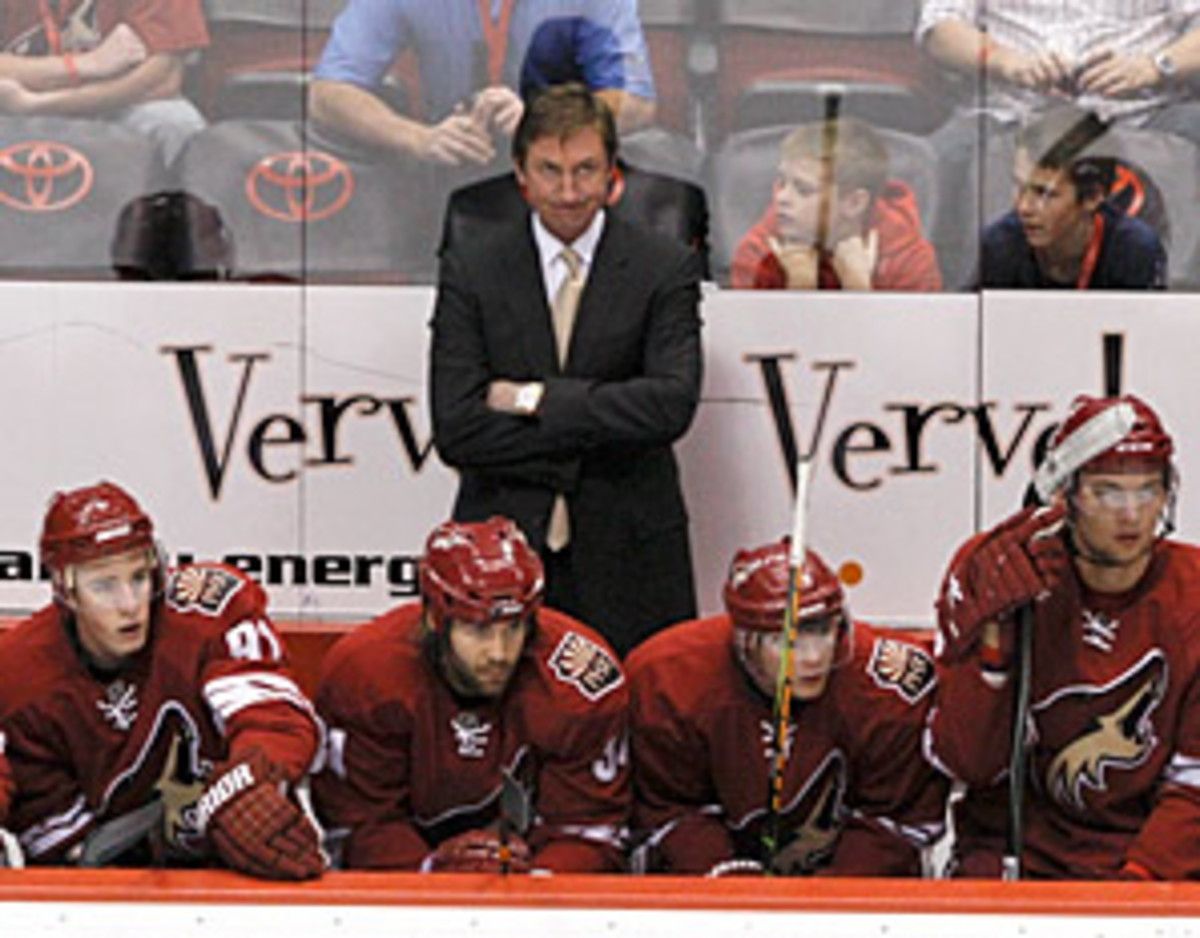
The Phoenix Coyotes, largely unnoticed by the inhabitants of Arizona, have gone bankrupt. A wealthy Canadian wants to pay almost a quarter of a billion dollars to buy a franchise that is worthless in the desert and move it to Hamilton, Ontario, where it would be positively adored. You would think the NHL would embrace this sports philanthropist with tears of joy. But no, the NHL is fighting in bankrupcy court, desperately, to hold onto the Coyotes. If they can't make it in Phoenix, then inflict them on Kansas City or Las Vegas, where there is also no evidence that the populace cares about hockey. Just keep them in the United States, so the NHL might get a tick more in the Nielsen ratings.
What a shame.
Look, it's no insult for a sport not to be appreciated everywhere. Pride and television are no match for love and cheers, and hockey is too good a game to be held up to ridicule just because its vainglorious patrons' reach exceeds their grasp. The NHL should render unto Canada what is Canada's and let the Coyotes go back up north to where hockey is understood and the team is wanted.
 Add us as a preferred source on Google
Frank Deford is among the most versatile of American writers. His work has appeared in virtually every medium, including print, where he has written eloquently for Sports Illustrated since 1962. Deford is currently the magazine's Senior Contributing Writer and contributes a weekly column to SI.com. Deford can be heard as a commentator each week on Morning Edition. On television he is a regular correspondent on the HBO show Real Sports With Bryant Gumbel. He is the author of 15 books, and his latest,The Enitled, a novel about celebrity, sex and baseball, was published in 2007 to exceptional reviews. He and Red Smith are the only writers with multiple features in The Best American Sports Writing of the Century. Editor David Halberstam selected Deford's 1981 Sports Illustrated profile on Bobby Knight (The Rabbit Hunter) and his 1985 SI profile of boxer Billy Conn (The Boxer and the Blonde) for that prestigious anthology. For Deford the comparison is meaningful. "Red Smith was the finest columnist, and I mean not just sports columnist," Deford told Powell's Books in 2007. "I've always said that Red is like Vermeer, with those tiny, priceless pieces. Five hundred words, perfectly chosen, crafted. Best literary columnist, in any newspaper, that I've ever seen." Deford was elected to the National Association of Sportscasters and Sportswriters Hall of Fame. Six times at Sports Illustrated Deford was voted by his peers as U.S. Sportswriter of The Year. The American Journalism Review has likewise cited him as the nation's finest sportswriter, and twice he was voted Magazine Writer of The Year by the Washington Journalism Review. Deford has also been presented with the National Magazine Award for profiles; a Christopher Award; and journalism honor awards from the University of Missouri and Northeastern University; and he has received many honorary degrees. The Sporting News has described Deford as "the most influential sports voice among members of the print media," and the magazine GQ has called him, simply, "The world's greatest sportswriter." In broadcast, Deford has won a Cable Ace award, an Emmy and a George Foster Peabody Award for his television work. In 2005 ESPN presented a television biography of Deford's life and work, You Write Better Than You Play. Deford has spoken at well over a hundred colleges, as well as at forums, conventions and on cruise ships around the world. He served as the editor-in-chief of The National Sports Daily in its brief but celebrated existence. Deford also wrote Sports Illustrated's first Point After column, in 1986. Two of Deford's books, the novel, Everybody's All-American, and Alex: The Life Of A Child, his memoir about his daughter who died of cystic fibrosis, have been made into movies. Two of his original screenplays have also been filmed. For 16 years Deford served as national chairman of the Cystic Fibrosis Foundation, and he remains chairman emeritus. He resides in Westport, CT, with his wife, Carol. They have two grown children – a son, Christian, and a daughter, Scarlet. A native of Baltimore, Deford is a graduate of Princeton University, where he has taught American Studies.