%20%20--%3E%0A%3Csvg%20version%3D%221.1%22%20id%3D%22Layer_1%22%20xmlns%3D%22http%3A%2F%2Fwww.w3.org%2F2000%2Fsvg%22%20xmlns%3Axlink%3D%22http%3A%2F%2Fwww.w3.org%2F1999%2Fxlink%22%20x%3D%220px%22%20y%3D%220px%22%0A%09%20width%3D%2239px%22%20height%3D%2240px%22%20viewBox%3D%220%200%2039%2040%22%20enable-background%3D%22new%200%200%2039%2040%22%20xml%3Aspace%3D%22preserve%22%3E%0A%3Cpath%20fill%3D%22%23FFFFFF%22%20d%3D%22M38.5%2C7H28.2v26h10.3V7z%22%2F%3E%0A%3Cpath%20fill-rule%3D%22evenodd%22%20clip-rule%3D%22evenodd%22%20fill%3D%22%23FFFFFF%22%20d%3D%22M26.1%2C25.5c0%2C5.8-4.1%2C7.5-12.9%2C7.5C3.9%2C33%2C0%2C31.2%2C0%2C25.2v-1.1h11.6%0A%09v2.4c0%2C0.7%2C0.1%2C1.4%2C1.2%2C1.4c1%2C0%2C1.2-0.4%2C1.2-1.3v-0.9c0-1.6-0.9-1.6-3.5-2.2C2.2%2C21.7%2C0%2C19.7%2C0%2C15.3v-0.9C0%2C9.3%2C5.5%2C7%2C12.9%2C7%0A%09c10.2%2C0%2C12.8%2C2.6%2C12.8%2C7.4v1.8h-11v-2.9c0-0.6-0.4-1.1-1.2-1.1c-0.6%2C0-1.2%2C0.4-1.2%2C1.1v0.9c0%2C1.5%2C0.9%2C2%2C3.3%2C2.5%0A%09c8%2C1.6%2C10.5%2C3.3%2C10.5%2C7.5V25.5z%22%2F%3E%0A%3C%2Fsvg%3E%0A)
‘Heated Rivalry’ Is Bringing Fans to Hockey. But Do NHL Barns Live Up to the Cottage?
Sometimes, a film or TV show can launch a neologism into the popular culture that sticks.
Like the term “friend zone,” meaning a dynamic that’s been sidelined into platonic territory. The phrase is thought to have come from a 1994 episode of, fittingly, Friends. Or “shipping,” a modification of the word “relationship,” which refers to fans’ wishful thinking around two subjects getting together. “Shipping” emerged from The X-Files in the 1990s, when viewers hoped Scully and Mulder would become amorous (it happened, but not until the seventh season). Late 2025 and into ’26 might have brought another into the lexicon: “the cottage.” It’s the most repeated sound bite from the breakout book and streaming series Heated Rivalry, a fictional story about professional male hockey players falling in love with one another. Essentially, “the cottage” connotes a safe (though removed) space where said men can enjoy each other’s company without fear of teammates, fans, cameras and rumors—which is exactly what Heated Rivalry’s main characters, Shane Hollander (played by Hudson Williams) and Ilya Rozanov (Connor Storrie), do in a moment of summertime catharsis at the former’s lakeside pad.

In the zeitgeist, Heated Rivalry is massive—celebrated, memed and discussed at length across medias traditional and social. It’s even bringing fans to the game just in time for NHL players to make their long-awaited return to the Olympics. But when it comes to the real-world evolution of LGBTQ+ acceptance in men’s hockey, the show has raised a harder-edged question. “The cottage” is all well and good … but has it prompted any change within the NHL?
Or, simply: How is this all playing out at the barn?
Slow Burn, Turned Fast
It’s been almost three months since the show dropped, but the sensation is well over half a decade in the making. Heated Rivalry’s origins began with author Rachel Reid, who released her novel in 2019 (it is the second book in her Game Changers series, which follows Shane and Ilya through their relationship). Her stand-in for the NHL is called the “MLH;” her central teams are the Boston “Raiders” and the Montreal “Metros.” The book fits into a popular subcategory of romantic fiction anchored to and around sports, and Reid has been a hockey lover since she was a kid—though she’s had a fraught relationship with the fandom of the sport, citing, in particular, hesitation due to Hockey Canada’s yearslong sexual assault scandal.
“It wasn’t that I wanted to write a romance novel so I decided to frame it around hockey. It was that I wanted to write about hockey, and I decided to make it a romance novel,” Reid said over a Zoom call from Toronto (she was there in mid-January for press appearances and a writing retreat; Reid resides outside of Halifax, Nova Scotia). “And, you know, I’ve read other fantastic sports romance novels about baseball, basketball, football, but I do think hockey is an extremely important part [of why this story took off.] Men’s hockey culture is a … very unique thing.” Namely: Among American pro sports leagues, the NHL is cited as having the fewest publicly LGBTQ+ identifying athletes in its history.
The book features plenty of explicit and clandestine sex, which turns to love, between her main characters; to many, the forbidden fruit of Heated Rivalry is its initial pull.
Heated Rivalry, the show, which was adapted by the writer and director Jacob Tierney, premiered on Nov. 28, 2025 in both the United States and Canada. Tierney had approached Reid about it around two years prior. HBO Max purchased the distribution rights from the Canadian streamer Crave, which produced it, only nine days before its air date. Hype had spread on social media and amongst the book and genre’s audiences, but, for a majority of consumers, the juggernaut arrived ostensibly out of the blue.

Data published across multiple sources over the past few weeks indicates that Heated Rivalry now averages around 10.6 million American viewers per episode, and that 15% of viewers on Crave have watched the series five times or more (I’m a fan, but this feels excessive). On StubHub, tickets to hockey games have surged 40%. A second season of the show was quickly greenlit. Worth adding: The story is among the latest in a swelling wave of high-profile and critically acclaimed sports-adjacent LGBTQ+ narratives, including the 2024 tennis-centric movie Challengers, which follows a guy-girl-guy love triangle, and the 2025 Amazon series Overcompensating, created by Benito Skinner, in which a high school football star has to come to terms with his sexuality once he gets to college. (Season 2 of this show begins filming shortly, too.)
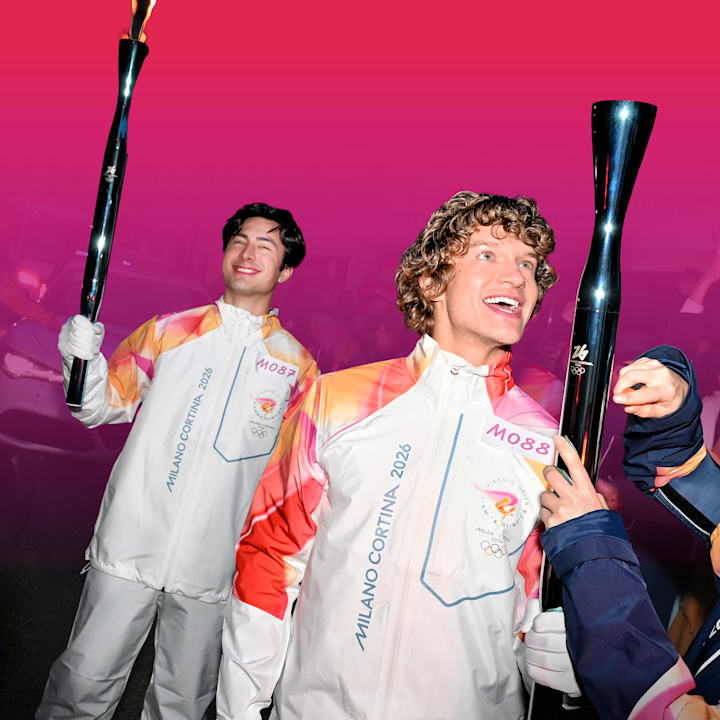
Heated Rivalry’s virality has ascended into a broader zeitgeist. It minted overnight celebrities of its stars Storrie, Williams, François Arnaud and Robbie Graham-Kuntz. Storrie and Williams joined the Olympic torch relay leading up to the Milan Cortina Games (to note, these Winter Olympics have the most openly LGBTQ+ individuals on record). Storrie is set to host Saturday Night Live on Feb. 28, which is a remarkable feat considering he was not a household name three months ago, and Williams booked a high-profile modeling job for the Canadian luxury label DSquared2 at Milan Fashion Week a few weeks ago. Architectural Digest even ran a story that partially opined on “the cottage,” which, set-wise, is a real, modernist wood-and-glass compound on Lake Muskoka in Ontario. The sheer volume of organic media, most of which has included the term hockey in one form or another, is hard to quantify; it’s likely worth billions of dollars.
The NHL knows all of this. There’s been an explosion of spillover content, too, of people posting videos from hockey games (often as newcomers), hockey memes, winter sports crossovers (I’ve seen a few highly viewed posts that say “It’s a great time to be named Ilia,” looping in the real-life figure skating phenom Ilia Malinin) and more (here’s yet another term that’s circulated: “boy aquarium,” which refers to the glass-enclosed rink). But to what extent, if any, has a needle genuinely been moved within the league—calculably and culturally?
Some numbers have jumped.
Jon Weinstein, the NHL’s chief communications officer, sent through data that the league has collected over the past few weeks. He noted that the NHL’s official TikTok account has experienced an 83% increase in followers since the show’s debut. The league’s X account has seen its average new daily follower count increase by 114%. These aren’t merely significant figures; they’re kind of remarkable. He also said, generally, that there was a 21% year-over-year increase (between December 2024 and 2025) in search term volume around the NHL and hockey.

Drilled-down testimonial—at the team level—regarding the show’s ramifications is less exhilarating. Brandon Weiss, media relations manager for the Sharks, said via email that, after speaking with some of the San Jose’s business team members, there “doesn’t appear to be an ‘a-ha’ connection between the immense popularity of [the show] and a tangible change in ticket sales—at least not one that can be directly tracked.” That team’s president, Jonathan Becher, added: “I can’t say that we’ve seen any direct overt changes based around the show.... [But if it] can introduce new fans to the game and also perhaps foster a more inclusive environment for all fans, the sport will be better off for it.” (The Sharks, especially with their proximity to a famously gay city, have, said Becher, a “long-standing” relationship with the LGBTQ+ community; the team will host their annual pride game on April 2).
Luc Robitaille, the Kings’ president, relayed that “hockey has always been about passion, respect and teamwork while playing an intense sport with intense rivalries. Heated Rivalry captures all of that, and it’s amazing to see the series opening the door to important conversations.” Los Angeles hosted Tierney, an openly gay man, at a recent game—the crowd cheered loudly when he appeared on the Jumbotron. It’s worth noting that Kings are one of three teams—the others being the Hurricanes and the Bruins—that have recently stepped back from hosting a dedicated “Pride Night,” long a focal point for LGBTQ+ outreach, in favor of the broader, NHL-backed “Hockey Is For Everyone” banner. The organization says it plans to expand its support for diversity through additional initiatives throughout the year.
Of the two dozen teams contacted for this story, some politely declined, but most just didn’t respond at all.
What did come back from the NHL C-suites ended up highlighting the divide as to where exactly Heated Rivalry’s implications are manifesting: In one vein, there does seem to be a trackable impact on men’s hockey’s fandom, and in the other, there’s the less overt effect, if any, on the entity and its athletes. Evan Ross Katz, the content creator, podcaster and pop culture arbiter who has been a strong supporter of the show and who has interviewed its stars at length, saw this coming (Katz also grew up with hockey, with one brother playing for Penn State—he also remembers meeting the famed defenseman Paul Coffey).
“I think there are ways in which the league can be more accepting to LGBTQ+ fans of the sport… and then there’s the separate but related conversation around the idea of creating an atmosphere within the locker room and on the ice that allows for players to feel comfortable being out,” he said.

Reid, too, spoke of the layers: “I have seen a bit of a shift among [queer and ally] fans getting a little more loud and a little more organized online. Seeing people going to games wearing merch from the show [which the Senators were seen selling through their official shops] or bringing signs that reference the show … It almost makes me nervous, because I can’t imagine being that bold going to a NHL game. I think it’s awesome that they are, I think it’s just me being conditioned by decades of being a hockey fan and thinking, like, ‘O.K., there’s a way to behave and a way not to behave.’ ” That sentiment was echoed by Graham-Kuntz over a Zoom call: “It has been nice to see a different community, and different people who wouldn’t normally go to these events, A) feel like they want to go and B) have the courage to do so.”
Of the players themselves, Reid said: “I mainly get messages from athletes who were closeted when they played, but who don’t play anymore. And it’s not just hockey, it’s other sports, too. I’ve gotten a few from athletes at the college level who aren’t necessarily closeted—they aren’t talking about it super publicly—but their teammates and their friends know, and they appreciated the show for making things a little easier.” Katz tapped on this, too: “We need to be thoughtful in the sense that there might be an active player, right now, who is openly gay to his teammates, or his friends, or his family. We don’t know. It might just be that they’re not public about it.” The subtext being: There will be an enormous amount of attention heaped upon the “first” out and active NHL player, if and when it happens (some men’s hockey players have come out while playing for minor league teams or pro leagues in Europe, but not while in the NHL). It is perfectly comprehensible that he, whose primary job is to perform to the best of his abilities without distraction, would not want that.
One other note: Williams, who plays Shane on the series, said on Andy Cohen Live on SiriusXM, that Reid had been receiving emails from current non-out athletes; this was misconstrued by the media as actively playing professionals. Reid said there aren’t really any present-day players in touch.
Open Stance
The U.S. men’s hockey team starts its Olympic campaign Thursday in Milan. At that city’s Malpensa Airport, as the team arrived, I asked Wild defenseman Quinn Hughes about the current temperature of the league’s openness from within. His response reflected what I’d guess is many players’ positions: Whatever defines an athlete away from the rink is secondary once the puck drops.
“I haven’t watched the show, but everyone I talk to says it’s a great storyline,” Hughes says. “I’m always a supporter, overall. [And in hockey itself,] if you’re good enough to play, if you can help my team win, then no matter what, you should be there.”
A handful of others have commented. Lightning defenseman Victor Hedman told GQ that “sports are about inclusion. Anything like that is good for the game to get more fans and get people to feel included. It doesn’t matter which way you are. I’m super supportive of all that. I think it’s great.”
And Bruins defenseman Charlie McAvoy, who is also on Team USA in Italy, told the media: “I think within our room we’ve tried to do things to make everyone feel safe and comfortable in the game … it’s the least that we can do to show our support … we’re all on the same team.”
Reid acknowledged that it’s understandable if a player might feel a little “caught off guard” when asked about the show, especially in the locker room (as McAvoy was).

The NHL’s track record around LGBTQ+ allyship and acceptance has its blemishes. The league faced backlash in 2023 when it banned the use of rainbow-striped pride tape, a decision that was quickly reversed—and one that some players defied even as it stood (the now retired Travis Dermott was high profile among them). Players have been fined for using homophobic slurs on the ice. The group had long maintained a certain heteronormative attitude towards self-presentation and style, too; only from the 2025–26 season are players permitted to arrive dressed as they please. The code-loosening came well after other pro sports leagues, where “tunnel fits” (outfits worn by athletes during arrivals) have become phenomenons in their own rights (see: the NFL, NBA, WNBA and Formula 1). In hockey, a suit and tie—pretty much the sartorial standard of traditional masculinity—had been mandatory until now.
“It’s like, baby steps, you know?” Reid joked. (She also said that the sole active NHL athlete who has followed her on social media is the Utah Mammoth defenseman Mikhail Sergachev; since the dress code change, he has become known as one of the best-dressed men in the sport.)
Weinstein, however, outlined the NHL’s concerted efforts in LGBTQ+ community advocacy. There’s more that goes on than many people may realize. The league has fostered relationships with, and provided financial support to, a dozen and counting LGBTQ+ hockey organizations spanning from New York City to Chicago to Vancouver. This includes a trans hockey athlete association. The NHL hosts an annual Pride Cup, which is now in its third year (2026’s is upcoming in Vancouver). And back in 2013, the league partnered with You Can Play, a social campaign that aims to end homophobia in sports. The alignment remains ongoing, 13 years later.
“The NHL has been and continues to be intentional in fostering a game and a culture where LGBTQ+ individuals are not only welcomed, but truly valued,” said the NHL’s executive vice president Kim Davis in a statement.
And, for what it’s worth, NHL commissioner Gary Bettman said he binged the entirety of Heated Rivalry’s six episodes in one night–and that he loved it.
This all said, the NHL may want to consider amplifying these aforementioned initiatives; they’re not publicized at scale, and the reputation of men’s hockey is that it remains the least gay-friendly sport out there (Arnaud—publicly bisexual in real life and playing a gay, elder-statesman hockey star on Heated Rivalry—even used an appearance on The Kelly Clarkson Show to call out the league, urging the NHL to meaningfully “back it up” considering the attention boost the show has given the sport.)
There may be lessons gleaned from, really, just next door: One area where LGBTQ+ acceptance is significantly more developed is women’s hockey. The PWHL has well over two dozen openly out athletes. Hilary Knight, the Team USA captain at Milan Cortina, four-time Olympic medalist and current Seattle Torrent forward, is among them.
“I do feel like we’ve created a very different experience for our fan base to celebrate allyship,” Knight said. “And [as far as players], I mean… these are literally my teammates. It feels like that, right? Look at [the former Olympic rivals] Julie Chu and Caroline Ouellette. They ended up getting married, and what a beautiful story that is. There are a lot of layers to this conversation, but I think the reason why there are so many happening around this show is because everyone can kind of feel a little bit represented in some way, shape or form through Heated Rivalry. For me personally, I felt very seen.”
Shaking up long-entrenched ways of being is a challenge. We’ve seen that across countless arenas when it comes to LGBTQ+ acceptance. I understand, too, the perhaps reticence within pro men’s hockey to fully lean into the moment; the NHL and its players don’t have to answer to Heated Rivalry.
As a moderate athlete and a lifelong sports fan (I’m 38 now, and still nothing makes me happier than the Olympics), I’ll say that things do feel … warmer now to me than they once did, regarding hockey and otherwise. I'm gay, and I didn’t make it through my youth without being called a homophobic slur in the locker room. I wanted to belong in sports, yet never felt completely at ease, and carried a sort of constant nervous energy whenever I was playing or spectating. That feeling hasn’t disappeared entirely, but it has softened in a meaningful way. Call it something like getting toward a general sort of friend zone, from old barns to new cottages; in just a few short weeks, Heated Rivalry’s thought starters as to the intersection of queerness and athletics, and what it can look like, have continued to thaw that anxiety.
As a journalist friend observed to me when we were talking about this, progress often comes from pressure—intentional or passive. Iman Hassan, an academic at the University of Denver with a PhD in Sports Performance Psychology, framed that evolution as being rooted in “unprompted invitations” for people in and around athletics to talk openly, and to feel safe in doing so. Heated Rivalry has certainly functioned as a sort of spontaneous summons in this regard. And as Knight said, in what I think is the strongest takeaway: “Sports are so great when you focus on the positives of what they can do. You know, when you sign up to play a sport, I think it means you have more things in common than not.”
More NHL on Sports Illustrated
 Add us as a preferred source on Google
Nick Remsen is an American journalist with over 15 years of experience reporting on the intersections of culture, lifestyle, entertainment and sports. In addition to Sports Illustrated, has contributed to Vogue, GQ, The New York Times, The Wall Street Journal, The Financial Times and many more titles globally.