%20%20--%3E%0A%3Csvg%20version%3D%221.1%22%20id%3D%22Layer_1%22%20xmlns%3D%22http%3A%2F%2Fwww.w3.org%2F2000%2Fsvg%22%20xmlns%3Axlink%3D%22http%3A%2F%2Fwww.w3.org%2F1999%2Fxlink%22%20x%3D%220px%22%20y%3D%220px%22%0A%09%20width%3D%2239px%22%20height%3D%2240px%22%20viewBox%3D%220%200%2039%2040%22%20enable-background%3D%22new%200%200%2039%2040%22%20xml%3Aspace%3D%22preserve%22%3E%0A%3Cpath%20fill%3D%22%23FFFFFF%22%20d%3D%22M38.5%2C7H28.2v26h10.3V7z%22%2F%3E%0A%3Cpath%20fill-rule%3D%22evenodd%22%20clip-rule%3D%22evenodd%22%20fill%3D%22%23FFFFFF%22%20d%3D%22M26.1%2C25.5c0%2C5.8-4.1%2C7.5-12.9%2C7.5C3.9%2C33%2C0%2C31.2%2C0%2C25.2v-1.1h11.6%0A%09v2.4c0%2C0.7%2C0.1%2C1.4%2C1.2%2C1.4c1%2C0%2C1.2-0.4%2C1.2-1.3v-0.9c0-1.6-0.9-1.6-3.5-2.2C2.2%2C21.7%2C0%2C19.7%2C0%2C15.3v-0.9C0%2C9.3%2C5.5%2C7%2C12.9%2C7%0A%09c10.2%2C0%2C12.8%2C2.6%2C12.8%2C7.4v1.8h-11v-2.9c0-0.6-0.4-1.1-1.2-1.1c-0.6%2C0-1.2%2C0.4-1.2%2C1.1v0.9c0%2C1.5%2C0.9%2C2%2C3.3%2C2.5%0A%09c8%2C1.6%2C10.5%2C3.3%2C10.5%2C7.5V25.5z%22%2F%3E%0A%3C%2Fsvg%3E%0A)
When the Hurricanes’ Stanley Cup Run Got Stressful, Tripp Tracy’s Radio Call Made It All Worthwhile
In this story:
Early in Game 2, I stopped trying to sync the radio to the television.
I could not abandon my beloved audio feed. But I had to accept that it would mean hearing the Stanley Cup Final a second and a half before seeing it. And soon, I realized, I preferred it that way. This series was too much to be at the mercy of the picture alone. I needed the grounding cadence of the radio.
Maybe that wouldn’t have been the case had this series gone any other way. But here is how this series went: The Hurricanes and Golden Knights established that no 2–0 lead was safe before establishing that no 4–0 lead was safe. They saw three overtime periods in their first three games. They put together win-probability graphs that could have doubled as blueprints for wildly illegal deadly carnival rides. It felt almost unbearable to watch.
So I listened instead.
I lived and died with Carolina radio broadcasters Tripp Tracy and Mike Maniscalco. As this playoff run wore on, as the Hurricanes made it past the Eastern Conference Finals hurdle that had stopped them in recent years, I got increasingly precious about my fandom. I pulled out all the childlike acts of faith that felt crucial to me during their last championship run in 2006. Here was the lucky shirt meant to be worn on the lucky section of the couch. Here was the desperate bargaining with the universe. And here was the feeling that national broadcasters simply did not get it. This run had to be heard through the voices of the local crew. I needed my guys.
Legendary call. Legendary moment. pic.twitter.com/HbFgARQ4QD
— Carolina Hurricanes (@Canes) June 5, 2026
The best way I can describe a Tripp Tracy broadcast is to imagine a hockey game called like a weekday afternoon baseball game. I mean this as the highest compliment. Tracy is a color commentator who makes a game into a conversation, punctuated with gently meandering stories, the action in front of him sometimes only a loose prompt for what he wants to say. He has a seemingly encyclopedic memory of team history and an elaborate network of bits and catchphrases. I have never known the Hurricanes without him.
Which is true for nearly all Carolina fans. Tracy has been calling games since before the franchise moved to Raleigh. (A former goalie in the franchise’s farm system, he started in the booth in 1998, when the Hurricanes were still in their temporary home of Greensboro after moving south from Hartford.) You get the sense that he remembers every person ever to be even loosely involved with hockey in North Carolina. It might easily sound like name-dropping if the names did not so often belong to equipment managers and the parents of guys on the fourth line. Tracy has a connection to make for every play and every player and, invariably, a conversation that he was having just the other day with someone in the arena elevator that really makes him think of something here. There’s a version of this style that might easily go off the rails. But it works here, a credit to the play-by-play of Mike Maniscalco, who knows when to play things straight and when to let them flow.
My own fandom has loosely followed the fortunes of the franchise. But the one constant has been Tracy. He was in the booth for so many of the games that caused me to fall in love with the Hurricanes while growing up in the Triangle. And he was in the booth when I grew older and the Hurricanes grew worse. There was no longer any roster overlap with the names on the poster I hung with such devotion above my childhood bed in 2006. A playoff dry spell became a serious drought as the team missed out on the postseason from 2010 to ’18. The rumors of a team sale became rumors of a potential team relocation. When I graduated college and decided to go into sportswriting, complete with principled ideas of giving up all my old rooting interests, I was stung to realize that giving up rooting for the Hurricanes did not feel like giving up much in the 2010s. It had been years since watching them felt like cheering for something rather than simply enduring it.
Legendary call. Legendary moment. pic.twitter.com/HbFgARQ4QD
— Carolina Hurricanes (@Canes) June 5, 2026
But that eventually changed, and Tracy was in the booth for that, too. There was soon plenty worth cheering for again. I had grown just old enough to realize how much I needed that—a way to love sports that had nothing to do with any job, a way to care for the sake of caring, a way to feel like a very small part of something very big. My first sports jersey had been Rod Brind’Amour’s No. 17, bright red with a shimmer of silver on the sleeves, my only request for my 12th birthday in 2006. It still hung in the back of my closet at my parents’ house, a little southwest of Raleigh, and it still fit. Brind’Amour was now the Hurricanes’ head coach. My old childhood hero Justin Williams was back on the roster surrounded by a delightfully compelling Bunch of Jerks: Andrei Svechnikov and Sebastian Aho and Jaccob Slavin. When they made it back to the playoffs in 2019, I was overwhelmed by the kind of sheer joy that I had previously associated only with childhood. And that came while listening to Tracy, too.
The broadcast changed around him in the years that followed. Gone was play-by-play voice John Forslund. Gone was longtime radio man Chuck Kaiton. Gone was any dedicated radio feed at all: The regional television audio was now simulcast to radio. I hated this. (Now, years later, I still hate that it forced goodbyes for Forslund and Kaiton, even as I made peace with the rest of it and came to adore Maniscalco.) But the arrangement started to feel like a blessing as the Hurricanes began playing consistently deep into April and May. Every local television broadcast stops for the year once postseason coverage starts being carried exclusively on national broadcasts. But local radio gets to keep going. Which meant that I never had to give up Tracy and Maniscalco once they were done for the season on TV. They were always there on the radio.
It was their voices that narrated the last few years of playoff joy and heartbreak for me. The roster changed. The outcome never did: Eastern Conference Finals at most, a great team who could have won it all, maybe with some puck luck, maybe with another draw, but, of course, the next season brought different puck luck and a new draw, and the same thing invariably happened the next May. And then came this year.
You could hear all of that in how Tracy called the Stanley Cup Final. I heard the decades of waiting and the years that saw me drift away and the combination of people who brought me back. At one point in Game 3, which I experienced mostly as four hours of longing for death through an unbelievable comeback ending in double overtime heartbreak, Tracy turned to Maniscalco and said, “Is this fun or what, partner?” I believed him.
This run was full of comparisons to 2006. It was inevitable: Brind’Amour lifting the Cup as a player was the most iconic image in team history. His quest to do it again as a coach was a driving narrative force. But the comparisons from Tracy were like those of no one else. Other broadcasters might occasionally indulge a generic flashback or note a vague similarity. Tracy would call back to the particulars of a specific blocking save, to how the rink had felt on a given morning, to a snippet of conversation that he remembered. It was the difference between verifying an old score by pulling up a box score and by calling up my dad to ask what he remembered. Maybe the whole thing felt a bit homerish at times: Fair enough. But this was the whole point of the local broadcast for me. I realized that I only wanted to hear it from someone who had been here the whole time and did not mind showing just how much he cared about that.

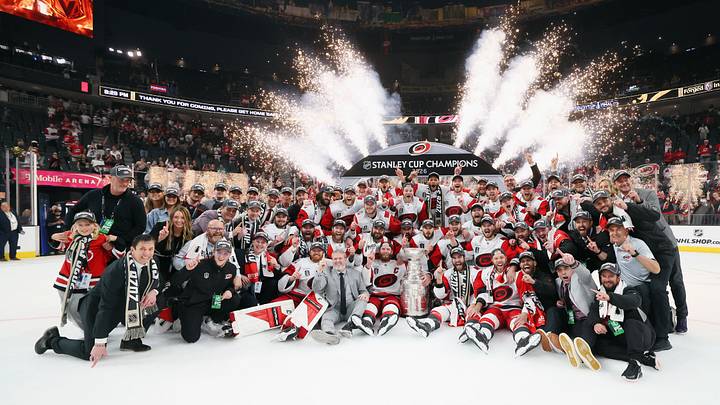
I did not cry when Nikolaj Ehlers scored the empty-netter, or when Jordan Staal received the Conn Smythe, or when Brandon Bussi lifted the Stanley Cup. But I did cry when Tracy finally wrapped up the radio broadcast. It was close to midnight. Every player had lifted the Cup, and every assistant, too, with Tracy announcing every last name with delight and sharing what each had contributed. The only thing left to do was sign off. And so Tracy started describing his father bringing him to the 1984 World Series in Detroit, taking a story that seemed questionably relevant before tying it back perfectly, a move that could only be described as classically Tripp Tracy:
“Partner, I say, ‘Bless you boys,’ for giving us all this joy.”
No one could have said it better.
More NHL from Sports Illustrated
 Add us as a preferred source on Google
Emma Baccellieri is a staff writer focused on women’s basketball for Sports Illustrated. She previously covered MLB. She has also written for Baseball Prospectus and has been honored with multiple awards from the Society of American Baseball Research. A graduate of Duke University, she lives in Washington, D.C.
Follow emmabaccellieri