%20%20--%3E%0A%3Csvg%20version%3D%221.1%22%20id%3D%22Layer_1%22%20xmlns%3D%22http%3A%2F%2Fwww.w3.org%2F2000%2Fsvg%22%20xmlns%3Axlink%3D%22http%3A%2F%2Fwww.w3.org%2F1999%2Fxlink%22%20x%3D%220px%22%20y%3D%220px%22%0A%09%20width%3D%2239px%22%20height%3D%2240px%22%20viewBox%3D%220%200%2039%2040%22%20enable-background%3D%22new%200%200%2039%2040%22%20xml%3Aspace%3D%22preserve%22%3E%0A%3Cpath%20fill%3D%22%23FFFFFF%22%20d%3D%22M38.5%2C7H28.2v26h10.3V7z%22%2F%3E%0A%3Cpath%20fill-rule%3D%22evenodd%22%20clip-rule%3D%22evenodd%22%20fill%3D%22%23FFFFFF%22%20d%3D%22M26.1%2C25.5c0%2C5.8-4.1%2C7.5-12.9%2C7.5C3.9%2C33%2C0%2C31.2%2C0%2C25.2v-1.1h11.6%0A%09v2.4c0%2C0.7%2C0.1%2C1.4%2C1.2%2C1.4c1%2C0%2C1.2-0.4%2C1.2-1.3v-0.9c0-1.6-0.9-1.6-3.5-2.2C2.2%2C21.7%2C0%2C19.7%2C0%2C15.3v-0.9C0%2C9.3%2C5.5%2C7%2C12.9%2C7%0A%09c10.2%2C0%2C12.8%2C2.6%2C12.8%2C7.4v1.8h-11v-2.9c0-0.6-0.4-1.1-1.2-1.1c-0.6%2C0-1.2%2C0.4-1.2%2C1.1v0.9c0%2C1.5%2C0.9%2C2%2C3.3%2C2.5%0A%09c8%2C1.6%2C10.5%2C3.3%2C10.5%2C7.5V25.5z%22%2F%3E%0A%3C%2Fsvg%3E%0A)
The FIFA World Cup Rule Changes Supporters Need to Know
The 2026 FIFA World Cup is edging into view and it promises to be a tournament like none other since its inception nearly a century ago.
Not only are matches being staged across three different countries, the expansion of the competition to 48 participants means more matches and, with any luck, more drama than ever before.
That’s not the only significant change, though. The rule book has been updated ahead of the tournament, laws amended in an attempt to maximize fairness and eliminate the dark arts.
Here are the rule changes passed by the International Football Association Board (IFAB) for this summer’s World Cup.
2026 FIFA World Cup Rule Changes Explained
Countdown for Goal Kicks, Throw-ins

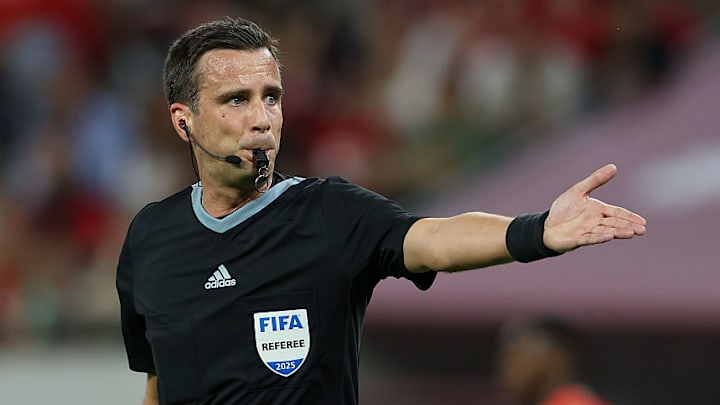
Officials have been given new powers in an attempt to combat time-wasting at the World Cup. If the referee deems that a goal kick or throw-in is being purposefully delayed or simply taking too long, they can initiate a visual five-second countdown.
If the ball hasn’t entered play by the countdown’s conclusion, then the throw-in will be reversed and given to the other team. For goal kicks, a corner will be awarded to the opposition.
A similar initiative was introduced at the beginning of the current Premier League season which means goalkeepers are now only allowed to hold the ball for eight seconds before distributing it. If they fail to do so in the timeframe, a corner is given against them, and it’s a rule that has helped speed play up in England’s top flight.
Substitution Time Limit

On the mission to reduce time-wasting, another rule change has been implemented regarding substitutions. Players at the World Cup will be forced to leave the field within 10 seconds of the substitution board being shown.
Failure to comply means the player coming onto the field will be made to wait an entire minute (running clock) before entering the fray, after which they will have to wait until a stoppage in play to join their teammates.
Altered Injury Protocols

When a player receives on-field treatment from medical staff at the World Cup, they will also have wait a minute (running clock) before re-entering the game. This, once again, has been introduced to battle time-wasting and discourage players from feigning injuries.
However, if a player receiving on-field medical attention was injured by a foul that resulted in a yellow or red card for their opponent, they don’t have to leave the field at all.
At present, players in the Premier League are only asked to spend 30 seconds off the field before returning to the action, with the new change for the World Cup marking a significant increase which is set to come under scrutiny.
VAR Developments

Love it or hate it, VAR is here to stay—and it will undeniably take center stage at the World Cup. Several important changes to the implementation of the technology are likely to come under the microscope throughout the tournament.
One alteration is that the VAR is now able to intervene if a player is shown a clearly incorrect second yellow card in their sending off. Previously, red cards for two bookings could not be overturned by VAR.
Another amendment is that the VAR can now intervene in the case of mistaken identify, in the instance a referee penalizes the wrong player/team in the award of a yellow or red card.
Finally, the VAR is now also able to rule on corners that are incorrectly awarded by the referee. However, this will only occur when a review and subsequent change of decision can be made without interrupting the match and delaying the restart.
Take Our World Cup Stadium Quiz
READ THE LATEST WORLD CUP NEWS, ANALYSIS AND INSIGHT FROM SI FC
 Add us as a preferred source on Google
Ewan Ross-Murray is a soccer writer for SI FC. He boasts years of experience following his First Class Honours in Journalism from the University of Leicester, producing a variety of content from match reports and news pieces to more extensive features on an array of topics. With Scottish, Welsh and English heritage, Ross-Murray’s soccer influences are far-ranging, but his primary focus is on the Premier League and Champions League.