%20%20--%3E%0A%3Csvg%20version%3D%221.1%22%20id%3D%22Layer_1%22%20xmlns%3D%22http%3A%2F%2Fwww.w3.org%2F2000%2Fsvg%22%20xmlns%3Axlink%3D%22http%3A%2F%2Fwww.w3.org%2F1999%2Fxlink%22%20x%3D%220px%22%20y%3D%220px%22%0A%09%20width%3D%2239px%22%20height%3D%2240px%22%20viewBox%3D%220%200%2039%2040%22%20enable-background%3D%22new%200%200%2039%2040%22%20xml%3Aspace%3D%22preserve%22%3E%0A%3Cpath%20fill%3D%22%23FFFFFF%22%20d%3D%22M38.5%2C7H28.2v26h10.3V7z%22%2F%3E%0A%3Cpath%20fill-rule%3D%22evenodd%22%20clip-rule%3D%22evenodd%22%20fill%3D%22%23FFFFFF%22%20d%3D%22M26.1%2C25.5c0%2C5.8-4.1%2C7.5-12.9%2C7.5C3.9%2C33%2C0%2C31.2%2C0%2C25.2v-1.1h11.6%0A%09v2.4c0%2C0.7%2C0.1%2C1.4%2C1.2%2C1.4c1%2C0%2C1.2-0.4%2C1.2-1.3v-0.9c0-1.6-0.9-1.6-3.5-2.2C2.2%2C21.7%2C0%2C19.7%2C0%2C15.3v-0.9C0%2C9.3%2C5.5%2C7%2C12.9%2C7%0A%09c10.2%2C0%2C12.8%2C2.6%2C12.8%2C7.4v1.8h-11v-2.9c0-0.6-0.4-1.1-1.2-1.1c-0.6%2C0-1.2%2C0.4-1.2%2C1.1v0.9c0%2C1.5%2C0.9%2C2%2C3.3%2C2.5%0A%09c8%2C1.6%2C10.5%2C3.3%2C10.5%2C7.5V25.5z%22%2F%3E%0A%3C%2Fsvg%3E%0A)
Four Key Ways MLS Could Change Under New Commissioner Larry Berg
Major League Soccer is ready for its new era.
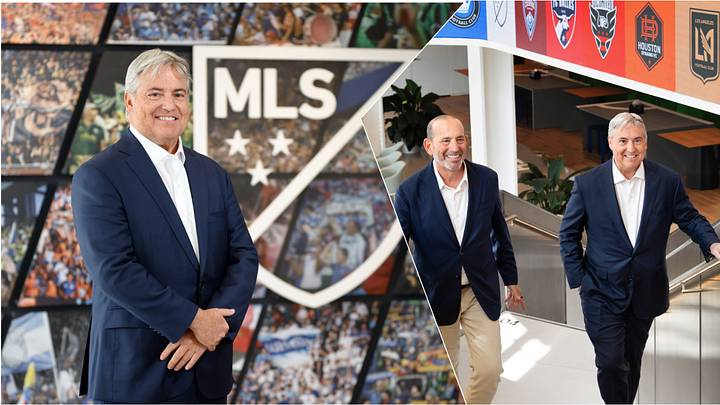
Dubbed MLS 3.0 and headlined by a calendar shift to align with Europe’s top competitions, the league is entering a pivotal point as it shifts from longtime commissioner Don Garber, 68, to a new commissioner in LAFC co-owner Larry Berg, 60.
With soccer’s popularity boost in the wake of the 2026 World Cup, MLS is looking to reach a new level of popularity and many key decisions will fall on Berg in the first few years after he takes charge in Jan. 2027.
Set to divest his stake as a co-owner of LAFC and to leave his role in private equity with 26North, Berg will have his entire focus on growing MLS as the league enters some of its most pivotal years.
Here, Sports Illustrated takes a look at four ways MLS could change—and the vital decisions that lie ahead—for Berg in his new role.
New Divisions

It was a brief comment from Berg in his first words as the commissioner-elect. Still, the mention of “divisions” in the league's future could change the entire way MLS is as a competitive product, potentially as soon as the 2027–28 season, when the league flips its schedule.
As previously reported by The Athletic, a divisional realignment was approved by the MLS owners in 2025, which could see the league move to a setup of five, six-team divisions, competing in a single table, with potential benefits to teams topping their divisions.
While few details have emerged on how the divisions or competition format could look in practice, it is expected to emphasize most of the league’s longstanding regional rivalries, albeit with the potential to make more matchups even rarer than the current Eastern and Western Conference, which already see teams go potentially three or more seasons without facing cross-conference opponents.
“The league has done a ton of work with outside parties, with inside parties looking at those very questions for the regular season, for the division, for the playoffs, and there’s a lot of analysis that’s gone in,” Berg told CBS Sports.
“There’s a lot of research and fan research that’s gone in and there’s a lot of discussion at committee levels that’s gone in so what's important to me is we ultimately achieve consensus and move forward together. But the good news is that I think the things we’re thinking about certainly will move our league forward, make it entertaining, make it interesting and I’m pretty excited to roll it out.”
Eased Roster Rules

In his role as co-owner of LAFC, Berg was part of one of the most ambitious clubs in MLS, one that signed Son Heung-min last season, retained the talents of Denis Bouanga and also welcomed Gareth Bale, Hugo Lloris and other superstars through its time. While the league isn’t likely to open up practically re-spending like other top competitions, the roster rules could evolve to allow teams to invest further into their squads.
“At the end of the day, it’s quality on the field, which means the roster investment model in part, and that’s something that the owners need to decide collectively,” Berg told Sports Business Journal.
“I would say that’s my number one job ... I think if I do that well, we will have more transfer revenue and more media money, and that’ll all lead to a better product on the field. It’ll become a flywheel that leads to more transfers, more revenue and more media money.”
As for how an expanded roster-building process could look, it could come with a higher salary cap, more designated player slots or a further emphasis on young players, as has already been seen with the U-22 initiative slots. At the same time, the acquisition process and heavily-critiqued Discovery Rights could evolve as well.
For any of those changes to be implemented, MLS would likely need to reach an agreement with the MLS Players’ Association in the next Collective Bargaining Agreement, which will be a vital negotiation to set up the league’s next phase, with the current CBA set to expire on Jan. 31, 2028.
A New Media Deal

The media deal is the most defining piece of the next era of MLS and the only way the league will genuinely be able to compete with global competitions. Currently, the average American sports fan can more easily watch the Premier League on linear TV than follow the MLS club that may be just miles away from their home. That issue must evolve, in some way.
The current deal, which sees MLS and Leagues Cup broadcast as part of Apple TV’s general subscription, is set to expire in the summer of 2029, which will be midseason in the new calendar’s 2028–29 season. It will be vital for MLS to find a balance between the evolving streaming distribution channels—it is the only top five U.S. sports league with all games available on one primary service—and find a spot within the common availability of sports channels.
The Apple agreement appeared as a gamble when it was initially signed, with a plan to net MLS $250 million per year and the tech company placing a bet on the league to grow in popularity. Through the deal, MLS has been able to negotiate Lionel Messi’s contract with Inter Miami creatively and, in the first three years, had significant ancillary content, including pregame shows, post-game wrap-ups and a wraparound show—nearly all of which have dissipated in breadth in season four, 2026.
With the new calendar, MLS’s marquee MLS Cup playoff games will be in the spring, competing with the NBA and NHL playoffs, but avoiding the NFL and MLB postseasons, while also putting the games in likely better weather conditions.
Sports leagues around the world have quickly discovered how pivotal media rights deals can be, not only for distribution, but for bringing in significant revenue. MLS will need to get it right, and that could mean the way fans consume the action could change.
Grow in Major Cities and Solve Vancouver Whitecaps

In the biggest cities in the United States and Canada, MLS remains an afterthought. Berg was able to make MLS stand out in Downtown Los Angeles with LAFC’s growth, but the team still ranks well behind the city’s two NBA teams, two NFL teams, NHL team and MLB teams in terms of relevance in the market.
While soccer will face an uphill battle even as it continues to grow, finding further local relevance in the major hubs of Houston, New England, Dallas, Denver, Montréal, Toronto and New York City will be a key step.
In some markets, MLS ranks as the first or second most popular team in town, and it’s also vital that MLS maintains those while moving some teams into those categories as well. Vancouver Whitecaps stand as a prominent example, with the team trailing only the NHL franchise in popularity and ranking in the top five of average MLS attendance.
Their stadium situation with BC Place, which does not generate significant revenue, must be solved—and it’s vital that MLS does not surrender one of the teams that holds ample importance in its marketplace, especially a Pacific hub like Vancouver, which can serve as a gateway to further popularity in the Asian markets.
 Add us as a preferred source on Google
Ben Steiner is an American-Canadian journalist who brings in-depth experience, having covered the North American national teams, MLS, CPL, NWSL, NSL and Liga MX for prominent outlets, including MLSsoccer.com, CBC Sports, and OneSoccer.
Follow BenSteiner00