%20%20--%3E%0A%3Csvg%20version%3D%221.1%22%20id%3D%22Layer_1%22%20xmlns%3D%22http%3A%2F%2Fwww.w3.org%2F2000%2Fsvg%22%20xmlns%3Axlink%3D%22http%3A%2F%2Fwww.w3.org%2F1999%2Fxlink%22%20x%3D%220px%22%20y%3D%220px%22%0A%09%20width%3D%2239px%22%20height%3D%2240px%22%20viewBox%3D%220%200%2039%2040%22%20enable-background%3D%22new%200%200%2039%2040%22%20xml%3Aspace%3D%22preserve%22%3E%0A%3Cpath%20fill%3D%22%23FFFFFF%22%20d%3D%22M38.5%2C7H28.2v26h10.3V7z%22%2F%3E%0A%3Cpath%20fill-rule%3D%22evenodd%22%20clip-rule%3D%22evenodd%22%20fill%3D%22%23FFFFFF%22%20d%3D%22M26.1%2C25.5c0%2C5.8-4.1%2C7.5-12.9%2C7.5C3.9%2C33%2C0%2C31.2%2C0%2C25.2v-1.1h11.6%0A%09v2.4c0%2C0.7%2C0.1%2C1.4%2C1.2%2C1.4c1%2C0%2C1.2-0.4%2C1.2-1.3v-0.9c0-1.6-0.9-1.6-3.5-2.2C2.2%2C21.7%2C0%2C19.7%2C0%2C15.3v-0.9C0%2C9.3%2C5.5%2C7%2C12.9%2C7%0A%09c10.2%2C0%2C12.8%2C2.6%2C12.8%2C7.4v1.8h-11v-2.9c0-0.6-0.4-1.1-1.2-1.1c-0.6%2C0-1.2%2C0.4-1.2%2C1.1v0.9c0%2C1.5%2C0.9%2C2%2C3.3%2C2.5%0A%09c8%2C1.6%2C10.5%2C3.3%2C10.5%2C7.5V25.5z%22%2F%3E%0A%3C%2Fsvg%3E%0A)
Four Takeaways From Brazil’s Soured World Cup Win Over Haiti
After a disappointing 1–1 draw with Morocco which Carlo Ancelotti branded as “nervous,” Brazil’s manager struck a balance between hope and desperation when he previewed the clash with Haiti on Friday. “We can do better,” he began before accepting, “We have to do better.”
It’s hard to judge if Brazil did any better, or if Haiti were just so much worse than Morocco.
Any learnings which Ancelotti may have been able to take from a routine stroll against a nation slumped 80 places below them in FIFA’s world rankings were outweighed by a concerning injury to Raphinha.
Brazil was out of sight by halftime—which was fortunate, because the flawed contenders mustered just two shots (both off target) in the second half.
Brazil Fortunate to Get Away With Opening Goal

The old adage goes that Napoleon always preferred a lucky general to a good one. Brazil enjoyed a slice of good fortune to get that all-important first goal in the 23rd minute.
Vinicius Junior’s shot was parried poorly by Johny Placide. Hannes Delcroix was first to the loose ball spilled by his goalkeeper, but only conspired to prod it inadvertently onto Matheus Cunha’s left leg, sending it spinning beyond Placide. At the same time, Cunha’s right leg was busy crashing into Delcroix’s calf.
The Haiti center back was oddly unmoved by what appeared to be a clear foul, offering no protest for a goal which surprisingly passed a swift review from the video assistant referee.
That fortuitous opener broke the game apart and set Brazil on its way to an easy win. Yet, given the calamitous approach taken by Haiti, the Seleção didn’t necessarily need a helping hand from the refereeing team to get ahead.
Brazil’s Best Player? Haiti

Barcelona’s former Brazilian midfielder Marinho Peres was befuddled by the high line his Dutch manager Rinus Michels had in mind. “Michels wanted the center backs to push out to make the offside line,” he would explain years later. “In Brazil this was known as the donkey line: people thought it was stupid. The theory was that if you passed one defender, you passed all the others.”
Marinho would quickly discover that this approach isn’t so stupid when you properly press the player on the ball. In that scenario, a high defensive line shrinks the pitch by constantly catching the opposition offside. Haiti, however, turned to the “donkey line” on Friday.
Without any adequate pressure out of possession, Lucas Paquetá had ample time to clip a pass over the top of Haiti’s disastrous defensive disorganization. The backline was so out of position Vinicius Jr didn’t even need a running start to spear past the white shirts, taking his time before tucking Brazil’s third goal underneath Placide.
Haiti had already gifted Ancelotti’s side its opening two goals by cheaply giving the ball away in midfield. After such an underwhelming opener, Brazil was primed for a frustrating evening spent fumbling in front of a low block. Haiti turned down that approach to instead present the Seleção with wide open gaps to run into in transition.
Carlo Ancelotti’s Search for a No. 9 Ends

For all the talk of Neymar’s inclusion—which is yet to even yield a single minute for the vaunted veteran—the biggest selection call Ancelotti made was leaving out João Pedro. The Chelsea forward watched Brentford’s Igor Thiago toil against Morocco, sending his only snatched chance wide in the opening 15 minutes.
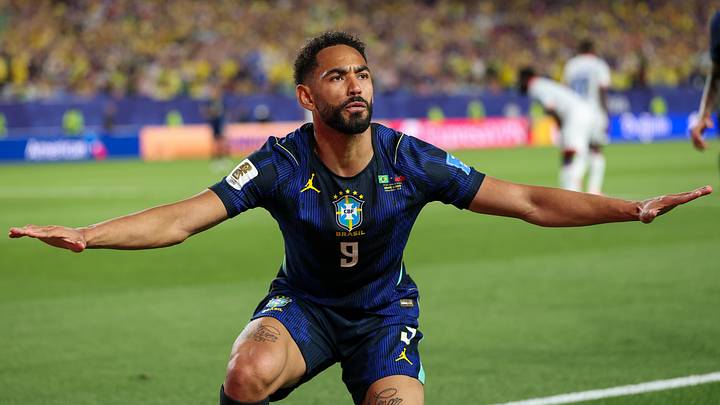
Thiago’s omission was one of two changes Ancelotti made as Cunha came into the lineup. The Manchester United forward is at his best bouncing off a traditional center forward—or even on the left wing—but scored twice on his first-ever World Cup start.
Cunha’s goals were a consequence of Haiti’s inadequacies more than any Brazilian ingenuity, yet the role he played was an intriguing wrinkle from Ancelotti.
The team’s No. 9 spent most of his time in midfield, regularly dropping deeper than Paquetá and even Bruno Guimarães—much the same way that Harry Kane does for England. Cunha’s positioning gave Brazil’s thin midfield another body in the center of the pitch and got the best out of the two wingers who were tasked with running beyond him. Until one of them went off injured, that is.
Raphinha Injury Throws Plans Into Disarray

A system which allows wingers to run in behind is tailor-made for Raphinha. As Ancelotti gushed shortly before the tournament: “Raphinha is the best player in the world at attacking depth.”
However, the Barcelona star appeared to perform one sprint too many, pulling up off the ball before the first half had even concluded.
Bournemouth’s teenage gem Rayan was an intriguing choice of replacement, but filling the boots of Raphinha—for what he does on and off the ball—is a stiff task for anyone, let alone a 19-year-old with three caps to his name. A failure to take a shot or complete a single dribble during his 50-minute outing didn’t exactly make a compelling case for Rayan.
READ THE LATEST WORLD CUP NEWS, ANALYSIS AND INSIGHT FROM SI FC
 Add us as a preferred source on Google
Grey Whitebloom is an Associate Editor for SI FC. He has more than half a decade of experience in sports media across all its various guises, from the fast-paced demands of news articles and match reports to in-depth research required for features. Whitebloom graduated with a First Class Honours from University College London and found himself named on the Dean’s List—which, despite his initial fears, was a form of praise rather than a punishment. He specialises in the Premier League and Champions League, while also boasting an extensive track record of La Liga coverage.