%20%20--%3E%0A%3Csvg%20version%3D%221.1%22%20id%3D%22Layer_1%22%20xmlns%3D%22http%3A%2F%2Fwww.w3.org%2F2000%2Fsvg%22%20xmlns%3Axlink%3D%22http%3A%2F%2Fwww.w3.org%2F1999%2Fxlink%22%20x%3D%220px%22%20y%3D%220px%22%0A%09%20width%3D%2239px%22%20height%3D%2240px%22%20viewBox%3D%220%200%2039%2040%22%20enable-background%3D%22new%200%200%2039%2040%22%20xml%3Aspace%3D%22preserve%22%3E%0A%3Cpath%20fill%3D%22%23FFFFFF%22%20d%3D%22M38.5%2C7H28.2v26h10.3V7z%22%2F%3E%0A%3Cpath%20fill-rule%3D%22evenodd%22%20clip-rule%3D%22evenodd%22%20fill%3D%22%23FFFFFF%22%20d%3D%22M26.1%2C25.5c0%2C5.8-4.1%2C7.5-12.9%2C7.5C3.9%2C33%2C0%2C31.2%2C0%2C25.2v-1.1h11.6%0A%09v2.4c0%2C0.7%2C0.1%2C1.4%2C1.2%2C1.4c1%2C0%2C1.2-0.4%2C1.2-1.3v-0.9c0-1.6-0.9-1.6-3.5-2.2C2.2%2C21.7%2C0%2C19.7%2C0%2C15.3v-0.9C0%2C9.3%2C5.5%2C7%2C12.9%2C7%0A%09c10.2%2C0%2C12.8%2C2.6%2C12.8%2C7.4v1.8h-11v-2.9c0-0.6-0.4-1.1-1.2-1.1c-0.6%2C0-1.2%2C0.4-1.2%2C1.1v0.9c0%2C1.5%2C0.9%2C2%2C3.3%2C2.5%0A%09c8%2C1.6%2C10.5%2C3.3%2C10.5%2C7.5V25.5z%22%2F%3E%0A%3C%2Fsvg%3E%0A)
Germany’s Questioned Star Keeps Specter of Jurgen Klopp at Bay—For Now
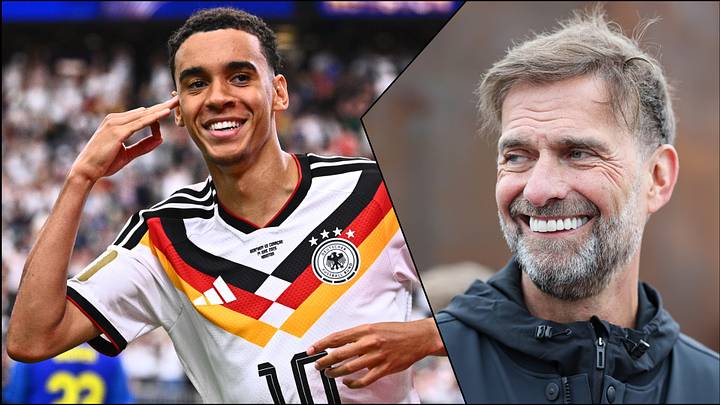
Jamal Musiala jogged across to the side of the pitch after his number was raised for a substitution, an extra spring in his step after expertly tucking away the fourth of Germany’s goals in a 7–1 thumping of Curaçao.
Julian Nagelsmann met his sinewy star on the touchline, wrapping him in a sweaty embrace before whispering in his ear.
It’s unlikely that Jürgen Klopp’s name was mentioned during that tender exchange, but the fact that it could even be a faint possibility says everything about the influence of the former Liverpool manager.
Klopp’s Words Carry (Too Much) Weight

One of the typically frazzled storylines for Germany heading into its opening group game was Klopp’s preview of the contest alongside Thomas Müller. RB Leipzig’s global head of soccer, who remains a favorite for many to one day become the national team head coach, made a point of leaving Musiala out of his preferred starting XI against Curaçao.
Klopp’s thought process was that Deniz Undav would be better suited to a starting role while Musiala, who has not enjoyed a consistent run of form for Bayern Munich since recovering from a broken leg and dislocated ankle last July, should be saved so that he can take advantage of Curaçao’s fatigue.
These musings did not go down well.
Former Germany captain Lothar Matthäus launched into a tirade against Klopp and Müller, who never quite gelled with Nagelsmann while the pair were together at Bayern Munich. “I accept their opinion, but I don’t want to let it stand,” he seethed. “I feel it lacks sensitivity. Jürgen Klopp, of all people, should know better. To have a successful World Cup, Germany needs the quality of Musiala. That’s why he needs to be given trust and playing time.
“Klopp’s comments aren’t exactly making Nagelsmann’s job any easier,” Matthäus pointedly added. “I’d like to see what Klopp would have said if a pundit had advised him to bench one of his regular starters before an important Champions League match. Such interference isn’t well received, especially among fellow coaches.”
Such was the backlash to this perceived snub, Klopp felt compelled to issue an apology. Musiala made sure he would avoid such comments in the future.
Musiala Justifies His Selection

Up against a stubborn opponent sent out with the clear intention to frustrate, the capacity to dribble is crucial. There are few in world soccer more talented in that regard than Musiala.
The wriggling menace is a rubbery nuisance, forever shimmying his tall frame with a surprisingly low center of gravity to unbalance defenders.
It was that ability to consistently beat his man which helped him average a touch in Curaçao’s box once every six minutes he was on the pitch. A couple of heroic blocks denied Musiala in the first half, but he seared into the second 45 minutes, darting into the penalty area once again before picking out the bottom corner within 70 seconds of the restart.
Coincidence or otherwise, it felt fitting that Nagelsmann should replace Musiala with Klopp’s beloved Undav, who also helped himself to a goal as Curaçao’s dream World Cup debut became increasingly nightmarish. Nevertheless, the plucky underdogs ensured Germany—and Nagelsmann—didn’t come through the contest entirely unscathed.
15 Minutes of Embarrassment Keeps Klopp Talk Alive
Ola Blou. https://t.co/cPWiOirziU pic.twitter.com/nrBbGMRwj8
— Sports Illustrated FC (@SI_FootballClub) June 12, 2026
Modern soccer may not allow for the same chasm of class which was once prevalent at the World Cup. This Curaçao team is not stuffed with semiprofessionals—in fact, more than half of the starting XI against Germany play top flight soccer.
However, to frame this contest as anything other than David vs. Goliath would be a gross oversight.
Germany’s goalkeeper Manuel Neuer has a longer international career than the entire nation of Curaçao. By the time the team played its first recognized international fixture in 2011 following the dissolution of the Netherlands Antilles, Neuer had already amassed 21 caps and played in a World Cup.
The starting XI which Nagelsmann was able to call upon for the group stage opener between the two sides on Sunday boasted a combined transfer valuation of $680 million, per FotMob. Curaçao’s was $18 million—about one third of Malick Thiaw, Germany’s fifth-choice center back.
This is a team used to paying for their own plane tickets and waiting around baggage claim themselves, one which dines at hotel buffets rather than with private chefs and openly laughed at the suggestion they would need security provided by FIFA. “We’ve already won the World Cup just by being there,” is a sentiment Wouter Jansen, the team coordinator, has repeated on several occasions.
And so, when Livano Comenencia, a right back for FC Zürich moonlighting in midfield for his country, swept Curaçao level in the 21st minute against the four-time world champion, it was a stunning moment in World Cup history.
Germany would roar back to comfortably prevail, but the 15 minutes between Comenencia’s equalizer and the header from Nico Schlotterbeck to nod the Europeans back in front was a quarter of an hour for Nagelsmann and the nation to fret through.
The specter of Klopp will not be washed away by one win (however emphatic) against the competition’s most extreme minnow. But it served as a moment of vindication for Musiala, at least.
READ THE LATEST WORLD CUP NEWS, ANALYSIS AND INSIGHT FROM SI FC
 Add us as a preferred source on Google
Grey Whitebloom is an Associate Editor for SI FC. He has more than half a decade of experience in sports media across all its various guises, from the fast-paced demands of news articles and match reports to in-depth research required for features. Whitebloom graduated with a First Class Honours from University College London and found himself named on the Dean’s List—which, despite his initial fears, was a form of praise rather than a punishment. He specialises in the Premier League and Champions League, while also boasting an extensive track record of La Liga coverage.