%20%20--%3E%0A%3Csvg%20version%3D%221.1%22%20id%3D%22Layer_1%22%20xmlns%3D%22http%3A%2F%2Fwww.w3.org%2F2000%2Fsvg%22%20xmlns%3Axlink%3D%22http%3A%2F%2Fwww.w3.org%2F1999%2Fxlink%22%20x%3D%220px%22%20y%3D%220px%22%0A%09%20width%3D%2239px%22%20height%3D%2240px%22%20viewBox%3D%220%200%2039%2040%22%20enable-background%3D%22new%200%200%2039%2040%22%20xml%3Aspace%3D%22preserve%22%3E%0A%3Cpath%20fill%3D%22%23FFFFFF%22%20d%3D%22M38.5%2C7H28.2v26h10.3V7z%22%2F%3E%0A%3Cpath%20fill-rule%3D%22evenodd%22%20clip-rule%3D%22evenodd%22%20fill%3D%22%23FFFFFF%22%20d%3D%22M26.1%2C25.5c0%2C5.8-4.1%2C7.5-12.9%2C7.5C3.9%2C33%2C0%2C31.2%2C0%2C25.2v-1.1h11.6%0A%09v2.4c0%2C0.7%2C0.1%2C1.4%2C1.2%2C1.4c1%2C0%2C1.2-0.4%2C1.2-1.3v-0.9c0-1.6-0.9-1.6-3.5-2.2C2.2%2C21.7%2C0%2C19.7%2C0%2C15.3v-0.9C0%2C9.3%2C5.5%2C7%2C12.9%2C7%0A%09c10.2%2C0%2C12.8%2C2.6%2C12.8%2C7.4v1.8h-11v-2.9c0-0.6-0.4-1.1-1.2-1.1c-0.6%2C0-1.2%2C0.4-1.2%2C1.1v0.9c0%2C1.5%2C0.9%2C2%2C3.3%2C2.5%0A%09c8%2C1.6%2C10.5%2C3.3%2C10.5%2C7.5V25.5z%22%2F%3E%0A%3C%2Fsvg%3E%0A)
Lionel Messi Is Inter Miami’s Biggest Asset—He’s Also Their Biggest Problem
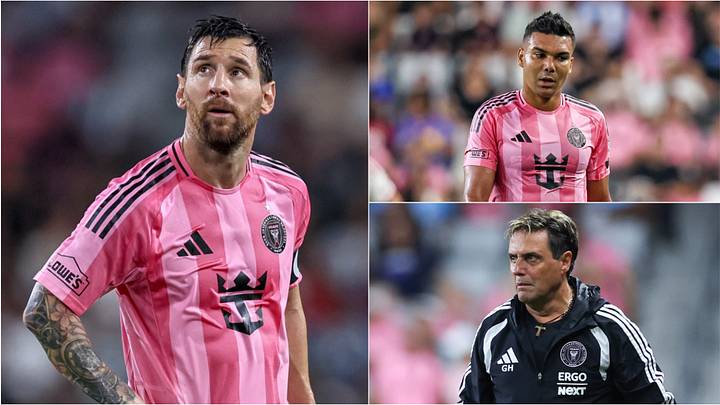
As Lionel Messi scolded Rodrigo De Paul on Saturday in Inter Miami’s eventual 2–1 loss, it became clear just how fed up the eight-time Ballon d’Or winner is becoming this season.
Less than a year removed from leading Miami to the MLS Cup—earning the Golden Boot and MVP honors in the process, Messi has shown immense frustration. Inter Miami look closer to the disaster they were before the soccer legend arrived in 2023—ranking last in MLS—than the team supposed to contend for every trophy.
The loss to Toronto FC marked Miami’s fifth-straight winless game, with two of those results coming in Leagues Cup and three in MLS. Pair that with Nashville SC’s incredible form, and the Herons are 10 points behind the Eastern Conference and Supporters’ Shield lead—with their contending window waning.
There is no denying Miami have one of the best players in the world, with Messi still reaching top form at 39 years old, and he scored again against Toronto, his 14th goal in 18 league appearances. But now, with 13 games to go in the regular season and the Supporters’ Shield effectively out of reach, it doesn’t feel as though Miami can be legitimate MLS Cup contenders. The team lacks that cutting edge it had in the stellar 2025 campaign—but why has it all fallen apart, and where does it go from here?
Ironically, the issue may be Messi.
A Bad Team With Messi

Messi has carried the major moments this season, offering direct involvement in 49% of the team’s regular-season goals, including two in the last three games. He continues to do his best to step up, but it’s no longer enough to save his team, precisely because it is his team.
Miami have adopted a deeply flawed roster build, seemingly dictated by the vibes it will create for Messi at practice and in the locker room, rather than the way it will create a threatening, cohesive unit on the pitch for years to come. It has simply made them not very good.
Messi may have 24 goal contributions this season, but he is surrounded by underwhelming talent of his own choosing, and they cannot manage beyond his own brilliance.
For example, against Nashville, in an embarrassing 4–1 loss, Miami couldn’t contain Andy Najar, Hany Mukhtar and Sam Surridge on counterattacks. Against Philadelphia, the feistiness of Quinn and Cavan Sullivan picked apart their efforts. In the Toronto loss, Markus Cimermancic and Alonso Coello silenced the Miami midfield for most of the night.
And it has become strikingly clear that if an opponent focuses its entire defensive effort on Messi, the rest of the team is effectively incapable of making a significant difference, plagued by a lack of speed, fitness, effort and chemistry.
The Messi-Made Recruitment

Messi will get Ballon d’Or votes this year after scoring eight goals at the World Cup and leading Argentina to the final. He might even win the MLS Golden Boot again. He’s good at soccer, but he’s not very good at recruitment.
There’s an argument that Inter Miami weren’t very good in 2025 either, but Messi’s numbers and the remaining quality in the now-retired Sergio Busquets and Jordi Alba were enough to carry them to the MLS Cup.
This year, it’s become clear the roster is deeply flawed, and mistakes continue as a result. Fellow 39-year-old and Messi’s close friend, Luis Suárez, has 10 goals, but can’t contribute in any other ways, and the mix of Ian Fray, Noah Allen and Sergio Reguilón hasn’t come close to filling the void left by Alba.
Miami have been incredibly creative in flexing their financial might despite MLS salary and roster restrictions, but nearly every signing has been a decision without a target other than to make Messi happy. It’s become glaringly obvious that Miami nee offensive-minded fullbacks, a more dynamic transitional presence in midfield and younger depth in attack who can offer more than just goals.
Yet, in the winter, they went out and signed Germán Berterame for a near-club record $15 million, adding a hulking attacker who isn’t a serial goalscorer, isn’t fast and can’t press—instead of someone to offer an entirely different skill to Suárez. And then this summer, Miami made their latest mistake: signing Casemiro right after his disheartening World Cup with Brazil.

In five matches thus far, he’s been dispossessed as many times as he’s won tackles (three) and has created just four total chances from the center of the park. He’s given up an own goal and even received two yellow cards, lacking any of the poise that defined his play when Manchester United fans were echoing, “One more year, one more year, Casemiro!” from Old Trafford last spring.
In his latest MLS match, he left looking shocked and exhausted in the 73rd minute, struggling to adapt to the physical rigors of MLS. It’s as if he thought things would be easier.
Casemiro sale del partido.
— José Armando (@Jarm21) August 23, 2026
Esta no es la imagen que muchos esperaban del brasileño con Inter Miami.
Insólito. #InterMiamiCF pic.twitter.com/BtDfGKI9Ku
Headlined by Casemiro and Berterame—and even Rodrigo De Paul, to an extent— the newest additions to Miami’s roster have been deeply flawed, and the best players, notably Yannick Bright—the team’s lone MLS All-Star—weren’t acquired through a Messi-led lens.
Nearly every recent signing has Messi as the central focus, leading to greater reliance on the aging star and a less supportive team around him, even if it makes training sessions more enjoyable.
What’s Next for Inter Miami?

Inter Miami are the most ambitious team in MLS but won’t be able to fully improve until they alter their transfer and recruitment strategy entirely. The owners, Messi included, need to emphasize finding players who fit the roles the team requires, rather than what will make their aging star most happy in his twilight years. There’s little reason Miami can’t use their creative roster gymnastics to bring in proven, younger talent.
The shift in approach will be clearer, as roster restrictions are expected to ease slightly sometime before the 2027 sprint season or the 2027–28 campaign under the new calendar. Before then, however, finding a quick sale at a loss for some aging talent and identifying key role players could help save the 2026 campaign.
There will have to be tough conversations, though. It’s clear that the Messi-led project isn’t working to build a winning team anymore, but separating the roster-building nucleus from Messi's business, equity and influence could prove a massive challenge.
Regardless, Messi could walk as soon as this offseason and hinted at retirement after his father’s death. Without Messi, Miami will have a massive fight to stay relevant, remain successful and avoid becoming the high-spending yet last-place team they were before he arrived.
 Add us as a preferred source on Google
Ben Steiner is an American-Canadian journalist who brings in-depth experience, having covered the North American national teams, MLS, CPL, NWSL, NSL and Liga MX for prominent outlets, including MLSsoccer.com, CBC Sports, and OneSoccer.
Follow BenSteiner00