%20%20--%3E%0A%3Csvg%20version%3D%221.1%22%20id%3D%22Layer_1%22%20xmlns%3D%22http%3A%2F%2Fwww.w3.org%2F2000%2Fsvg%22%20xmlns%3Axlink%3D%22http%3A%2F%2Fwww.w3.org%2F1999%2Fxlink%22%20x%3D%220px%22%20y%3D%220px%22%0A%09%20width%3D%2239px%22%20height%3D%2240px%22%20viewBox%3D%220%200%2039%2040%22%20enable-background%3D%22new%200%200%2039%2040%22%20xml%3Aspace%3D%22preserve%22%3E%0A%3Cpath%20fill%3D%22%23FFFFFF%22%20d%3D%22M38.5%2C7H28.2v26h10.3V7z%22%2F%3E%0A%3Cpath%20fill-rule%3D%22evenodd%22%20clip-rule%3D%22evenodd%22%20fill%3D%22%23FFFFFF%22%20d%3D%22M26.1%2C25.5c0%2C5.8-4.1%2C7.5-12.9%2C7.5C3.9%2C33%2C0%2C31.2%2C0%2C25.2v-1.1h11.6%0A%09v2.4c0%2C0.7%2C0.1%2C1.4%2C1.2%2C1.4c1%2C0%2C1.2-0.4%2C1.2-1.3v-0.9c0-1.6-0.9-1.6-3.5-2.2C2.2%2C21.7%2C0%2C19.7%2C0%2C15.3v-0.9C0%2C9.3%2C5.5%2C7%2C12.9%2C7%0A%09c10.2%2C0%2C12.8%2C2.6%2C12.8%2C7.4v1.8h-11v-2.9c0-0.6-0.4-1.1-1.2-1.1c-0.6%2C0-1.2%2C0.4-1.2%2C1.1v0.9c0%2C1.5%2C0.9%2C2%2C3.3%2C2.5%0A%09c8%2C1.6%2C10.5%2C3.3%2C10.5%2C7.5V25.5z%22%2F%3E%0A%3C%2Fsvg%3E%0A)
Mikel Arteta Opens Up on Status Struggles of Enzo Maresca, Ruben Amorim
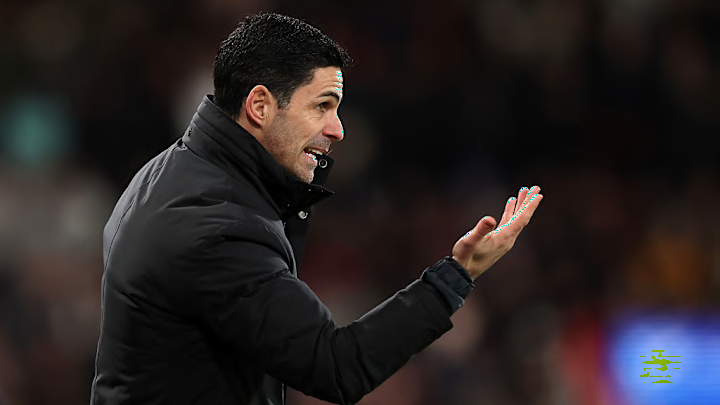
In the week that Enzo Maresca and Ruben Amorim have both clashed with their respective clubs over power and paid with their jobs, Mikel Arteta has played down the significance of his role being changed from head coach to manager in his first year at Arsenal.
Maresca’s power struggle with Chelsea’s senior leadership prompted his sudden exit on New Year’s Day. Amorim was sacked by Manchester United four days later after it appeared he was having a similar battle at Old Trafford, although the club denied a struggle behind the scenes was the reason.
It used to be the way in English football that the “manager” was all-powerful, answering to a chairman but effectively running the entire sporting operation. Sir Alex Ferguson and Arsène Wenger were the last of the omnipotent breed, before structures began to mimic director of football or general manager-led approaches favoured by European clubs or American sports teams.
Amorim declared himself a “manager” not a “head coach” in what proved to be his final press conference with Manchester United on Sunday, having previously hinted at being denied new signings in January that he believed necessary to make his 3-4-3 system work.
Arteta Promoted to Manager in 2020

Many would conflate the two positions as being one and the same. But there are differences.
Amorim was announced as Manchester United’s new “head coach” when he was appointed in November 2024, noticeably different in wording from all but one previous hire in the club’s 148-year-old, who were exclusively the “manager” aside from head coach Wilf McGuinness in 1969.
Arteta was appointed Arsenal “head coach” when he arrived in December 2019, but within nine months was formally promoted to the role of “manager” instead.
Arsenal said at the time “there is so much more that he can bring” than simply coaching the first-team squad of players, affording Arteta more influence over other things and a closer working relationship with then-director of football Edu Gaspar and then-CEO Vinai Venkatesham.
In the context of Maresca and Amorim feeling restrained by their job titles just over five years later, Arteta said the change didn’t matter that much to him, ultimately suggesting that relationships between the various people involved are what makes a team successful or not.

“It was different at the time when they proposed to change the role and what they thought about in the areas that I could help probably more than they expected at the beginning,” he told a press conference on Wednesday, before the Gunners face Liverpool this week.
“At the end it’s about the relationships and the people, because we have formed great teams with very different qualities and some that have been more on certain things and when there is somebody that is much better than me on that, I let them do it.
“For me the title doesn't really reflect the way we operate daily.
“I think it’s more important the people and the morale to really understand that let’s give each other the things that we can master and make us much better and the rest we just support that idea.”
Arteta: ‘I Didn’t Ask for Title Change’

Asked if his confidence grew from being promoted to manager from head coach, Arteta replied that it did. But it wasn’t something he’d asked the club to do.
“Yes, [it gave a confidence boost], because I didn’t demand it,” he explained.
“I didn’t ask for it, and they believed it was the right thing to do. But again since then because we have to work with different people with the changes that we have in recent years, I think when you have a leader which is ownership, in this case it’s Stan [Kroenke] and Josh [Kroenke], and Josh is very close to that with very clear alignment to all of us what he wants to do, how he wants to achieve it and creates that space for everybody. I think it’s very easy to work like this.”
READ THE LATEST ARSENAL NEWS, TRANSFER RUMOURS AND MORE
 Add us as a preferred source on Google
Jamie Spencer is a writer and editor for SI FC. Jamie grew up in Manchester, England, in the 1990s and fell in love with the game at the same time as the Premier League was taking off. With more than a decade of experience behind him in sports media, he specializes in Manchester United and the overall Premier League, still living in England’s north-west soccer hotbed. Jamie is also an expert on the women’s game and enjoys old school nostalgia, telling stories from soccer’s rich history and culture.