%20%20--%3E%0A%3Csvg%20version%3D%221.1%22%20id%3D%22Layer_1%22%20xmlns%3D%22http%3A%2F%2Fwww.w3.org%2F2000%2Fsvg%22%20xmlns%3Axlink%3D%22http%3A%2F%2Fwww.w3.org%2F1999%2Fxlink%22%20x%3D%220px%22%20y%3D%220px%22%0A%09%20width%3D%2239px%22%20height%3D%2240px%22%20viewBox%3D%220%200%2039%2040%22%20enable-background%3D%22new%200%200%2039%2040%22%20xml%3Aspace%3D%22preserve%22%3E%0A%3Cpath%20fill%3D%22%23FFFFFF%22%20d%3D%22M38.5%2C7H28.2v26h10.3V7z%22%2F%3E%0A%3Cpath%20fill-rule%3D%22evenodd%22%20clip-rule%3D%22evenodd%22%20fill%3D%22%23FFFFFF%22%20d%3D%22M26.1%2C25.5c0%2C5.8-4.1%2C7.5-12.9%2C7.5C3.9%2C33%2C0%2C31.2%2C0%2C25.2v-1.1h11.6%0A%09v2.4c0%2C0.7%2C0.1%2C1.4%2C1.2%2C1.4c1%2C0%2C1.2-0.4%2C1.2-1.3v-0.9c0-1.6-0.9-1.6-3.5-2.2C2.2%2C21.7%2C0%2C19.7%2C0%2C15.3v-0.9C0%2C9.3%2C5.5%2C7%2C12.9%2C7%0A%09c10.2%2C0%2C12.8%2C2.6%2C12.8%2C7.4v1.8h-11v-2.9c0-0.6-0.4-1.1-1.2-1.1c-0.6%2C0-1.2%2C0.4-1.2%2C1.1v0.9c0%2C1.5%2C0.9%2C2%2C3.3%2C2.5%0A%09c8%2C1.6%2C10.5%2C3.3%2C10.5%2C7.5V25.5z%22%2F%3E%0A%3C%2Fsvg%3E%0A)
The 25 Best Defensive Midfielders in Soccer History—Ranked
Being a defensive midfielder in soccer isn’t always the most glamorous job on the field.
They’re rarely the ones scoring goals or grabbing headlines like strikers, gliding past defenders like elite wingers, or stealing the spotlight in the No. 10 role—but their importance is impossible to ignore.
From doing the dirty work with perfectly timed tackles, to cutting out danger with crucial interceptions, to keeping things simple in possession and quietly controlling the tempo of a match, the role is often thankless. It isn’t always pretty, and it’s frequently overlooked—but it’s absolutely vital.
Here, we’ve ranked the 25 greatest defensive midfielders in the history of soccer, from hard-nosed pioneers who built the role to modern, ball-playing maestros who refined it.
The Best Defensive Midfielders of All Time
25. Dunga

The first of several Brazilians on this list, Dunga was—tactically speaking—the least Brazilian of them all. He favored European-style discipline, physicality and pragmatism over Brazil’s traditional emphasis on flair and freedom, a contrast that saw him heavily criticized early in his international career. Many fans even blamed him for Brazil’s failure at the 1990 World Cup.
Four years later, however, those very traits proved decisive. As captain, Dunga helped drive Brazil to World Cup glory in 1994, finally striking the right balance between attack and defense—an issue that had plagued the national team for years.
A fierce tackler and outstanding interceptor, the former Fiorentina midfielder fundamentally reshaped how Brazil approached the holding role. In many ways, he laid the blueprint for the generations that followed, with teams built around disciplined defensive midfielders like Gilberto Silva, Casemiro and others still emerging from the production line today.
24. Joshua Kimmich

What sets Joshua Kimmich apart from many, if not all, of the other defensive midfielders on this list is that, beyond shielding the back four and breaking up play, he contributes an extraordinary volume of attacking output.
The German star—winner of countless Bundesliga titles and a Champions League with Bayern Munich—has racked up over 200 combined goals and assists for club and country, and that number keeps growing.
Even accounting for his versatility and Bayern’s domestic dominance, that is an astonishing return for a player in a defensive role.
23. Javier Mascherano

After impressing in the Premier League with Liverpool, Javier Mascherano—known as “El Jefecito” (“The Little Chief”)—joined Barcelona and became a vital part of one of the most dominant teams in soccer history.
While he wasn’t always a guaranteed starter, the battle-hardened Argentine was Pep Guardiola’s trusted option when it mattered most. Comfortable in both defensive midfield and at center back, Mascherano famously started in defense for Champions League finals in 2011 and 2015, against Manchester United and Juventus, with Barcelona winning both.
Never flashy and rarely in the spotlight, Mascherano was the ultimate problem-solver: Breaking up attacks, throwing himself into challenges and moving the ball on quickly and efficiently.
22. Graeme Souness

Only one man in soccer history has had the guts to plant a massive Galatasaray flag in the center circle of rival Fenerbahçe’s pitch after winning the Turkish Cup.
That man was Graeme Souness. Even though he was a manager at the time, the stunt perfectly captured his playing career: fearless, fiery and just a little bit wild.
A hard-tackling, no-nonsense midfield enforcer, Souness was a player nobody wanted to cross. He’s best remembered for his seven-year spell at Liverpool, where he won five First Division titles and three European Cups.
21. Zito

While Pelé was the headline act of Os Santásticos—the legendary Santos side of the late 1950s and 1960s—it was Zito who wore the captain’s armband. He served not only as a mentor to the young superstar but also as the dependable midfield anchor who helped turn Santos into one of the most dominant clubs in Brazilian soccer history, winning nine league titles and back-to-back Copa Libertadores trophies.
Zito played a similarly vital role for Brazil, acting as the midfield linchpin during the Seleção’s World Cup triumphs in 1958 and 1962. He even scored in the final of the latter against Czechoslovakia, stepping up with Pelé sidelined through injury.
20. Pep Guardiola

Pep Guardiola didn’t just go on to coach some of the greatest midfielders the game has ever seen—Sergio Busquets, Andrés Iniesta and Kevin De Bruyne, to name just a few. Before he became a managerial icon, he was one of the best midfielders in the world himself.
The heartbeat of Johan Cruyff’s legendary Barcelona side, Pep Guardiola’s intelligence in the center of the pitch was vital to a team that won four consecutive La Liga titles and the club’s first-ever European Cup in 1992. A deep-lying playmaker who orchestrated attacks from the back, his lack of pace and slight frame mattered little—his game relied on supreme positional awareness, anticipation and soccer IQ.
Those same qualities later became the foundation of his coaching philosophy, clearly reflected in the midfield maestros he helped transform into world-beaters.
19. Casemiro

Because his time at Manchester United has been so mixed, some forget just how dominant Casemiro was at his peak with Real Madrid, where he helped the club win five Champions League titles, three La Liga crowns and a host of other major trophies.
During his time at the Bernabéu, Casemiro earned a well-deserved reputation as a midfield destroyer, thanks to his bone-crunching tackles and propensity for bookings. But he was much more than that.
The Brazilian was, and remains, a superb ball-playing midfielder, capable of threading precise passes, shooting from distance and timing his runs into the box to score crucial goals—a skill he has only refined as his career has progressed.
18. Obdulio Varela

Obdulio Varela played seven World Cup matches in his career—and Uruguay remained undefeated every time he stepped onto the pitch.
He first featured in all four games as Uruguay famously won the 1950 World Cup, including the decisive match against Brazil. Varela is widely credited as the mastermind behind Brazil’s downfall, using devastating tackles and a touch of the “dark arts” to neutralize their star-studded attack.
In 1954, he again starred as Uruguay reached the semifinals, though he missed that game after celebrating a goal against England in the quarterfinals.
On the domestic stage, Varela also lifted no fewer than 20 major trophies with Peñarol, chiefly while serving as captain.
17. Didier Deschamps

Before becoming a World Cup–winning manager with France, Didier Deschamps was a World Cup–winning captain on the pitch, leading Les Bleus to glory in 1998 and then guiding them to Euro 2000 victory.
Though once dismissively called a “water-carrier” by teammate Éric Cantona, Deschamps was far more than that. While not the flashy playmaker of some others on this list, he excelled at winning the ball back, distributing it to his more technical teammates and orchestrating the team with impeccable positional awareness and leadership.
Without his tactical intelligence and organizational mastery, France likely wouldn’t have lifted those trophies—and Deschamps might not have enjoyed the club success he did, including Champions League titles with Marseille and Juventus.
16. Xabi Alonso

“The best passer of a ball I’ve ever played with.”
That’s how Steven Gerrard once described his former Liverpool teammate Xabi Alonso—high praise indeed coming from a player who shared the pitch with legends like David Beckham, Frank Lampard and Paul Scholes.
Watch Alonso in action, and it’s easy to see how Gerrard came to that conclusion. The Spaniard could spray the ball from either foot with arrow-like pace, precision and power, landing passes exactly where he intended—whether at a teammate’s feet or into the perfect space ahead of them.
Not a powerful runner with the ball nor the hardest tackler, Alonso’s genius lay in controlling the game from deep. He won the Champions League with both Liverpool and Real Madrid and was a key figure in Spain’s golden era from 2008–12.
15. Gennaro Gattuso

“Sometimes maybe good, sometimes maybe...” You know the rest. Gennaro Gattuso’s brutally honest assessment of his Hajduk Split side in a now-legendary press conference could well describe his entire hit-and-miss managerial career.
On the pitch, however, Gattuso was anything but inconsistent.
A World Cup victor with Italy in 2006 and two-time Champions League winner with AC Milan, he played with the same brutal straightforwardness that later made him a meme as a manager.
Not flashy, but devastatingly effective, Gattuso was a bulldog in midfield—relentless in ball-winning, ferocious in tackles and tireless in running.
14. Jose Leandro Andrade

Nicknamed “The Black Marvel” or “The Black Pearl,” Andrade was a key figure in Uruguay’s early soccer success, helping the nation win two Olympic gold medals and three South American Championships in the 1920s, as well as the inaugural World Cup in 1930.
While the game has evolved enormously since then, Andrade was a true pioneer—the world’s first great defensive midfielder.
13. Edgar Davids

There’s a reason Edgar Davids was known as the “Pitbull”—a nickname bestowed on him by former Ajax coach Louis van Gaal.
Few players in soccer history have ever matched his tenacity. Davids would spend entire matches tearing around midfield at full throttle, snapping into tackles, muscling opponents off the ball and clinging to possession like a dog refusing to let go of a chew toy.
Part of Ajax’s legendary ’90s side that won the Champions League, Davids also enjoyed success with Juventus, winning Serie A three times, and had spells at Inter Milan, Barcelona and, of course, Barnet. Beyond his defensive ferocity, he was a regular goalscorer and a highly skilled technician, thanks in part to his street soccer upbringing.
12. Fernando Redondo

Fernando Redondo was a master of contrasts.
With the ball at his feet, the Real Madrid legend moved with the elegance of a true playmaker—slipping past opponents, splitting defenses with pinpoint passes and dictating the tempo of a match with effortless precision. Off the ball, he was a menace—ruthlessly flying into tackles, using every part of his frame (elbows included) to assert himself, and leaving opponents wary of even challenging him.
Redondo was, in every sense, a fusion of elegance and toughness—a midfielder who combined artistry with intimidation.
11. Falcao

Part of the legendary 1982 Brazil squad—often hailed as the greatest team never to win the World Cup—Falcão was a masterful deep-lying playmaker, blessed with exceptional vision and an outstanding passing range.
But he wasn’t just a creator; he also had a defensive edge, often stepping in as an auxiliary centre back and making last-ditch tackles to stop opponents in their tracks.
A legend at both Internacional and Roma, Falcão earned the nickname “The Eighth King of Rome” during his time in Italy. There, he won a Serie A title and two Coppa Italia trophies, and became the world’s highest-paid player at the time—a remarkable achievement for a non-attacking player.
10. Roy Keane

You’d be hard-pressed to find a player who wanted to win as much as Roy Keane. He played every game as if his life depended on it—surging into tackles with reckless abandon, covering every blade of grass and generally scaring the living daylights out of his opponents with his fearsome demeanour.
That intensity sometimes overshadowed his technical brilliance. Keane was a precise passer and, for a holding midfielder, chipped in with his fair share of goals, too.
In truth, though, it was his relentless commitment and the way he demanded the same from everyone around him that made him truly special—arguably the greatest captain the game has ever seen.
9. Jozsef Bozsik

Back in the 1950s, Honvéd—the Hungarian army team—dominated domestic football, winning four league titles and forming the core of the legendary Hungary national team, famously known as the Mighty Magyars, who claimed Olympic gold and reached the World Cup final just two years later.
At the heart of both teams was József Bozsik.
Renowned for his flair, precise passing and creative vision, Bozsik orchestrated attacks from deep, controlling the tempo and linking defense with offense—setting the standard for the generations of midfield maestros that followed.
8. Rodri

One of only two players on this list to have won the Ballon d’Or, Rodri has already secured his place among the all-time great defensive midfielders—even with much of his career still ahead of him.
The Spaniard claimed the award in 2024 after starring for Spain at Euro 2024, where he also took home the Player of the Tournament honor. The year before, he was Manchester City’s standout performer as they completed a historic treble, winning the Premier League, FA Cup and Champions League.
Though he never came through Barcelona’s famed academy, Rodri plays with the kind of positional intelligence, calm under pressure and line-breaking passing that would make anyone think he had.
7. Claude Makelele

You know you’ve left a mark on the game when an entire position is named after you—which is exactly what happened with Claude Makélélé. His mastery of sitting deep and breaking up opposition attacks gave rise to the now-famous “Makélélé role.”
What truly set him apart was his extraordinary positional intelligence. While many midfielders rush toward the ball, diving into tackles, Makélélé often let the play come to him, reading the game with uncanny anticipation. Of course, he could also crunch in when needed—but his genius lay in knowing exactly when to act.
First the lynchpin of Real Madrid’s Galácticos in the early 2000s (where Fernando Hierro credited him as the team’s most indispensable player), Makélélé later moved to Chelsea, where his influence helped form a midfield so solid that the Blues won consecutive Premier League titles while conceding a record-low number of goals.
6. N’Golo Kante

Because they were both diminutive French holding midfielders who won titles with Chelsea, N’Golo Kanté and Claude Makélélé are often compared—but in reality, they were quite different players.
Where Makélélé was the master of reading the game, Kanté was a relentless engine, chasing every ball, closing down every opponent and covering every blade of grass—suffocating opponents into giving up possession. Unlike Makélélé, Kanté also wasn’t afraid to drive forward once he’d won the ball; his low center of gravity and tight control allowing him to glide past players with ease.
A World Cup winner with France in 2018, Kanté was every opponent’s nightmare and every manager’s dream.
5. Patrick Vieira

Although Patrick Vieira had the athleticism and drive of a box-to-box midfielder, his greatest impact came from the base of midfield, where he controlled games for both club and country. As Arsenal’s anchor during their 1998 double-winning campaign and the iconic 2003–04 Invincibles season, he provided the platform that allowed others to flourish. He played a similarly pivotal role for France in their World Cup triumph in 1998 and European Championship victory two years later.
Vieira combined positional discipline with rare physical dominance. From deep areas, he broke up attacks with authority, dictated tempo through intelligent distribution and then chose his moments to surge forward. His blend of composure, power and tactical awareness made him far more than a destroyer.
Many have attempted to replicate that balance of steel and sophistication in a holding role, but few have ever managed it with the same authority.
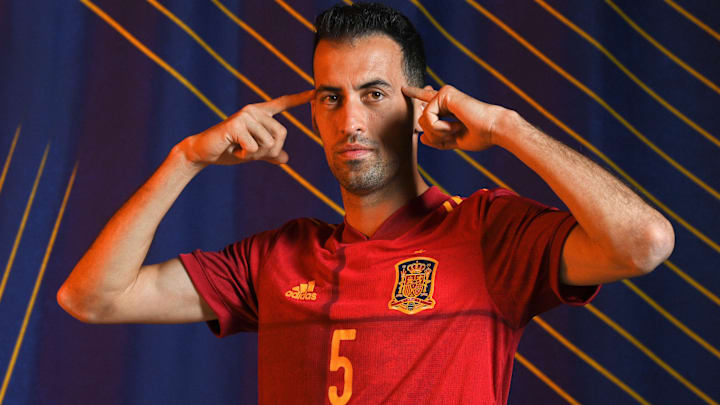
4. Sergio Busquets

When Sergio Busquets hung up his boots in 2025—shortly after lifting an MLS Cup with Inter Miami alongside former Barcelona teammates Lionel Messi, Luis Suárez, Jordi Alba and Javier Mascherano, who served as head coach—the soccer world said goodbye to the greatest defensive midfielder of the modern era.
Busquets was never a snarling pitbull in the mold of Davids or Gattuso, nor a deep-lying quarterback like Alonso, nor a box-to-box force like Vieira or Keane. Instead, he was something entirely his own.
He mastered the art of moving himself—and the ball—only when necessary. Every pass was calculated and perfectly weighted, every body feint premeditated to leave opponents grasping at shadows and every off-ball movement designed to create space for teammates to play through and around the opposition.
The dominant Barcelona and Spain sides of the 2010s simply would not have existed without his quiet, understated genius.
3. Frank Rijkaard

Schooled by a who’s who of Dutch and Italian soccer royalty—Cruyff, Michels, Sacchi, Capello and Van Gaal—it should come as little surprise that Frank Rijkaard was a rare fusion of Dutch intelligence and Italian grit. The combination made him one of the most complete midfielders the game has ever seen, and a relentless winner.
Comfortable almost anywhere on the pitch—centre back, fullback, his preferred holding midfield role, or even as an auxiliary striker—there was very little Rijkaard couldn’t do. He tackled with the ferocity of a hard-nosed Italian defender, passed with the vision and composure of a Dutch playmaker and read the game with an almost effortless calm.
A cornerstone of two of the greatest club sides in soccer history, Rijkaard won everything with both Ajax and AC Milan, including three European Cups. On the international stage, he was equally influential, playing a starring role in the Netherlands’ triumph at Euro 1988—the nation’s only major international title to date.
2. Johan Neeskens

Rinus Michels and Johan Cruyff are rightly credited with the invention of Total Football in the 1970s, but Johan Neeskens was the engine that made it all run. He was the yin to Cruyff’s yang—the tireless enforcer whose work off the ball gave Ajax, Barcelona and the Netherlands the freedom to dazzle.
Playing higher up the pitch than a traditional holding midfielder, Neeskens’s endless running, crunching tackles and ferocious pressing often served as the cue for the entire team to surge forward. His intensity compressed the pitch, strangling opponents and robbing them of time and space—an approach that would later become gospel for the modern pressing game.
All-action, high-octane and driven by a relentless, never-say-die mentality, Neeskens won over supporters wherever he went. Known in Barcelona as “Johan the Second,” he may have spent his career in the shadow of his legendary namesake, but his influence was just as profound.
Just as Cruyff shaped generations of creative minds, Neeskens became the template for the modern defensive and box-to-box midfielder.
1. Lothar Matthaus

Although defensive midfield was his primary role, Lothar Matthäus was far more than a simple holding player—he was the complete midfielder.
One of the most technically gifted and tactically intelligent players the beautiful game has ever produced, the Bayern Munich icon could do everything. When he wasn’t shielding the backline, he was spraying long, raking passes across the pitch, driving forward on powerful runs, or unleashing thunderous shots from distance that so often found the net—fully living up to his WWII tank–inspired nickname, “Der Panzer.”
The second-most capped player in World Cup history and a winner in 1990 (when he also scooped the Ballon d’Or), Matthäus was once described by Diego Maradona as the toughest opponent he ever faced—about as high praise as any player can receive.
READ MORE OF SPORTS ILLUSTRATED’S SOCCER RANKINGS
 Add us as a preferred source on Google
Sports Illustrated’s FC team bring you the latest news, transfers and match coverage.