%20%20--%3E%0A%3Csvg%20version%3D%221.1%22%20id%3D%22Layer_1%22%20xmlns%3D%22http%3A%2F%2Fwww.w3.org%2F2000%2Fsvg%22%20xmlns%3Axlink%3D%22http%3A%2F%2Fwww.w3.org%2F1999%2Fxlink%22%20x%3D%220px%22%20y%3D%220px%22%0A%09%20width%3D%2239px%22%20height%3D%2240px%22%20viewBox%3D%220%200%2039%2040%22%20enable-background%3D%22new%200%200%2039%2040%22%20xml%3Aspace%3D%22preserve%22%3E%0A%3Cpath%20fill%3D%22%23FFFFFF%22%20d%3D%22M38.5%2C7H28.2v26h10.3V7z%22%2F%3E%0A%3Cpath%20fill-rule%3D%22evenodd%22%20clip-rule%3D%22evenodd%22%20fill%3D%22%23FFFFFF%22%20d%3D%22M26.1%2C25.5c0%2C5.8-4.1%2C7.5-12.9%2C7.5C3.9%2C33%2C0%2C31.2%2C0%2C25.2v-1.1h11.6%0A%09v2.4c0%2C0.7%2C0.1%2C1.4%2C1.2%2C1.4c1%2C0%2C1.2-0.4%2C1.2-1.3v-0.9c0-1.6-0.9-1.6-3.5-2.2C2.2%2C21.7%2C0%2C19.7%2C0%2C15.3v-0.9C0%2C9.3%2C5.5%2C7%2C12.9%2C7%0A%09c10.2%2C0%2C12.8%2C2.6%2C12.8%2C7.4v1.8h-11v-2.9c0-0.6-0.4-1.1-1.2-1.1c-0.6%2C0-1.2%2C0.4-1.2%2C1.1v0.9c0%2C1.5%2C0.9%2C2%2C3.3%2C2.5%0A%09c8%2C1.6%2C10.5%2C3.3%2C10.5%2C7.5V25.5z%22%2F%3E%0A%3C%2Fsvg%3E%0A)
What It Takes for NFL Stadiums to Have World Cup-Ready Natural Grass
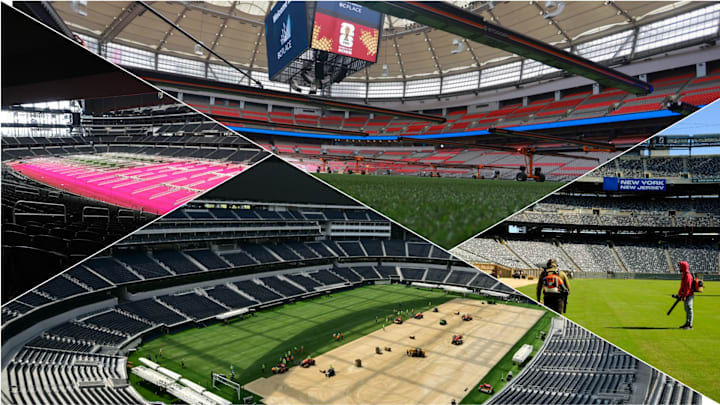
VANCOUVER — Some of the most famous stadiums in the United States, Canada and Mexico are starting to look World Cup-ready, as the tournament approaches its opening day on June 11.
While Mexico’s stadiums are undergoing only branding changes for the tournament, several U.S. and Canadian venues have been forced into significant makeovers, headlined by the playing surface that the world’s best players will grace.
In the U.S., seven stadiums have had to install real grass in place of the usual artificial turf surface used by NFL teams, while Vancouver’s BC Place has undergone a similar shift from the playing surface used by the city’s soccer club.
For some venues, like Atlanta’s Mercedes-Benz Stadium and Seattle’s Lumen Field, the grass has been in for months. However, others have spent the last several weeks adding the surface, battling challenges that come with stadiums never designed to host living, real grass.

And unlike the recent 2024 Copa América or 2025 FIFA Club World Cup, the grass has to be rooted, not simply laid over the previous surface.
Every stadium must meet a long list of FIFA regulations for its surface, including an automatic irrigation system, sufficient drainage, built-in vacuum and vents to keep the grass and soil aerated, and artificial grow lights to keep the grass healthy. Some stadiums, including Vancouver’s, are also using snow-making machines as high-powered sprinklers.
Field installations had to be completed before FIFA took over venue control of most stadiums on May 14, when the international organization began placing branding around venues, removing commercial advertising and art, and shuttering local businesses within their area of control.
Why This Grass Is Special

Each local organizing committee was responsible for arranging the grass and ensuring it fit FIFA’s standards. The varying climates across the 16 cities led to differing grass mixes, each suited to its climate.
Nine stadiums use a mix of Kentucky bluegrass and perennial ryegrass, while six use Bermuda grass, choosing the best mix for the climate. Only Toronto’s BMO Field, which operates with a usual natural grass surface, uses pure Kentucky bluegrass.
Grass is usually grown on native soil, and its roots are cut when harvested for sod. However, that would not have worked for the World Cup, as roots may not have been able to be established. As such, farms opted to grow sod on plastic sheets, with sand as a base to ensure durability.
For some stadiums, like BC Place, grass was grown locally. The Bos farm in nearby Abbotsford spent months curating the grass before installing it in recent weeks.
Meanwhile, Joe Wilkins III’s farm outside Denver grew the grass for Dallas, Atlanta and Houston, and the MetLife Stadium pitch, which will host the World Cup final, was grown in North Carolina.
Not every stadium receives direct sunlight, and it is unclear whether the retractable roofs will be open for the tournament, as inconsistent sunlight can negatively affect the grass.
To make the grass more durable to withstand matches and the timeline, plastic fibers are woven into the grass, creating a hybrid system with roots wrapped around these green fibers. The process also allows the plastic fibers to help boost the color of the pitches, which could suffer in the summer heat.
The Pitches Have Risen
A closer look at the World Cup grass at BC Place from pitch level.
— Ben Steiner (@BenSteiner00) May 12, 2026
The grass is several feet higher than the turf, so the front row of fans is literally pitch level.
Turf starts about five feet from the end line and there are snowblowers to act as sprinklers. pic.twitter.com/05AIcZGcZV
Fans making their way into the stadiums may not notice it at first, but the fields will be closer to the crowds than before. In the multi-layered effort to lay the grass, the pitch sits between 18 inches and two-feet higher than the artificial turf below.
“The last [MLS] game happened on April 25, and [this started] immediately after that game,” BC Place general manager Chris May told Sports Illustrated. “The hard floor was laid down, the [plastic] concert floor was laid down, some protective material was laid down, and then the dirt started getting brought in. That grass pitch sits about 18 inches above the turf, so that’s still all under there.”
Great turn out for @SISPitches #FieldTechLive today at MetLife Stadium! Nice to see SIS Grass stitching into Tahoma 31 ahead of the FIFA World Cup games. pic.twitter.com/wcYCy45Qmk
— Geoffrey Rinehart (@gjrinehart) May 13, 2026
Staff across the co-hosting cities put in considerable effort to make the grass as strong as possible, and it is now overseen by FIFA’s senior pitch manager, David Graham, who oversees the grass at all 16 tournament venues.
“This pitch will be in longer than the duration of last year’s [Club World Cup] tournament before we kick a ball,” Graham told reporters at MetLife Stadium. “We didn’t receive the venue until two weeks before the first ball was kicked in 2025 for the Club World Cup. Here, it’s a completely different build. It’s a completely different scenario.”
The pitches have just a few weeks to get into top condition now, with the first NFL stadium match being the USMNT vs. Paraguay at Los Angeles Stadium, usually known as SoFi Stadium on June 12.
READ THE LATEST WORLD CUP NEWS, ANALYSIS AND INSIGHT FROM SI FC
 Add us as a preferred source on Google
Ben Steiner is an American-Canadian journalist who brings in-depth experience, having covered the North American national teams, MLS, CPL, NWSL, NSL and Liga MX for prominent outlets, including MLSsoccer.com, CBC Sports, and OneSoccer.
Follow BenSteiner00