%20%20--%3E%0A%3Csvg%20version%3D%221.1%22%20id%3D%22Layer_1%22%20xmlns%3D%22http%3A%2F%2Fwww.w3.org%2F2000%2Fsvg%22%20xmlns%3Axlink%3D%22http%3A%2F%2Fwww.w3.org%2F1999%2Fxlink%22%20x%3D%220px%22%20y%3D%220px%22%0A%09%20width%3D%2239px%22%20height%3D%2240px%22%20viewBox%3D%220%200%2039%2040%22%20enable-background%3D%22new%200%200%2039%2040%22%20xml%3Aspace%3D%22preserve%22%3E%0A%3Cpath%20fill%3D%22%23FFFFFF%22%20d%3D%22M38.5%2C7H28.2v26h10.3V7z%22%2F%3E%0A%3Cpath%20fill-rule%3D%22evenodd%22%20clip-rule%3D%22evenodd%22%20fill%3D%22%23FFFFFF%22%20d%3D%22M26.1%2C25.5c0%2C5.8-4.1%2C7.5-12.9%2C7.5C3.9%2C33%2C0%2C31.2%2C0%2C25.2v-1.1h11.6%0A%09v2.4c0%2C0.7%2C0.1%2C1.4%2C1.2%2C1.4c1%2C0%2C1.2-0.4%2C1.2-1.3v-0.9c0-1.6-0.9-1.6-3.5-2.2C2.2%2C21.7%2C0%2C19.7%2C0%2C15.3v-0.9C0%2C9.3%2C5.5%2C7%2C12.9%2C7%0A%09c10.2%2C0%2C12.8%2C2.6%2C12.8%2C7.4v1.8h-11v-2.9c0-0.6-0.4-1.1-1.2-1.1c-0.6%2C0-1.2%2C0.4-1.2%2C1.1v0.9c0%2C1.5%2C0.9%2C2%2C3.3%2C2.5%0A%09c8%2C1.6%2C10.5%2C3.3%2C10.5%2C7.5V25.5z%22%2F%3E%0A%3C%2Fsvg%3E%0A)
Why Canada Signed Jesse Marsch’s 2030 World Cup Extension Ahead of 2026
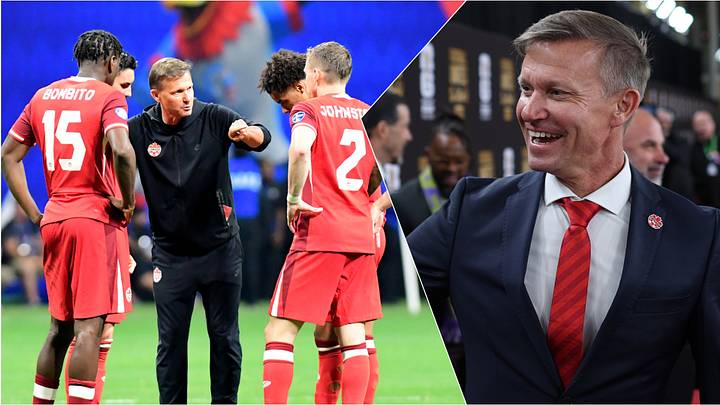
Jesse Marsch has never coached at a World Cup. Now, he’s got a second one lined up.
Ahead of leading Canada’s men’s national team into its third World Cup and first on home soil, the 52-year-old Wisconsin-born manager signed a four-year contract extension through the 2030 World Cup.
He’s the head coach who has led Canada to its best-ever World Cup ranking, rising as high as 26th in 2025, and to the 2024 Copa América semifinal, only to be dispatched by Lionel Messi’s Argentina.
While his current contract expires at the end of this summer’s World Cup, it’s no surprise that he’s sticking around longer. Talks had been underway for over a year, and as much as the results of Canada’s journey this summer are important, the progress Marsch has made is too good to turn away from.
Here’s why Canada wanted to secure his future.
Marsch’s Canadian Embrace

Marsch is the first to acknowledge that he isn’t Canadian, yet his fondness for the country and player pool has been evident since he first worked with CF Montréal in 2012 and in his time as Canada’s boss since 2024.
He’s defended the nation’s sovereignty, snapping at comments from President Trump about annexing Canada to make it the 51st U.S. state, and has spent ample time touring the country’s youth programs, seeking to raise the level of grassroots soccer.
In that, he’s endeared himself to the Canadian public and soccer community more than ever, all while making his mark on the outskirts of Pisa, Italy, and ensuring his national team players are in the best possible situations for their club careers.
“With Canada,” Marsch said in 2025, “I’ve found a place that embodies for me the ideals and morals of what not just football and a team is, but what life is, and that’s integrity, respect and the belief that good people can do great things together.”
For a team that brings together players from different backgrounds, many of whom are first- and second-generation Canadians, having a coach who embraces that diversity is a significant factor, and that approach has helped bring out the best in several players.
“I really enjoy representing this nation,” he told Sports Illustrated in January of his initial decision to sign with the program. “When I met the players at first, the big question I was always asking was, what does the Canadian national team mean?
“I was on a research project to really kind of understand what that means, and then I had my idea of football, and I thought that this team could play the way I want and could benefit from the things that I think are important.”
The Investment Opportunity

Canada Soccer doesn’t pay the majority of Marsch's salary. Instead, it’s paid by philanthropic efforts, previously made by the ownership groups of MLS sides Vancouver Whitecaps and CF Montréal, as well as MLSE, which owns Toronto FC, and the city’s NHL, NBA and CFL teams.
That setup made Marsch’s official title from 2024 to 2026 “MLS Canada Head Coach,” whereas his new role had no mention of that title, with MLSE no longer listed as a funding partner.
Marsch’s original deal was constructed by Canada Soccer CEO Kevin Blue and is estimated at north of $2 million per year, with each MLS club chipping in $500,000 and Canada Soccer paying the rest.
The new deal will be majority-funded by several philanthropic support pillars, including, but not limited to, the Whitecaps ownership, who will remain committed after completing their sale of the team, locally or otherwise, a source told Sports Illustrated, and the Saputo Foundation, which is the same Saputo family that owns CF Montréal.
MLSE, however, is not involved, with other groups including Boro and Jen Hamilton, the Adnani Family, and a donor who has chosen to remain anonymous.
“MLSE has actively supported Canada Soccer over the past year in a number of ways that benefit their operating budget, contributing in excess of seven figures to Canada Soccer events that generated new business opportunities and ultimately serve as the organization’s contribution towards the cost of this extension,” MLSE said in a statement to Sports Illustrated. "We are proud of our support of Canada Soccer and look forward to a continued partnership that results in continued growth and success for soccer in Canada.”
The former Leeds United manager’s positive reputation and the keen commitment from financial stakeholders ahead of the World Cup made the deal worthwhile, given the lack of assurance that Canada Soccer could afford a coach of similar pedigree on its own and the potential that a stellar World Cup showing could attract more lucrative offers from other countries or clubs.
Marsch’s Fatherly Approach

Beyond his large-scale embrace of the Canadian soccer system, Marsch has taken a personable approach with his players. He has dubbed himself an “agent” for the hours he spends finding the best club situations for players, while also regularly connecting with them either.
Living in Italy, he is a regular at Ismaël Kone’s Sassuolo and Jonathan David’s Juventus. And with Koné, Marsch guided the young midfielder out of an uncomfortable situation at Marseille, where he was entangled in a tense relationship with manager Roberto De Zerbi.
“It wasn’t easy with De Zerbi and Marseille,” Marsch said of Koné’s time with the French giants. “De Zerbi was a real, real a------ with him, and he stayed strong. He never doubted himself. He found a new situation, and now look at him flourishing.”
Since moving to Sassuolo, Koné established himself as a Serie A regular and a favorite to start at this summer’s World Cup, a similar story to striker Cyle Larin’s return to goalscoring form since joining Southampton in the English Championship after struggling with Feyenoord in the Dutch Eredivisie.
How CanMNT 🇨🇦 treat their players vs. how USMNT 🇺🇸 do
— OneSoccer (@onesoccer) May 27, 2026
Jesse Marsch called or left voicemails for TWENTY-SEVEN players involved with his team before picking his latest squad 📞
Maurico Pochettino on having to make phone calls to his players?
"That is bullsh*t." 💀 pic.twitter.com/RKtUVrZwV5
Outside of soccer, Marsch has been critical as well, stepping up for now Premier League-bound Hull City winger Liam Millar last year, when the then 25-year-old was struggling with depression amid a tedious recovery from a 2024 ACL tear. Marsch invited Millar with his wife and kids to Italy, offering respite and helping rebuild the player’s confidence, which led to an eventual national team return and a stellar Hull City season.
“The second my injury happened, Jesse called me and told me he’ll do everything he can,” Millar said in March. “He invited my family to his house, and obviously, I’m not going to turn down his invitation, so we went to his house with my kids and my family and had exactly what we needed.
“We were on his beautiful estate, in the mountains ... things can be so chaotic, but we went for dinner, he was great with my kids, and it gave me a good perspective on the team, on myself and everything.”
Marsch’s Tactical Vision

The tactics that Marsch has brought to Canada also fit the current player pool and will allow the team to develop further, given that players like Alphonso Davies, Nathan Saliba, David, Koné and several others will still be in their 20s by the 2030 World Cup.
His 4-4-2 formation, which features a high-pressing and demanding system, relies on intensity, energy and speed, with the majority of goals coming from transitional moments. In defense, it’s about maintaining two solid blocks of four, with varying widths depending on personnel, game situation and counter-pressing outlook.
Given his vision for how he sees the team playing and the age of the current pool, continuing the project seemed to be the right fit for all parties. For now, the focus is purely on the World Cup, but winning the Concacaf Gold Cup and Nations League will also be critical factors in the lead-up to the 2030 World Cup for a nation that hasn’t won an international trophy since 2000.
And with Marsch, that direction is clear. The connection made too much sense with Canada Soccer—so why bother waiting it out?
READ THE LATEST WORLD CUP NEWS, ANALYSIS AND INSIGHT FROM SI FC
 Add us as a preferred source on Google
Ben Steiner is an American-Canadian journalist who brings in-depth experience, having covered the North American national teams, MLS, CPL, NWSL, NSL and Liga MX for prominent outlets, including MLSsoccer.com, CBC Sports, and OneSoccer.
Follow BenSteiner00