%20%20--%3E%0A%3Csvg%20version%3D%221.1%22%20id%3D%22Layer_1%22%20xmlns%3D%22http%3A%2F%2Fwww.w3.org%2F2000%2Fsvg%22%20xmlns%3Axlink%3D%22http%3A%2F%2Fwww.w3.org%2F1999%2Fxlink%22%20x%3D%220px%22%20y%3D%220px%22%0A%09%20width%3D%2239px%22%20height%3D%2240px%22%20viewBox%3D%220%200%2039%2040%22%20enable-background%3D%22new%200%200%2039%2040%22%20xml%3Aspace%3D%22preserve%22%3E%0A%3Cpath%20fill%3D%22%23FFFFFF%22%20d%3D%22M38.5%2C7H28.2v26h10.3V7z%22%2F%3E%0A%3Cpath%20fill-rule%3D%22evenodd%22%20clip-rule%3D%22evenodd%22%20fill%3D%22%23FFFFFF%22%20d%3D%22M26.1%2C25.5c0%2C5.8-4.1%2C7.5-12.9%2C7.5C3.9%2C33%2C0%2C31.2%2C0%2C25.2v-1.1h11.6%0A%09v2.4c0%2C0.7%2C0.1%2C1.4%2C1.2%2C1.4c1%2C0%2C1.2-0.4%2C1.2-1.3v-0.9c0-1.6-0.9-1.6-3.5-2.2C2.2%2C21.7%2C0%2C19.7%2C0%2C15.3v-0.9C0%2C9.3%2C5.5%2C7%2C12.9%2C7%0A%09c10.2%2C0%2C12.8%2C2.6%2C12.8%2C7.4v1.8h-11v-2.9c0-0.6-0.4-1.1-1.2-1.1c-0.6%2C0-1.2%2C0.4-1.2%2C1.1v0.9c0%2C1.5%2C0.9%2C2%2C3.3%2C2.5%0A%09c8%2C1.6%2C10.5%2C3.3%2C10.5%2C7.5V25.5z%22%2F%3E%0A%3C%2Fsvg%3E%0A)
Why Chelsea Were Denied Stoppage-Time Penalty vs. Hull for Handball Claim
LONDON — A frustrating afternoon was given an even more bitter conclusion as Chelsea were denied what many within Stamford Bridge deemed to have been a strong penalty appeal for handball against Hull City on Saturday.
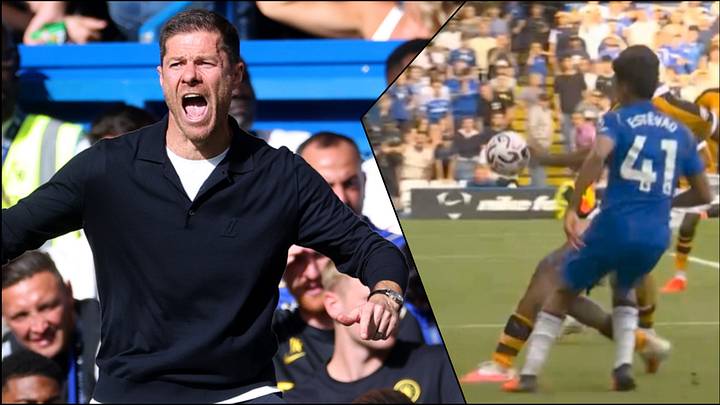
With the score level at 2–2 entering second-half stoppage time, Chelsea’s angst aggravated by the sloppy nature of the way they had given up an early advantage at home to newly promoted opposition, Estêvão wriggled to the byline and stabbed in a cross.
Hull’s towering center back Semi Ajayi had covered across and managed to get something on the ball heading into his penalty area—the only issue was that he got his right fist to the ball.
Estêvão pirouetted away demanding and slapping his hand while Xabi Alonso performed the same universal action of frantic disdain in the sun soaked Stamford Bridge dugout. Neither the on-pitch official Farai Hallam nor video assistant referee (VAR) Michael Oliver were receptive to the appeals and play was swiftly waved on.
Why Chelsea Didn’t Win Penalty Against Hull City

The handball law is one of the most fickle wrinkles in the increasingly complex and murky world of soccer regulations. To begin unpicking the intricacies, Law 12 in the FA Handbook defines a handball offense as when a player “deliberately touches the ball with their hand/arm, for example moving the hand/arm towards the ball touches the ball with their hand/arm when it has made their body unnaturally bigger.”
Ajayi clearly moves his hand away from the ball, so that immediately eliminates the possibility of it being deliberate. Now, the question of whether he has made his body bigger is a little stickier.
Law 12 explains: “A player is considered to have made their body unnaturally bigger when the position of their hand/arm is not a consequence of, or justifiable by, the player’s body movement for that specific situation. By having their hand/arm in such a position, the player takes a risk of their hand/arm being hit by the ball and being penalize.”
Ajayi’s arm is initially outstretched while in the action of lunging to block Estêvão’s cross. It could be quite easily argued that, in order to maintain balance while contorting his frame, a pair of raised hands would be a natural consequence of his position.
Despite the evident frustration of those in west London, the refereeing team can rest easy with their conclusion to avoid a penalty. Once the fury of dropped points has cooled, it may become clearer that Chelsea should not have been relying upon a half-hearted penalty appeal to scrap a win against Hull.
 Add us as a preferred source on Google
Grey Whitebloom is an Associate Editor for SI FC. He has more than half a decade of experience in sports media across all its various guises, from the fast-paced demands of news articles and match reports to in-depth research required for features. Whitebloom graduated with a First Class Honours from University College London and found himself named on the Dean’s List—which, despite his initial fears, was a form of praise rather than a punishment. He specialises in the Premier League and Champions League, while also boasting an extensive track record of La Liga coverage.