%20%20--%3E%0A%3Csvg%20version%3D%221.1%22%20id%3D%22Layer_1%22%20xmlns%3D%22http%3A%2F%2Fwww.w3.org%2F2000%2Fsvg%22%20xmlns%3Axlink%3D%22http%3A%2F%2Fwww.w3.org%2F1999%2Fxlink%22%20x%3D%220px%22%20y%3D%220px%22%0A%09%20width%3D%2239px%22%20height%3D%2240px%22%20viewBox%3D%220%200%2039%2040%22%20enable-background%3D%22new%200%200%2039%2040%22%20xml%3Aspace%3D%22preserve%22%3E%0A%3Cpath%20fill%3D%22%23FFFFFF%22%20d%3D%22M38.5%2C7H28.2v26h10.3V7z%22%2F%3E%0A%3Cpath%20fill-rule%3D%22evenodd%22%20clip-rule%3D%22evenodd%22%20fill%3D%22%23FFFFFF%22%20d%3D%22M26.1%2C25.5c0%2C5.8-4.1%2C7.5-12.9%2C7.5C3.9%2C33%2C0%2C31.2%2C0%2C25.2v-1.1h11.6%0A%09v2.4c0%2C0.7%2C0.1%2C1.4%2C1.2%2C1.4c1%2C0%2C1.2-0.4%2C1.2-1.3v-0.9c0-1.6-0.9-1.6-3.5-2.2C2.2%2C21.7%2C0%2C19.7%2C0%2C15.3v-0.9C0%2C9.3%2C5.5%2C7%2C12.9%2C7%0A%09c10.2%2C0%2C12.8%2C2.6%2C12.8%2C7.4v1.8h-11v-2.9c0-0.6-0.4-1.1-1.2-1.1c-0.6%2C0-1.2%2C0.4-1.2%2C1.1v0.9c0%2C1.5%2C0.9%2C2%2C3.3%2C2.5%0A%09c8%2C1.6%2C10.5%2C3.3%2C10.5%2C7.5V25.5z%22%2F%3E%0A%3C%2Fsvg%3E%0A)
Chris Evert and Martina Navratilova’s Rivalry and Friendship Highlighted in New Documentary
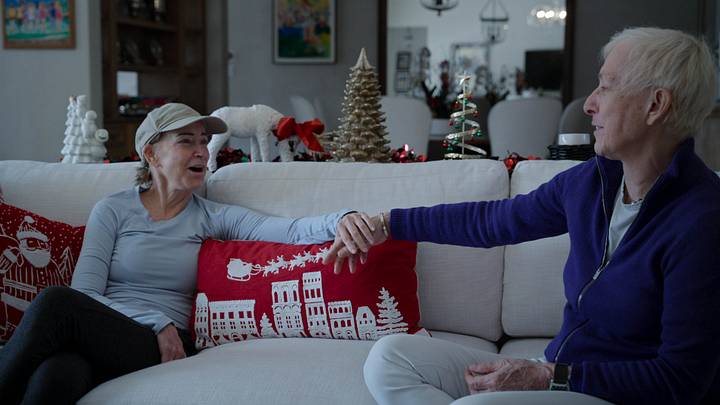
Chris & Martina: The Final Set premieres Wednesday at the Tribeca Film Festival and will drop on Netflix on June 26. Directed by two-time Emmy Award winner Rebecca Gitlitz, the film bounces (in the manner of a tennis rally) between the two subjects, Chris Evert and Martina Navratilova; between present and past; between Florida and Prague, to take the measure of what might well be the most gripping, durable sports rivalry that ever was.
Full disclosure: I worked on this film and am an executive producer. With that out of the way, it is an extraordinary examination of a soaring sports rivalry, of two women who were elite athletes and are elite human beings. Both were willing and able subjects, willing to plumb complicated lives and relationships, the undulations of stardom, and their singular friendship.
Once pitted against each other, held up for their contrasts, they eventually realized that if the world—and their inevitable confrontations in the finals of tennis tournaments—was going to bracket them together, they may as well lean into it.
Now, decades since their last match, they are dear friends, kindred spirits and cancer survivors confronting their mortality.
Here’s a piece adapted from a story from last year, highlighting this singular sports story, this singular life story and this singular relationship.
They sat alone in the small locker room, alternately trying to ignore the other and make awkward, nerves-concealing small talk. Even underground at Roland Garros—and then on the red clay tennis court above—there were contrasts that could not have been more obvious.
One was a lithe Floridian, then 20, a righty whose personality expressed itself in her precise tennis, predicated less on power than composure and calm. The other was 18, about to defect from what was then Communist Czechoslovakia. She was an athletic lefty, who, even as a teenager, had a hell of a risk threshold, charging forward on the court—and speaking her mind off it—come of it what may.
It was 51 years ago this month that Chris Evert (seeded first) and Martina Navratilova (seeded second) met for the first time at a tennis major. That warm Parisian Saturday, in the finals of the 1975 French Open, Evert’s ice would get the better of Navratilova’s fire.
After losing the first set in less than an hour, Evert reset. “I got my—I need to watch my language here—got my act together,” she recently recalled. Evert prevailed 2–6, 6–2, 6–1, marking the second of what would be a women’s record seven French Open singles titles that she would win.
No one knew it at the time, of course, but with this high stakes match, one of the towering, textured rivalries in sports history was officially underway. After that first encounter, Evert and Navratilova would carve their ways through draws and meet in 21 more majors—mostly in the finals, with the trophy on the line. They would play each other on all surfaces, all over the world, at all different phases of their lives. “With all different hairstyles,” Navratilova is quick to add.
Sometimes they would share food in the locker room before their showdowns; other times they would avoid eye contact. Always, they entered events prepared to meet the other.
Early on, both Evert and Navratilova (Chrissie-n-Martina as they inevitably would be known, as their pairing became so numbingly familiar) had the good sense to recognize the power of rivalry. If competition elevates performance, rivalry is competition with an affixed turbo motor.
All sorts of social science confirms this. Studies show that when recreational joggers can pinpoint a rival in their running club, their times improve more dramatically. In business, companies with a clear-cut rival—Coke versus Pepsi, Chevy versus Ford—innovate and drive revenue more than companies without an obvious marketplace competitor. (Steve Jobs would openly credit Microsoft and then Google for their roles in helping propel Apple to new heights.)
Same with sports. Rivals may take the equivalent of market share from each other. But, ultimately, they elevate the output. “Would I have won more if Chris hadn’t been in the way? Probably,” says Navratilova. “But even at the time I knew I was better for having her around. We made each other better. We made each other get better.”
In all, they would play each other 80 times from 1973 to ’88, with 61 of their meetings occurring in tournament finals. Their head-to-head record ended up 43–37, advantage Navratilova. (During that time, one or the other would hold the top ranking for a combined 592 weeks, more than 11 years.) In the end, they would each win 18 major singles titles, bracketing them in tennis’s record books for posterity.
Evert, now 71, is the mother of three boys, a recent grandmother, and a positive force on social media. Navratilova, 69, has been married to Julia Lemigova (of Real Housewives of Miami fame) since 2014, and is both a stepmother to Lemigova’s two daughters and mother of two boys the couple adopted last year.
Chris and Martina continue to marvel at how impossibly far removed they are from 1975. “What do they say? Life is what happens when you’re making other plans,” says Navratilova. “When we were sitting there in 1975—we were so young!—did we think this would be us in 50 years? We did not.”
And yet, as their rivalry has come to veer toward sisterhood, they both express surprise that more rivals don’t grow similarly close. As Evert once explained to me, in their competitive primes, she and Navratilova often thought about each other. Their experiences mirrored each other’s. Of all the people on the planet, Navratilova came closest to knowing what Evert was going through. And vice versa. “It’s almost like” says Evert, “how could we not be close?”
More Tennis from Sports Illustrated
 Add us as a preferred source on Google
Jon Wertheim is a senior writer for Sports Illustrated and has been part of the full-time SI writing staff since 1997, largely focusing on the tennis beat, sports business and social issues, and enterprise journalism. In addition to his work at SI, he is a correspondent for “60 Minutes” and a commentator for The Tennis Channel. He has authored 11 books and has been honored with two Emmys, numerous writing and investigative journalism awards, and the Eugene Scott Award from the International Tennis Hall of Fame. Wertheim is a longtime member of the New York Bar Association (retired), the International Tennis Writers Association and the Writers Guild of America. He has a bachelor’s in history from Yale University and received a law degree from the University of Pennsylvania. He resides in New York City and Paris with his wife, who is a divorce mediator and adjunct law professor. They have two children.
Follow jon_wertheim