%20%20--%3E%0A%3Csvg%20version%3D%221.1%22%20id%3D%22Layer_1%22%20xmlns%3D%22http%3A%2F%2Fwww.w3.org%2F2000%2Fsvg%22%20xmlns%3Axlink%3D%22http%3A%2F%2Fwww.w3.org%2F1999%2Fxlink%22%20x%3D%220px%22%20y%3D%220px%22%0A%09%20width%3D%2239px%22%20height%3D%2240px%22%20viewBox%3D%220%200%2039%2040%22%20enable-background%3D%22new%200%200%2039%2040%22%20xml%3Aspace%3D%22preserve%22%3E%0A%3Cpath%20fill%3D%22%23FFFFFF%22%20d%3D%22M38.5%2C7H28.2v26h10.3V7z%22%2F%3E%0A%3Cpath%20fill-rule%3D%22evenodd%22%20clip-rule%3D%22evenodd%22%20fill%3D%22%23FFFFFF%22%20d%3D%22M26.1%2C25.5c0%2C5.8-4.1%2C7.5-12.9%2C7.5C3.9%2C33%2C0%2C31.2%2C0%2C25.2v-1.1h11.6%0A%09v2.4c0%2C0.7%2C0.1%2C1.4%2C1.2%2C1.4c1%2C0%2C1.2-0.4%2C1.2-1.3v-0.9c0-1.6-0.9-1.6-3.5-2.2C2.2%2C21.7%2C0%2C19.7%2C0%2C15.3v-0.9C0%2C9.3%2C5.5%2C7%2C12.9%2C7%0A%09c10.2%2C0%2C12.8%2C2.6%2C12.8%2C7.4v1.8h-11v-2.9c0-0.6-0.4-1.1-1.2-1.1c-0.6%2C0-1.2%2C0.4-1.2%2C1.1v0.9c0%2C1.5%2C0.9%2C2%2C3.3%2C2.5%0A%09c8%2C1.6%2C10.5%2C3.3%2C10.5%2C7.5V25.5z%22%2F%3E%0A%3C%2Fsvg%3E%0A)
Serena Williams Didn’t Win in Wimbledon Return. But She Didn’t Lose Either
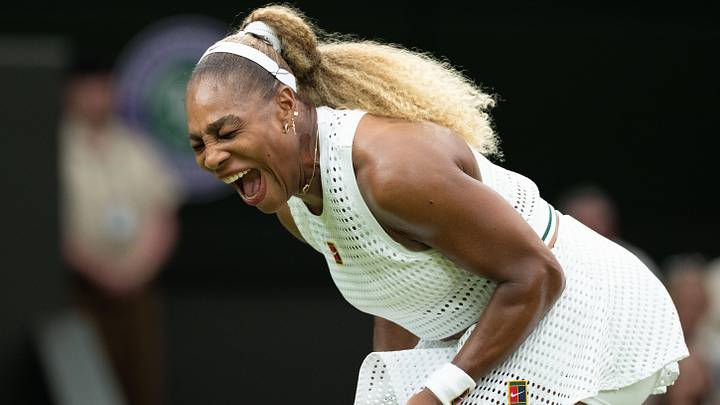
For all its hidebound traditions, Wimbledon decided to do something different this year. The tournament turned back the clock on Tuesday at the All England Club. There on Centre Court (in, symbolically, diminishing evening light), was the familiar sight of Serena Williams, ankles taped, clad in Nike, brandishing a Wilson racket, crowding the baseline, serving in excess of 120 mph, fixing her eyes on targets and rocking her arms as she prepared to return serve.
The nostalgia and throwback only went so far. Serena played more than respectably—surely one of the world’s all-time best players north of 40 years old. She served well, moved respectively, and, at times, did a convincing Serena impersonation. But in the end, the mighty Serena Williams lost to Maya Joint, a game 20-year-old from Australia, 6–3, 6–7, 6–3. And with that, considerable amounts of air left this tournament.
Ever since she announced her comeback, Serena has been the talk of Wimbledon, the biggest source of star wattage and the reason ESPN’s ratings may be higher for this first-round match than for the finals 10 days from now. This is a familiar story of a generational athlete returning, braided with themes of motherhood, self-agency and even the power of GLP-1s.
But, viewed objectively, this match was more about the opponent than the headliner. A former star at Texas, Joint turned pro as a teenager and cracked the top 30 in the WTA rankings. This year, at 20, she’s struggled mightily, having lost 12 of the past 13 matches she’s played. But tonight, in the strangest and most pressure-stuffed match of her career, she was the player who imposed herself, who protected her second serve, won the majority of the long rallies and handled the occasion with poise to burn.
Four years ago at Wimbledon, Serena lost to France’s Harmony Tan, moving sluggishly, making scads of errors and playing at a level unworthy of a GOAT. On Tuesday, she would have beaten that player handily. Against a player half her age, she hung in rallies, clubbed seven aces and showed flashes of brilliance. She also suffered from the lack of match play, made a series of questionable decisions, played too many balls to the middle of the court and missed too many second-serve returns. “Respectable” was a word scribbled in my notes more than once. Not dazzling. Not embarrassing. Respectable.
Where does Serena go from here? The first answer is the Wimbledon doubles draw, where she will pair with her sister, Venus, their combined age being 90. The bigger question: Was this a fun detour and experiment, a chance for a player to test herself and play in front of her kids when they could appreciate Mom’s aura? Or will this fail to slake her thirst for competition, and she’ll start training for the U.S. hard-court season?
Speculating about anything Serena-related is a fool’s errand. Always has been. But if she continues this comeback, she’ll need more match play, a bit more movement and better returning.
This we can say with certitude: Serena didn’t lose on Tuesday. Not in the big picture. But she didn’t win either. Her career singles record coming in was 858–156. It is now 858–157.
Meanwhile, the doubles team of time and biology remains, of course, unbeaten.
More Tennis from Sports Illustrated
 Add us as a preferred source on Google
Jon Wertheim is a senior writer for Sports Illustrated and has been part of the full-time SI writing staff since 1997, largely focusing on the tennis beat, sports business and social issues, and enterprise journalism. In addition to his work at SI, he is a correspondent for “60 Minutes” and a commentator for The Tennis Channel. He has authored 11 books and has been honored with two Emmys, numerous writing and investigative journalism awards, and the Eugene Scott Award from the International Tennis Hall of Fame. Wertheim is a longtime member of the New York Bar Association (retired), the International Tennis Writers Association and the Writers Guild of America. He has a bachelor’s in history from Yale University and received a law degree from the University of Pennsylvania. He resides in New York City and Paris with his wife, who is a divorce mediator and adjunct law professor. They have two children.
Follow jon_wertheim