%20%20--%3E%0A%3Csvg%20version%3D%221.1%22%20id%3D%22Layer_1%22%20xmlns%3D%22http%3A%2F%2Fwww.w3.org%2F2000%2Fsvg%22%20xmlns%3Axlink%3D%22http%3A%2F%2Fwww.w3.org%2F1999%2Fxlink%22%20x%3D%220px%22%20y%3D%220px%22%0A%09%20width%3D%2239px%22%20height%3D%2240px%22%20viewBox%3D%220%200%2039%2040%22%20enable-background%3D%22new%200%200%2039%2040%22%20xml%3Aspace%3D%22preserve%22%3E%0A%3Cpath%20fill%3D%22%23FFFFFF%22%20d%3D%22M38.5%2C7H28.2v26h10.3V7z%22%2F%3E%0A%3Cpath%20fill-rule%3D%22evenodd%22%20clip-rule%3D%22evenodd%22%20fill%3D%22%23FFFFFF%22%20d%3D%22M26.1%2C25.5c0%2C5.8-4.1%2C7.5-12.9%2C7.5C3.9%2C33%2C0%2C31.2%2C0%2C25.2v-1.1h11.6%0A%09v2.4c0%2C0.7%2C0.1%2C1.4%2C1.2%2C1.4c1%2C0%2C1.2-0.4%2C1.2-1.3v-0.9c0-1.6-0.9-1.6-3.5-2.2C2.2%2C21.7%2C0%2C19.7%2C0%2C15.3v-0.9C0%2C9.3%2C5.5%2C7%2C12.9%2C7%0A%09c10.2%2C0%2C12.8%2C2.6%2C12.8%2C7.4v1.8h-11v-2.9c0-0.6-0.4-1.1-1.2-1.1c-0.6%2C0-1.2%2C0.4-1.2%2C1.1v0.9c0%2C1.5%2C0.9%2C2%2C3.3%2C2.5%0A%09c8%2C1.6%2C10.5%2C3.3%2C10.5%2C7.5V25.5z%22%2F%3E%0A%3C%2Fsvg%3E%0A)
Marathons on Every Continent. Cancer Research Fundraising. What Can’t This U.S. Olympian Do?
It’s the morning after a tumultuous polar storm in 2013 and Winter Vinecki, a future Olympic aerial skier, is tucked into the side of a small rubber motor boat approaching Antarctica’s shores.
She’s 14, alongside her mother, Dawn Estelle, and is guided by naivety and love as she prepares for the third marathon in her journey to become the youngest person to run a marathon on every continent.
The night prior, she passed through the perilous Drake Passage on a Russian research vessel, barreling from Argentina towards Antarctica through a body of water that has instilled centuries of fear in adventurers.
“It has some of the most notoriously rough waters in the world, and we actually hit a hurricane which had 35-foot waves and 75-mile-an-hour winds that were rocking our boat,” Vinecki says. “We just crossed our fingers that it would get better. ... We woke up to race in the morning, and the weather was beautiful.”
26.2 grueling miles later, with a marathon course altered for some aggressive seals and curious penguins blocking the way, she and Estelle crossed her third of seven finish lines.
“You don’t really know what's scary until people start telling you it’s scary or something happens that’s scary,” Vinecki says. “Running these marathons, I was doing what I was loving, and I had my mom by my side.”
Within a year, Vinecki would become the youngest person to ever complete a marathon on every continent, including the steep Inca Trail Marathon, considered the toughest marathon in the world, as well as the Eugene Marathon, the Amazing Maasai Marathon in Kenya and races in Mongolia, New Zealand and finally Athens.

Most people would be satisfied with a Guinness world record and a lifetime’s worth of memories traveling the globe. But for Vinecki, this was only the beginning of a life of purpose.
Law Student by Day, Winter Olympian ... Also by Day
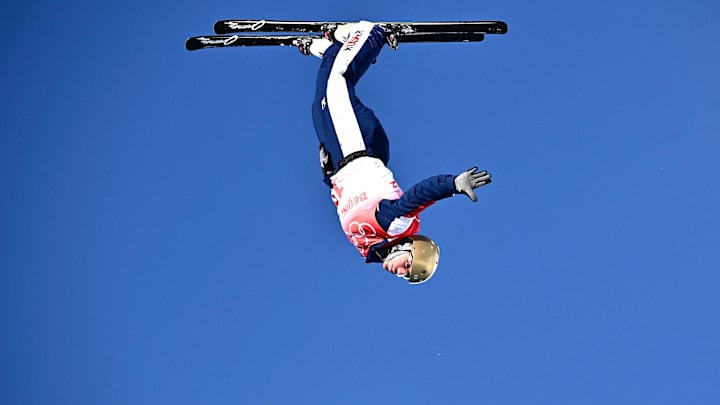
Thirteen years after completing her marathon journey, Vinecki is now competing in her second Winter Olympics in aerial skiing. To say her life has always been a balancing act may be an understatement.
Despite undertaking marathons and Olympic training, her focus often remains on her academic career. Vinecki attended a remote high school program through Stanford University before graduating from the University of Utah. While studying her aerial programs at the 2026 Milan Cortina Olympics, she also happens to be a St. Mary's University School of Law student.
When planning her extensive travel, Vinecki doesn’t just have to worry about her fitness or gear, but also about making time for her academic duties. It involves reading on planes and Zoom classes in cars, taking advantage of any opportunity regardless of how much event performance may influence her life.
“My life is definitely a balancing act,” Vinecki says. “The winters are the most challenging part of it, because of the time zone differences when we’re traveling around for the World Cups and now the Olympics.”

Of the nearly 3,000 athletes at the 2026 Winter Olympics, few juggle as many daunting tasks outside their sport, whether punishing physical feats or the relentless pursuit of a degree as demanding as law. Even fewer are likely to have deliberately harnessed fear as she has.
“Some people think you need to be fearless, but that’s definitely not the case at all. I think fear is a skill you can work on overcoming, just like anything else,” Vinecki says. “Every day, I am practicing overcoming fear and making sure I’m in the best headspace possible. ... It’s scary all the time. You’d have to be a bit crazy if you thought it wasn’t scary.”
For Vinecki, aerial skiing isn’t all about acrobatics and precision, nor are her other pursuits—it’s simply about finding comfort within fear and striking the balance to conquer any challenge. After losing her dad to cancer when she was 10, Vinecki had the perfect example of this in her marathon partner: her mother.
“I think some of her determination and grit comes from the fact that she had a strong mother who, despite losing her husband and never remarrying, she saw what I was capable of doing as a woman,” Estelle says. “We taught all our kids to dream big and to visualize.”

That visualization has become vital and has come a long way since Estelle helped a 13-year-old Vinecki post a sign in her bedroom that said “triples,” which has led to her 2026 Olympic routine of triple twisting and triple backflips.
“I think some people are just wired differently,” Estelle says. “I think when you lose somebody like your father at such a young age, it really changes you.”
How Starting a Nonprofit Led to Aerial Skiing
An avid athlete as a young kid, Vinecki took on triathlons after running her first 5K race at 5 years old.
At 9 years old, she remembers standing at the start line of a triathlon at Orlando’s Disney World and seeing her dad, Michael, who was already battling prostate cancer. Months later, everything shifted. Michael died, and Winter quickly turned her athletic pursuits into fundraising targets through Team Winter, raising over $400,000 through the nonprofit she established to support prostate cancer research.
Estelle, a full-time obstetrician and gynecologist, then moved the family from Gaylord, Mich., to Salem, Ore., where she could find a more balanced work situation and a better life for Winter and her three brothers.
It also meant that Vinecki, already an elite triathlete and Alpine ski racer, would be closer to premier training areas. It didn’t take long for a 12-year-old Vinecki to stumble upon the Guinness Book of World Records and see that the record for the youngest person to run a marathon on every continent belonged to a 27-year-old man.
“I knew I wanted to get this record for my dad,” she says. “But I didn’t think it would actually be possible.”
For Estelle—who, with Michael, refused to tell her children anything was impossible—it ignited a worldwide quest for races that led her to run all seven marathons across the globe with her daughter.
“I didn’t realize that the hardest part would be getting her to the start line—we had so many race directors say she was too young,” Estelle says. “I look back and I can’t fathom how I did it all.”
Less than a year before that tour, Vinecki discovered aerial skiing on a trip to New York City to receive the 2011 Annika Inspiration Award, which honors women “leaving a legacy of empowerment, transformation and positive impact.” The intensity of her speech and her slight figure caught the attention of Vancouver 2010 Olympian Emily Cooke, who proposed the idea of aerial skiing to Vinecki rather than Alpine skiing.

Vinecki eventually made her way to Park City, Utah, to stay with Cooke and attempt the sport for the first time in the pool, where aerial skiers launch themselves off training jumps into water throughout the summer. It didn’t take long before she was hooked.
“I didn’t really know anything about aerials or the whole freestyle world that was out there, but I always liked new challenges,” Vinecki says. “After I tried it, I told my mom to sell the racing skis. I wanted to do aerials.”
The 2018 PyeongChang Olympics became the goal, but facial injuries and a torn ACL kept her from making her Olympic debut. Four years later, she finished 15th at the 2022 Beijing Games, where she became the first person named Winter to go to the season’s marquee sporting event. Now, eight years on, she’s still jumping with the same love, inspiration and comfort within fear.
“I’ve really grown as a jumper in person over the last four years and since Beijing,” she says. “Right now, I’m just excited to go out there and take all these lessons and experiences that I’ve had over my life to be able to hopefully, put down some good jumps and see where it takes me.”
And for once, Vinecki doesn’t have to pursue a balancing act while at the Milan Cortina Olympics. Her law school postponed her assignments for the Winter Games. But what’s certain for Vinecki is that when one flame goes out in the Olympic cauldron next week, another will surely light within her.
More Winter Olympics on Sports Illustrated
 Add us as a preferred source on Google
Ben Steiner is an American-Canadian journalist who brings in-depth experience, having covered the North American national teams, MLS, CPL, NWSL, NSL and Liga MX for prominent outlets, including MLSsoccer.com, CBC Sports, and OneSoccer.
Follow BenSteiner00