%20%20--%3E%0A%3Csvg%20version%3D%221.1%22%20id%3D%22Layer_1%22%20xmlns%3D%22http%3A%2F%2Fwww.w3.org%2F2000%2Fsvg%22%20xmlns%3Axlink%3D%22http%3A%2F%2Fwww.w3.org%2F1999%2Fxlink%22%20x%3D%220px%22%20y%3D%220px%22%0A%09%20width%3D%2239px%22%20height%3D%2240px%22%20viewBox%3D%220%200%2039%2040%22%20enable-background%3D%22new%200%200%2039%2040%22%20xml%3Aspace%3D%22preserve%22%3E%0A%3Cpath%20fill%3D%22%23FFFFFF%22%20d%3D%22M38.5%2C7H28.2v26h10.3V7z%22%2F%3E%0A%3Cpath%20fill-rule%3D%22evenodd%22%20clip-rule%3D%22evenodd%22%20fill%3D%22%23FFFFFF%22%20d%3D%22M26.1%2C25.5c0%2C5.8-4.1%2C7.5-12.9%2C7.5C3.9%2C33%2C0%2C31.2%2C0%2C25.2v-1.1h11.6%0A%09v2.4c0%2C0.7%2C0.1%2C1.4%2C1.2%2C1.4c1%2C0%2C1.2-0.4%2C1.2-1.3v-0.9c0-1.6-0.9-1.6-3.5-2.2C2.2%2C21.7%2C0%2C19.7%2C0%2C15.3v-0.9C0%2C9.3%2C5.5%2C7%2C12.9%2C7%0A%09c10.2%2C0%2C12.8%2C2.6%2C12.8%2C7.4v1.8h-11v-2.9c0-0.6-0.4-1.1-1.2-1.1c-0.6%2C0-1.2%2C0.4-1.2%2C1.1v0.9c0%2C1.5%2C0.9%2C2%2C3.3%2C2.5%0A%09c8%2C1.6%2C10.5%2C3.3%2C10.5%2C7.5V25.5z%22%2F%3E%0A%3C%2Fsvg%3E%0A)
Why Veronica Burton Ranks As the WNBA’s Most Impactful Player
In this story:
Suppose you wanted to rank the most impactful players of the 2026 WNBA season without using box score statistics. How would you do it?
A natural place to begin is to compare how a player’s team performs when they are on the court versus when they are off of it. The idea is straightforward—the most impactful players should create the largest on-off differences (or splits)—but it is missing context. It can be improved by adjusting for the strength of who a player played with and against, which is exactly what Regularized Adjusted Plus-Minus (RAPM) is built to do.
Yet, RAPM is still missing context in a one-year setting. At the beginning of the season, every player is a stranger, and their estimated impact from previous seasons has no bearing on their baseline for the next one. Intuitively, recent history contains information worth valuing. Take Breanna Stewart, who entered 2026 ranked third in three-year RAPM from 2023 to 2025. If you wanted to predict Stewie’s impact in 2026, knowing how she performed over the last few seasons would provide a useful starting point.
One solution, then, is to carry some of that information forward. Prior-informed RAPM does this by incorporating a small share of each player’s previous three-year baseline; in other words, it encodes a prior belief about each player’s likely impact. As it turns out, the added information helps one-year RAPM's predictive power while keeping player impact estimates grounded in current season play.
So, what does that model make of the 2026 season?
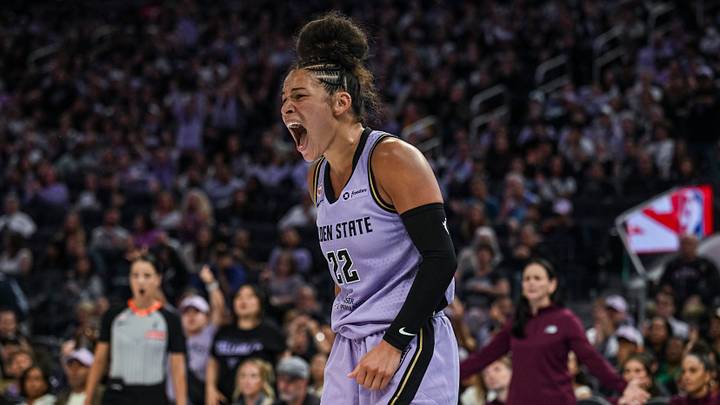
By single-season prior-informed RAPM, Valkyries guard Veronica Burton ranks as the WNBA’s most impactful player. That might be surprising, as her game isn’t loud. She doesn’t sink logo threes like Caitlin Clark, deliver soul-crushing rejections like A’ja Wilson or whip mind-bending passes like Olivia Miles. From the outside, Burton looks like an efficient two-way player on a top team. Nothing more.
Is there evidence that helps explain why prior-informed RAPM views Burton so highly, then? Start with its closest cousin: lineup-based impact. Burton appears in the first- and seventh-best lineups by defensive rating. She also has the third-best individual net rating (+13.7) and the fifth-highest net rating on-off split (+14.0) in the entire league.
Dig a little deeper, though, and Burton looks like an elite two-way player. While prior-informed RAPM doesn’t see anything beyond who was on the floor and what the scoring margin was for a given possession, box score statistics can help explain why those aggregated numbers look the way they do.
Begin with ball security and playmaking. Burton is on pace to become the third player in league history to start for an entire season and finish with an assist-to-turnover ratio above 4.0. The Valkyries commit about four fewer turnovers and generate two more assists per 100 possessions with her on the floor than with her off it. With Burton running point, the Valkyries share and take care of the basketball.
Move on to foul pressure. Burton has drawn 8.2 personal fouls per 100 possessions (10th in the WNBA, nearly on par with Kahleah Copper) and shooting fouls on 22.8% of her two-point attempts (11th). Even if she isn’t forcing her way to the rim as often as a player like Copper does, Burton still finds a way to tag her opponents with fouls and get to the line.
Then dive into efficiency and self-creation. Burton is one of 15 players leaguewide who have an effective field goal percentage of at least 50% and have made at least 45% of their field goals without an assist. To put another spin on it, Burton has maintained those numbers despite having the seventh-lowest expected field goal percentage (38.4%) among guards. She has been efficient without always being set up.
And, finally, end with defense. Golden State forces its opponents to shoot 41.7% from the floor and commit turnovers 19.6% of the time when Burton is on the court, the third- and sixth-best individual marks in the league, respectively. Burton had also surrendered the fewest points per direct drive and the second-fewest points per play as the ball handler defender on pick-and-rolls among qualified players as of mid-August, per GeniusIQ data via Nekias Duncan. Simply put: Burton is one of the three wardens of Valkatraz, alongside Gabby Williams and Kiah Stokes.
That helps explain why Burton’s impact looks the way that it does, even if prior-informed RAPM sees none of that information directly. Still, prior-informed RAPM may be overrating Burton’s impact. Work backwards: Burton, while a strong defender in her own right, plays next to two All-Defense candidates in Williams and Stokes. On offense, she has been relatively efficient but not overwhelmingly so. (Her 1.02 points per shot attempt is average for players with usage rates below 20%.) All told, Burton’s impact on a deep Valkyries team should be viewed with more uncertainty than her No. 1 ranking might suggest.
As for the remaining players in the top 10? Kaila Charles features in the league’s top defensive lineup alongside Burton. The rest are the usual suspects. Jackie Young, Wilson and Allisha Gray have the three best on-off net rating splits (+28.5, +26.3 and +17.1, respectively) in the WNBA. (Wilson pairs her lineup impact with massive box score production. She’s the MVP frontrunner for a reason.) Natasha Howard and Miles both are a part of the league’s top lineup by offensive rating, and the fourth lineup by net rating. They sit behind Aliyah Boston and Kelsey Mitchell, who have both powered the Fever to one of the best offensive seasons in league history.
That leaves Paige Bueckers. No one in the league takes on a more difficult offensive role and elevates her team quite like Bueckers: The Wings’ effective field goal percentage jumps from 47.1% when she’s off the court to 53.9% when she’s on it, the second-largest positive difference for an individual player.
Get all that? Those numbers help explain the top 10, but the more interesting cases might be the players whose previous baseline is helping (or hurting) their ranking in prior-informed RAPM. Take a player like Jacy Sheldon. She had the second-worst three-year RAPM rating from 2023 to 2025, which may have been influenced by playing for struggling teams in Dallas, Connecticut and Washington. Now playing for Chicago, Sheldon has produced a positive on-off net rating split (+4.6) for the first time in her career.
Both ordinary one-year RAPM and prior-informed RAPM agree that Sheldon has had a positive impact in 2026, but they disagree in terms of magnitude. Ordinary one-year RAPM only sees her positive possessions in ’26 and ranks her as this season’s 26th-most impactful player. That could be true, but it seems high. Prior-informed RAPM “remembers” Sheldon’s previous baseline and ranks her 61st. Still above average, but with a more moderate, informed view of her impact this year.
Sometimes, imbuing RAPM with a little memory of the past helps make it a better judge of what’s happening right now.
 Add us as a preferred source on Google
Dan Falkenheim is a fact checker for Sports Illustrated, where he may inundate you with numbers when he writes women's hoops. He joined the SI staff in September 2018 and also produces Faces in the Crowd for print. A graduate of Montclair State, Dan first got hooked on women’s basketball when covering the Red Hawks’ run to the 2015 Division III Final Four for the student newspaper. He lives in New Jersey with his wife and sweet rescue dog, Hari.
Follow thefalkon