%20%20--%3E%0A%3Csvg%20version%3D%221.1%22%20id%3D%22Layer_1%22%20xmlns%3D%22http%3A%2F%2Fwww.w3.org%2F2000%2Fsvg%22%20xmlns%3Axlink%3D%22http%3A%2F%2Fwww.w3.org%2F1999%2Fxlink%22%20x%3D%220px%22%20y%3D%220px%22%0A%09%20width%3D%2239px%22%20height%3D%2240px%22%20viewBox%3D%220%200%2039%2040%22%20enable-background%3D%22new%200%200%2039%2040%22%20xml%3Aspace%3D%22preserve%22%3E%0A%3Cpath%20fill%3D%22%23FFFFFF%22%20d%3D%22M38.5%2C7H28.2v26h10.3V7z%22%2F%3E%0A%3Cpath%20fill-rule%3D%22evenodd%22%20clip-rule%3D%22evenodd%22%20fill%3D%22%23FFFFFF%22%20d%3D%22M26.1%2C25.5c0%2C5.8-4.1%2C7.5-12.9%2C7.5C3.9%2C33%2C0%2C31.2%2C0%2C25.2v-1.1h11.6%0A%09v2.4c0%2C0.7%2C0.1%2C1.4%2C1.2%2C1.4c1%2C0%2C1.2-0.4%2C1.2-1.3v-0.9c0-1.6-0.9-1.6-3.5-2.2C2.2%2C21.7%2C0%2C19.7%2C0%2C15.3v-0.9C0%2C9.3%2C5.5%2C7%2C12.9%2C7%0A%09c10.2%2C0%2C12.8%2C2.6%2C12.8%2C7.4v1.8h-11v-2.9c0-0.6-0.4-1.1-1.2-1.1c-0.6%2C0-1.2%2C0.4-1.2%2C1.1v0.9c0%2C1.5%2C0.9%2C2%2C3.3%2C2.5%0A%09c8%2C1.6%2C10.5%2C3.3%2C10.5%2C7.5V25.5z%22%2F%3E%0A%3C%2Fsvg%3E%0A)
WNBA Can’t Escape Officiating Woes After Caitlin Clark Takes Back-to-Back ‘Cheap Shots’
In this story:
Editor’s note: After this column was published, the WNBA announced that Alyssa Thomas has received a Flagrant 2 foul and a one-game suspension for “recklessly making contact with her fist to the throat” of Caitlin Clark in Wednesday’s game.
The WNBA opened this year with a splashy announcement on refereeing. An offseason task force had resulted in new points of education for officials—with a special emphasis on freedom of movement. In May, with foul calls ticking slightly upward, WNBA leadership said they were pleased with the changes.
But one task force does not cure all ills. There are still frustrations and controversies here. And those are never more scrutinized or hotly debated than when they concern Caitlin Clark. The league should have plenty to celebrate right now as it gets into the heart of the season. Instead, once again, the WNBA finds itself mired in a controversy about its officiating.
The Mercury and Fever played a chippy game on Monday that ended with six technical fouls. (A particularly controversial one of those went to Clark.) The teams rematched on Wednesday. Clark left the floor during the third quarter with a back injury and did not return as the Mercury edged out the Fever, 111–109.
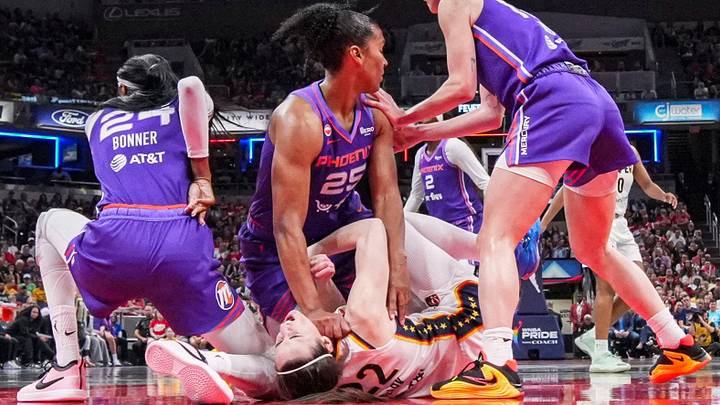
There were two plays before halftime that seemed to play a role there. The one that has circulated the most widely came in the second quarter: Clark drove into the lane and went down after contact with a defender before trying to pass out of the resulting scramble on the floor. Mercury forward Alyssa Thomas was then seen pressing her fist into Clark’s throat. There was no call. Then, soon after, Clark took a three and was closed out on by Phoenix defender Valeriane Ayayi. There was a whistle followed by an on-site review of the play. The foul was not upgraded to a reckless closeout.
Stephanie White went off on the officials for not calling what she deemed two "cheap shots" on Caitlin Clark.
— espnW (@espnW) June 25, 2026
Clark exited in the second half because of back issues. pic.twitter.com/gj1Y1GfiOC
“Number one, you’ve got to call it,” said Fever coach Stephanie White. “It’s absolutely egregious and utterly disrespectful. And then number two, you’re coming in here aware of what happened two nights ago, and that s--- still happens. Absolutely unacceptable. The reckless closeout, that they actually reviewed, the foot still comes down on top of the defender’s foot—that wasn’t upgraded. Absolutely disrespectful. We have a generational talent and WNBA superstar who had two cheap shots right there that weren’t called, and I just say again, absolutely unacceptable.”
This was as clearly frustrated as White has been about officiating since the coach returned to lead the Fever in 2025. (Asked why this specific game provoked such a response, White said, “When you have these things continue to happen, time and time and time and time and time again, eventually, it gets frustrating. But I thought those were just more egregious.”) The public discourse around the topic is often reductive or even patronizing. But this particular example seems very clear.
It’s not about protecting Clark. Nor should it be about gratitude for how she has changed the league or preservation of the financial gains she represents or any of the other grand causes to which people sometimes point during officiating failures. It’s about calling games evenly and fairly. Clark is a competitor who has been clear that all she wants to do is play good basketball. That requires strong, consistent officiating, and that has not always been on display.
“We spent all offseason looking at officiating,” White said later in her press conference. “All offseason, and I still say, the one thing that we keep asking for is consistency. She is not called the same way everybody else is called.”
Clark is getting more whistles this season than she has previously in her career. (She currently ranks seventh in the WNBA in free-throw attempts per game with 6.1.) But there are still mistakes and inconsistencies from game to game. What happened on Wednesday was an especially notable one.
It has blown up to the degree that it has because of the players involved. But it should not particularly matter that it revolved around Thomas and Clark. It should matter that it was a foul and that it should have been called as such. The last few years have seen these refereeing controversies repeatedly grow big enough to block out every other conversation and storyline in the league. The WNBA should be past that. And it’s a shame that it’s not.
More WNBA from Sports Illustrated
 Add us as a preferred source on Google
Emma Baccellieri is a staff writer focused on women’s basketball for Sports Illustrated. She previously covered MLB. She has also written for Baseball Prospectus and has been honored with multiple awards from the Society of American Baseball Research. A graduate of Duke University, she lives in Washington, D.C.
Follow emmabaccellieri