%20%20--%3E%0A%3Csvg%20version%3D%221.1%22%20id%3D%22Layer_1%22%20xmlns%3D%22http%3A%2F%2Fwww.w3.org%2F2000%2Fsvg%22%20xmlns%3Axlink%3D%22http%3A%2F%2Fwww.w3.org%2F1999%2Fxlink%22%20x%3D%220px%22%20y%3D%220px%22%0A%09%20width%3D%2239px%22%20height%3D%2240px%22%20viewBox%3D%220%200%2039%2040%22%20enable-background%3D%22new%200%200%2039%2040%22%20xml%3Aspace%3D%22preserve%22%3E%0A%3Cpath%20fill%3D%22%23FFFFFF%22%20d%3D%22M38.5%2C7H28.2v26h10.3V7z%22%2F%3E%0A%3Cpath%20fill-rule%3D%22evenodd%22%20clip-rule%3D%22evenodd%22%20fill%3D%22%23FFFFFF%22%20d%3D%22M26.1%2C25.5c0%2C5.8-4.1%2C7.5-12.9%2C7.5C3.9%2C33%2C0%2C31.2%2C0%2C25.2v-1.1h11.6%0A%09v2.4c0%2C0.7%2C0.1%2C1.4%2C1.2%2C1.4c1%2C0%2C1.2-0.4%2C1.2-1.3v-0.9c0-1.6-0.9-1.6-3.5-2.2C2.2%2C21.7%2C0%2C19.7%2C0%2C15.3v-0.9C0%2C9.3%2C5.5%2C7%2C12.9%2C7%0A%09c10.2%2C0%2C12.8%2C2.6%2C12.8%2C7.4v1.8h-11v-2.9c0-0.6-0.4-1.1-1.2-1.1c-0.6%2C0-1.2%2C0.4-1.2%2C1.1v0.9c0%2C1.5%2C0.9%2C2%2C3.3%2C2.5%0A%09c8%2C1.6%2C10.5%2C3.3%2C10.5%2C7.5V25.5z%22%2F%3E%0A%3C%2Fsvg%3E%0A)
The Lowest Seeds to Ever Win in March Madness—Which Cinderellas Will Emerge in 2026?
We’ve made it folks. After a stellar season of men’s college basketball action, March Madness is upon us once again. Through the next three weeks, brackets will be built and busted, Cinderella slippers worn and lost and buzzers will be beaten.
With so much to look forward to, it can be hard to remember to look back, but before building any of your brackets, let’s consider the history of the men’s NCAA tournament and its Cinderella stories.
Just how far can a Cinderella team go? Do 16-seeds ever actually win? And is that 12–5 upset thing legit or just a talking point for the bracketology shows? We break it all down below as we go through the lowest seeds to even make runs in March Madness.
Has a 16-seed ever won a game in the men’s NCAA tournament?
College basketball fans spent years wondering if the impossible would ever come to pass—could a No. 1 seed in a region ever lose in the first round to their small-school No. 16 opponent? There were a few close calls, but for the most part, these games were barely even considered a formality—it was a good time for the top seeds in the tournament to ensure that every player on their roster got to enjoy at least a few minutes of March Madness action.
But in 2018, the UMBC Retrievers changed everything, becoming the first 16-seed to ever win a first-round game. Fairleigh Dickinson joined them five years later with another miraculous win.
16-seeds that won in the first round
Year | Upset | Score | End of run |
|---|---|---|---|
2023 | Fairleigh Dickinson over Purdue | 63–58 | Round of 32 |
2018 | UMBC over Virginia | 74–54 | Round of 32 |
No. 16 UMBC takes down No. 1 Virginia in 2018

Before the first-round game between No. 16 UMBC and No. 1 Virginia tipped in Charlotte in March 2018, No. 16 seeds were 0–135 all time facing their top-ranked opponents. The Cavaliers entered the matchup not just as the top seed in the region, but the No. 1 seed of the entire tournament, having completed a stellar 31–2 season as both ACC regular-season and tournament champions.
Obviously the Retrievers pulling off the upset was a shock—UMBC entered the game as 20.5-point underdogs—but even more shocking was how they went about the win. After heading into halftime tied 24–24, the Retrievers absolutely dominated in the second half en route to a 74–54 win that was never close in the final 15 minutes. While it was magic in the moment, the Retrievers’ Cinderella run lasted just one day, as they lost in the second round to No. 9 Kansas State.
In a full-circle moment, the coach of that UMBC team was Ryan Odom, who eventually took over the top job for the Cavaliers after Tony Bennett’s retirement ahead of the 2024–25 season.
No. 16 Fairleigh Dickinson beats No. 1 Purdue in 2023.

You could say that UMBC opened up the floodgates, because after waiting decades for a 16-seed to win in the first round of March Madness, we had to wait only five more years for it to happen a second time.
In 2023, it was the Fairleigh Dickinson Knights who came through as the heroic underdogs, taking down a Purdue team led by Zach Edey. The Knights had to secure an extra win just for the right to take on the Boilermakers, becoming the first 16-seed to win a First Four game and go on to win a game in the first round.
After beating fellow 16-seed Texas Southern in the First Four, coach Tobin Anderson told his players in the locker room, “The more I watch Purdue, the more I think we can beat them.” While this initially read as a coach doing his best to inspire hope toward a hopeless cause, his words would prove prophetic.
It was a true David vs. Goliath situation, as Purdue was not only a one-seed, but also the tallest team in the entire tournament field, while Fairleigh Dickinson was the shortest team in the bracket, but the Knights would prove that at least for one day in March, size didn’t matter.
Unlike UMBC’s upset, Fairleigh Dickinson’s win over Purdue was a tightly contested affair throughout, with the Knights pulling out the 63–58 victory.
Should you pick a 16-seed to upset a 1-seed in your bracket this year?
And here is where I am forced to hit us with a dose of reality. Yes, it is extremely fun to push a 16-seed through to the second round on your bracket, especially if you have a personal vendetta against the one-seed they are up against. But while the feeling can be electric in the moment, I cannot in good conscience recommend it as a bracket-building strategy.
With an all-time record of 2–158 in the first round, the smart play remains, and will always remain, having the 16-seeds get swept out of the first round.
And if you decide not to heed this advice and push another epic upset onto your bracket anyway, please do not force them through to the Sweet 16, as it has still never happened. Then again, you didn’t listen the first time in this hypothetical scenario, so screw it, push them through to the championship. It’s your bracket.
How far has a 15-seed made it in the men’s NCAA tournament?
The 15-seeds have seen more success than 16-seeds historically, and have only been trending upwards in recent years. Heading into 2026, 15-seeds are 11–149 all time in the first round of the tournament, with No. 15 Richmond beating No. 2 Syracuse in 1991 as the first underdog to accomplish the feat.
Most notably, we saw one 15-seed secure a first-round win in three straight tournaments from 2021 to ’23, as well as two 15-seeds (Lehigh and Norfolk State) pull off such an upset in the same tournament in 2012.
Here’s a look at the history of 15-seed upsets, where St. Peter’s remains the most successful in March Madness history.
15-seeds that won in the first round
Year | Upset | Score | End of run |
|---|---|---|---|
2023 | Princeton over Arizona | 59–55 | Sweet 16 |
2022 | St. Peter’s over Kentucky | 85–79 | Elite Eight |
2021 | Oral Roberts over Ohio State | 75–72 | Sweet 16 |
2016 | Middle Tennessee over Michigan State | 90–81 | Round of 32 |
2013 | Florida Gulf Coast over Georgetown | 78–68 | Sweet 16 |
2012 | Norfolk State over Missouri | 86–84 | Round of 32 |
2012 | Lehigh over Duke | 75–70 | Round of 32 |
2001 | Hampton over Iowa State | 58–57 | Round of 32 |
1997 | Coppin State over South Carolina | 78–65 | Round of 32 |
1993 | Santa Clara over Arizona | 64–61 | Round of 32 |
1991 | Richmond over Syracuse | 73–69 | Round of 32 |
No 15-seed has had a run better than St. Peter’s in 2022

Several 15-seeds have captured the hearts of the nation with a Cinderella run through March Madness, with Florida Gulf Coast’s stunning “Dunk City” run in 2013 a standout. With electrifying verticality, FGCU produced plenty of highlights en route to becoming the first 15-seed to ever reach the Sweet 16.
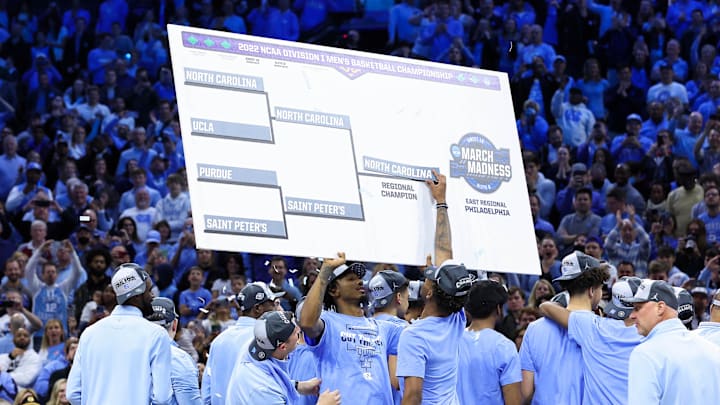
But a decade later, St. Peter’s would best the Eagles’ magical run, toppling No. 2 Kentucky, No. 7 Murray State and No. 3 Purdue to reach the Elite Eight in 2022. The Peacocks had a flair for the dramatic, with their win over the Wildcats coming in overtime and the victory against Purdue coming by a margin of just three points.
They were eventually ousted by North Carolina, who would reach the national championship game. Not bad for a school that had never won a March Madness game heading into the tournament.
Should you pick a 15-seed to upset a 2-seed in your bracket this year?
This one is at least a debate. Especially given the recent trend—we’ve seen a 15-seed win in three of the past five years—if you have a good feeling about a particular matchup in this part of the bracket, it’s a shot you can justify taking. It is a bold shot, but not completely out of the ordinary.
That said, my best advice would be to have the two-seeds sweep the 15-seeds, as it is the safest bet for protecting the long-term viability of your bracket. There are times to take risks in bracket building, but this is usually not one of them. If you call your shot and are correct though, you get to be a hero—and that can be a tough feeling to pass up.
How often do 14-seeds and 13-seeds win in the first round?
This is where things get interesting. Both 14-seeds and 13-seeds have found success in the NCAA tournament at a regular enough clip that while the upsets are still thrilling, they aren’t outright shocking. The 14-seeds have an all-time record of 23–137 in the first round, putting their winning percentage at 14.38%, while 13-seeds have a record of 33–127 to open the tournament, good for a winning percentage of 20.63%.
Over the past 15 tournaments, we’re seeing an average of 1.3 upsets each year from 13- and 14-seeded teams in the first round.
13-seeds that won in the first round
Year | Upset | Score | End of run |
|---|---|---|---|
2024 | Yale over Auburn | 78–76 | Round of 32 |
2023 | Furman over Virginia | 68–67 | Round of 32 |
2021 | Ohio over Virginia | 62–58 | Round of 32 |
2021 | North Texas over Purdue | 78–69 (OT) | Round of 32 |
2019 | UC Irvine over Kansas State | 70–64 | Round of 32 |
2018 | Marshall over Wichita State | 81–75 | Round of 32 |
2018 | Buffalo over Arizona | 89–69 | Round of 32 |
2016 | Hawaii over California | 77–66 | Round of 32 |
2013 | La Salle over Kansas State | 63–61 | Sweet 16 |
2012 | Ohio over Michigan | 65–60 | Sweet 16 |
2011 | Morehead State over Louisville | 62–61 | Round of 32 |
2010 | Murray State over Vanderbilt | 66–65 | Round of 32 |
14-seeds that won in the first round
Year | Upset | Score | End of run |
|---|---|---|---|
2024 | Oakland over Kentucky | 80–76 | Round of 32 |
2021 | Abilene Christian over Texas | 53–52 | Round of 32 |
2016 | Stephen F. Austin over West Virginia | 70–56 | Round of 32 |
2015 | Georgia State over Baylor | 57–56 | Round of 32 |
2015 | UAB over Iowa State | 60–59 | Round of 32 |
2014 | Mercer over Duke | 78–71 | Round of 32 |
2013 | Harvard over New Mexico | 68–62 | Round of 32 |
2010 | Ohio over Georgetown | 97–83 | Round of 32 |
While 14-seeds and 13-seeds have more success in the opening round of the tournament, they don’t have a great history of making a deep run in March
One of the difficult aspects of being a 14- or 13-seed that pulls off a first-round upset is the fact that they are usually faced with another tough opponent in the second round. While a 15-seed will be matched up against a seven- or 10-seed with a spot in the Sweet 16 on the line, the shape of the bracket means that teams on the No. 14 or 13 line will likely need to pull off significant upsets in back-to-back games to reach the second weekend of action. The numbers bear this out—while 14- and 13-seeds have recorded 20 first-round wins since 2010, just two have gone on to reach the Sweet 16.
Do 12-seeds really win that often in the first round?
All this week an outsized amount of attention will be paid to the 12–5 matchups and the potential upsets that could come out of it. Even the most casual of bracket builders knows that if they want to pick an upset, 12–5 games are the place to start.
Does the matchup live up to its popularity as an upset spot? It changes from year to year, but the upsets are there—in three of the past four tournaments, 12-seeds have gone 2–2 through the first round.
Year | 12-5 Upsets | Deepest run |
|---|---|---|
2025 | 2 | Colorado State and McNeese, Round of 32 |
2024 | 2 | James Madison and Grand Canyon, Round of 32 |
2023 | 0 | N/A |
2022 | 2 | New Mexico State and Richmond, Round of 32 |
2021 | 1 | Oregon State, Elite Eight |
2019 | 3 | Oregon, Sweet 16 |
2018 | 0 | N/A |
2017 | 1 | Middle Tennessee, Round of 32 |
2016 | 2 | Yale and Little Rock, Round of 32 |
2015 | 0 | N/A |
2014 | 3 | Stephen F. Austin, North Dakota State and Harvard, Round of 32 |
2013 | 3 | Oregon, Sweet 16 |
2012 | 2 | VCU and South Florida, Round of 32 |
2011 | 1 | Richmond, Sweet 16 |
2010 | 1 | Cornell, Sweet 16 |
Mostly, the 12–5 matchup is a break-even point in the class of teams that make the tournament field, providing a perfect place for at-large bids from power conferences to face off against a mid-major opponent they know nothing about.
Taking a 12-seed to the Sweet 16 is a good idea for anyone looking to be bold, but not too bold, while building their bracket.
How far has an 11-seed made it in the men’s NCAA tournament?

The 11-seed just might be the Cinderella sweet spot. Teams on the No. 11 line of the bracket have made a run to the Final Four on six different occasions, including twice in the past five years. For comparison’s sake, six-seeds and seven-seeds have just three appearances each in the Final Four since the tournament expanded to 64 teams.
These are teams that are easy to fall in love with. Loyola Chicago’s run in 2018, with Sister Jean leading the way, felt straight out of a Disney movie. And the wild ride that NC State took in 2024—losing its final four games of the regular season only to storm from the No. 10 seed in the ACC to win the conference tournament, and carry that run to four more wins in March Madness—was an absolute joy to watch.
Should you pick an 11-seed to make a run in the tournament this year?
It will depend on the teams! Not all 11-seeds are created equal. But if a team that you like winds up on the No. 11 line, they will likely have a better path to the second and third weekends of the tournament than many teams seeded a few spots higher than them.
The numbers bear this out—six 11-seeds have reached the Final Four since the tournament expanded to 64 teams, while just three nine-seeds have made such a run.
What’s the lowest seed to ever win the men’s NCAA tournament?
When picking a champion for your bracket, the safest bet is to go with your favorite one-seed, as more than half of the tournaments since expansion have been won by one of the top seeds out of their respective region.
If you want to go further down the list of potential champions, history suggests that the further you look is at the eight-seed.
In 1985, the first year that the tournament expanded to include 64 teams, meaning every team in the bracket had to win six games en route to claiming the championship, Villanova won its region as an eight-seed, and went on to claim the title. The Wildcats remain the lowest-seeded team to ever win the national championship.
While everyone loves a magical run, it’s tough to go against history when trying to choose a champion for your bracket. 65% of all title winning teams have entered the tournament as a one-seed, and nearly 90% of eventual champions were seeded at least amongst the top three in their region.
How likely is each seed to advance through each round of the tournament?
Below is a breakdown of each seed’s history of advancing through the tournament. Note that the percentages for both the final and the championship get a bit wonky due to the limited spots available in those games compared to the rest of
Seed | R32 | Sweet 16 | Elite Eight | Final Four | Final | Championship |
|---|---|---|---|---|---|---|
1 | 98.8% | 85% | 66.9% | 41.3% | 51.3% | 65% |
2 | 93.1% | 64.4% | 45% | 20% | 16.3% | 12.5% |
3 | 85.6% | 52.5% | 25.6% | 10.6% | 13.8% | 10% |
4 | 79.4% | 48.1% | 15.6% | 9.4% | 5% | 5% |
5 | 64.4% | 34.4% | 7.5% | 5.6% | 5% | 0% |
6 | 61.3% | 29.4% | 10.6% | 1.9% | 2.5% | 2.5% |
7 | 61.3% | 18.1% | 6.3% | 1.9% | 1.3% | 2.5% |
8 | 48.1% | 10% | 5.6% | 3.8% | 5% | 2.5% |
9 | 51.9% | 5% | 3.1% | 1.3% | 0% | 0% |
10 | 38.8% | 15% | 5.6% | 0.6% | 0% | 0% |
11 | 38.8% | 16.9% | 6.3% | 3.8% | 0% | 0% |
12 | 35.6% | 13.8% | 1.3% | 0% | 0% | 0% |
13 | 20.6% | 3.8% | 0% | 0% | 0% | 0% |
14 | 14.4% | 1.3% | 0% | 0% | 0% | 0% |
15 | 6.9% | 2.5% | 0.6% | 0% | 0% | 0% |
16 | 1.3% | 0% | 0% | 0% | 0% | 0% |
More College Basketball on Sports Illustrated
 Add us as a preferred source on Google
Tyler Lauletta was a staff writer for the Breaking and Trending News team at Sports Illustrated. Before joining SI, he covered sports for nearly a decade at Business Insider, and helped design and launch the OffBall newsletter. He is a graduate of Temple University in Philadelphia, and remains an Eagles and Phillies sicko. When not watching or blogging about sports, Tyler can be found scratching his dog behind the ears.
Follow tylerlauletta