%20%20--%3E%0A%3Csvg%20version%3D%221.1%22%20id%3D%22Layer_1%22%20xmlns%3D%22http%3A%2F%2Fwww.w3.org%2F2000%2Fsvg%22%20xmlns%3Axlink%3D%22http%3A%2F%2Fwww.w3.org%2F1999%2Fxlink%22%20x%3D%220px%22%20y%3D%220px%22%0A%09%20width%3D%2239px%22%20height%3D%2240px%22%20viewBox%3D%220%200%2039%2040%22%20enable-background%3D%22new%200%200%2039%2040%22%20xml%3Aspace%3D%22preserve%22%3E%0A%3Cpath%20fill%3D%22%23FFFFFF%22%20d%3D%22M38.5%2C7H28.2v26h10.3V7z%22%2F%3E%0A%3Cpath%20fill-rule%3D%22evenodd%22%20clip-rule%3D%22evenodd%22%20fill%3D%22%23FFFFFF%22%20d%3D%22M26.1%2C25.5c0%2C5.8-4.1%2C7.5-12.9%2C7.5C3.9%2C33%2C0%2C31.2%2C0%2C25.2v-1.1h11.6%0A%09v2.4c0%2C0.7%2C0.1%2C1.4%2C1.2%2C1.4c1%2C0%2C1.2-0.4%2C1.2-1.3v-0.9c0-1.6-0.9-1.6-3.5-2.2C2.2%2C21.7%2C0%2C19.7%2C0%2C15.3v-0.9C0%2C9.3%2C5.5%2C7%2C12.9%2C7%0A%09c10.2%2C0%2C12.8%2C2.6%2C12.8%2C7.4v1.8h-11v-2.9c0-0.6-0.4-1.1-1.2-1.1c-0.6%2C0-1.2%2C0.4-1.2%2C1.1v0.9c0%2C1.5%2C0.9%2C2%2C3.3%2C2.5%0A%09c8%2C1.6%2C10.5%2C3.3%2C10.5%2C7.5V25.5z%22%2F%3E%0A%3C%2Fsvg%3E%0A)
Ten Great March Madness Cinderella Stories You May Have Forgotten
American sports fans claim to love an underdog, but there’s only one time of year that they truly show it—March.
There is nothing quite like the subtle murmur that peels forth from the television during the early second half of an NCAA tournament upset in the making. When a mid-major starts taking it to a power-conference favorite, it is a near guarantee that the neutral fans in the building will start ganging up on said favorite. Ask Virginia fans who made the trip south to Charlotte in 2018 to watch their team play UMBC. Ask Purdue fans who drove east to Columbus, Ohio, in 2023, where Fairleigh Dickinson awaited them.
These Cinderella stories, along with other lightning-in-a-bottle runs like NC State’s in 1983 and Butler’s in 2010, will be remembered forever. However, not every such narrative sticks year over year around the country. Some Cinderella stories fade, and lie in wait for rediscovery by the next generation of history-curious college basketball fans.
Accordingly, for those in need of bar conversation fodder this March, here are 10 brief tales of men’s Cinderellas you may have forgotten—or maybe didn’t know about in the first place.
1944 Utah
What was Utah’s Cinderella run like? Very straightforward on paper—Utah beat Missouri and Iowa State in Kansas City before downing Dartmouth in overtime to win the eight-team NCAA tournament.
Who was its star? Forward Arnie Ferrin, a four-time All-American who later won two NBA titles with the Lakers.
Why is Utah’s run worth remembering? The team was not supposed to play in the tournament—coach Vadal Peterson’s squad was called upon to replace Arkansas after a March 18 car crash killed a Razorbacks assistant coach and injured two players.
1970 Jacksonville
What was the Dolphins’ Cinderella run like? Coach Joe Williams’s squad, four years removed from playing in the NAIA, dropped triple digits on Western Kentucky, Iowa and Kentucky in succession en route to a national championship loss to UCLA.
Who was their star? That’d be center Artis Gilmore, the “A-Train,” who averaged an astounding 26.5 points and 22.2 rebounds per game before becoming the ABA’s all-time leader in win shares.
Why is Jacksonville’s run worth remembering? Duval County’s sports history is now primarily viewed through the lens of the Jaguars, ignoring the comet of 1970 (the Dolphins now haven’t made the tournament in 40 years).

1986 Navy
What was the Midshipmen’s Cinderella run like? The Naval Academy generally frowns on tall applicants, but that didn’t stop the Midshipmen from an Elite Eight run as a No. 7 seed that included a win over Syracuse.
Who was their star? Center David Robinson garnered his first All-America accolades for this season, when he led the nation in rebounds (13.0) and blocks (5.9) per game.
Why is Navy’s run worth remembering? Not only did the Midshipmen achieve their highest winning percentage since World War II, they became the most recent service academy to make it past the first round.
1992 UTEP
What was the Miners’ Cinderella run like? Legendary coach Don Haskins’s final NCAA tournament team stunned No. 1 Kansas as a No. 9 seed and nearly made the Elite Eight before bowing out against Cincinnati.
Who was their star? Forward Marlon Maxey, a Minnesota transfer who made two All-WAC teams before a solid professional career spent primarily in Europe.
Why is UTEP’s run worth remembering? Haskins is rightly associated with the Miners’ barrier-breaking 1966 national championship, but his ’92 run proved his team remained vital decades later.
1997 Chattanooga
What was the Mocs’ Cinderella run like? The Southern champions—seeded No. 14—knocked out No. 3 Georgia and No. 6 Illinois, and played No. 10 Providence within 71–65 in an unsuccessful bid to become the first No. 14 seed in the Elite Eight.
Who was their star? Forward Johnny Taylor—a Chattanooga, Tenn., native—raised his stock enough to go No. 17 in the NBA draft to the Magic.
Why is Chattanooga’s run worth remembering? The Mocs are still the most recent No. 14 seed to advance past the second round (St. Peter’s, a better-known No. 15 seed, reached the Elite Eight in 2022).
2002 Kent State
What was the Golden Flashes’ Cinderella run like? Comically underseeded (they ended the year No. 14 in KenPom), No. 10 Kent State picked off No. 7 Oklahoma State, No. 2 Alabama and No. 3 Pittsburgh before losing to No. 5 Indiana in the Elite Eight.
Who was their star? All-MAC forward Antonio Gates averaged 16 points and eight rebounds per game in 2002, but he never played a minute in the NBA … instead, he reached the Pro Football Hall of Fame as a tight end for the Chargers.
Why is the Golden Flashes’ run worth remembering? Their 30 wins was a MAC record until this year, when it was broken by Miami (Ohio).
2003 Butler
What was the Bulldogs’ Cinderella run like? Butler, a No. 12 seed still new to life as a regular NCAA tournament presence, won its first games in the Big Dance since 1962 over Mississippi State and Louisville to make the Sweet 16.
Who was their star? Forward Joel Cornette emerged from a starless team to make All-Region in the tournament; his death at 35 later inspired the formation of a heart health foundation.
Why is the Bulldogs’ run worth remembering? A quartet of Sweet 16 trips (including famous runs in 2010 and ’11) were ahead of Butler in the next 14 years, but it was the ’03 team that raised the standard on 49th Street to levels not seen in decades.
2006 Bradley
What was the Braves’ Cinderella run like? Barely making the field as a No. 13 seed and conference tournament runner-up, Bradley upset Kansas and Pittsburgh in nail-biters before being dusted in the Sweet 16 by Memphis.
Who was their star? Center Patrick O’Bryant, like Taylor, raised his stock through his March Madness play and the Warriors made the ninth pick of the 2006 draft.
Why is the Braves’ run worth remembering? There was a time when Bradley was one of Midwestern college basketball’s signature brands—the Braves won 20 games in six straight years from 1957 to ’62—and this was its most recent nod to its former glory.

2013 La Salle
What was the Explorers’ Cinderella run like? In its only tournament appearance of the 21st century, La Salle emerged from the First Four as a No. 13 seed to reach the Sweet 16—where it lost to fellow Cinderella Wichita State.
Who was their star? Guard Ramon Galloway—a Philadelphia native and South Carolina transfer—averaged 17.2 points per game in 2013 before forging an extravagantly lengthy, ongoing international career.
Why is the Explorers’ run worth remembering? Every fan knows VCU in 2011 was the first First Four team to make the second weekend; few know the second.
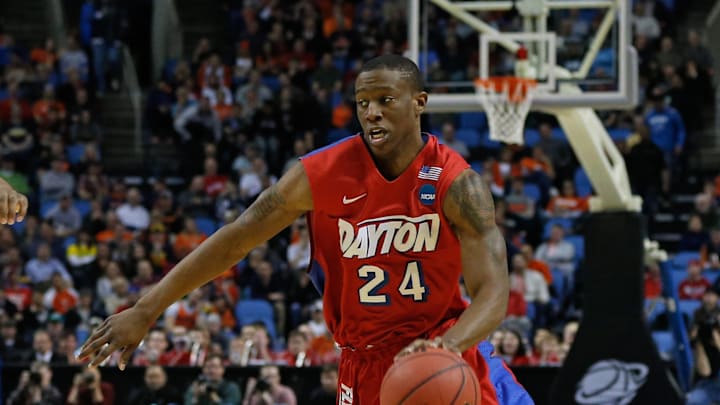
2014 Dayton
What was the Flyers’ Cinderella run like? Making it out of the first weekend for the first time since 1984, Dayton edged in-state foe Ohio State in the first round and a Syracuse team with five future NBA players on its way to the Elite Eight.
Who was their star? Memorably, the Flyers’ leading scorer was guard Jordan Sibert—a former Buckeye who went on to play four career NBA minutes.
Why is Dayton’s run worth remembering? In a sense, coach Archie Miller’s Flyers embarked on the take-no-prisoners run Dayton’s 29–2 2020 squad deserved.
More College Basketball from Sports Illustrated
Listen to SI’s college sports podcast, Others Receiving Votes, below or on Apple and Spotify. Watch the show on SI’s YouTube channel.
 Add us as a preferred source on Google
Patrick Andres is a staff writer on the Breaking and Trending News team at Sports Illustrated. He joined SI in December 2022, having worked for The Blade, Athlon Sports, Fear the Sword and Diamond Digest. Andres has covered everything from zero-attendance Big Ten basketball to a seven-overtime college football game. He is a graduate of Northwestern University's Medill School of Journalism with a double major in history .
Follow PAndres2001