%20%20--%3E%0A%3Csvg%20version%3D%221.1%22%20id%3D%22Layer_1%22%20xmlns%3D%22http%3A%2F%2Fwww.w3.org%2F2000%2Fsvg%22%20xmlns%3Axlink%3D%22http%3A%2F%2Fwww.w3.org%2F1999%2Fxlink%22%20x%3D%220px%22%20y%3D%220px%22%0A%09%20width%3D%2239px%22%20height%3D%2240px%22%20viewBox%3D%220%200%2039%2040%22%20enable-background%3D%22new%200%200%2039%2040%22%20xml%3Aspace%3D%22preserve%22%3E%0A%3Cpath%20fill%3D%22%23FFFFFF%22%20d%3D%22M38.5%2C7H28.2v26h10.3V7z%22%2F%3E%0A%3Cpath%20fill-rule%3D%22evenodd%22%20clip-rule%3D%22evenodd%22%20fill%3D%22%23FFFFFF%22%20d%3D%22M26.1%2C25.5c0%2C5.8-4.1%2C7.5-12.9%2C7.5C3.9%2C33%2C0%2C31.2%2C0%2C25.2v-1.1h11.6%0A%09v2.4c0%2C0.7%2C0.1%2C1.4%2C1.2%2C1.4c1%2C0%2C1.2-0.4%2C1.2-1.3v-0.9c0-1.6-0.9-1.6-3.5-2.2C2.2%2C21.7%2C0%2C19.7%2C0%2C15.3v-0.9C0%2C9.3%2C5.5%2C7%2C12.9%2C7%0A%09c10.2%2C0%2C12.8%2C2.6%2C12.8%2C7.4v1.8h-11v-2.9c0-0.6-0.4-1.1-1.2-1.1c-0.6%2C0-1.2%2C0.4-1.2%2C1.1v0.9c0%2C1.5%2C0.9%2C2%2C3.3%2C2.5%0A%09c8%2C1.6%2C10.5%2C3.3%2C10.5%2C7.5V25.5z%22%2F%3E%0A%3C%2Fsvg%3E%0A)
Why Texas Tech's JT Toppin Will Push To Play in 2026-27 Despite ACL Tear
In this story:
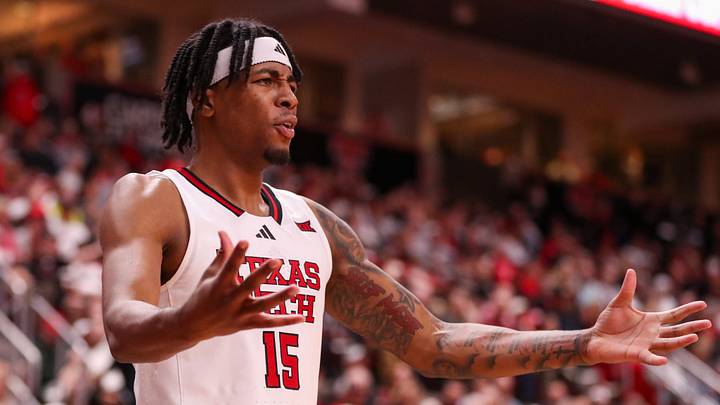
When Texas Tech forward JT Toppin’s ACL tore during the Red Raiders’ 72–67 loss to Arizona State on Feb. 17, his team’s hopes of March glory fell apart with it.
Texas Tech, 19-7 after the Sun Devils loss, split its final eight games—beating then-No. 4 Iowa State but also losing to two unranked opponents (one was BYU). Alabama ended the Red Raiders’ season in the second round of the NCAA tournament, leaving coach Grant McCasland and his team wondering what might have been.
This year, Texas Tech may not have to wonder. The Red Raiders indicated Wednesday that Toppin would return to play during the 2027 season—surprising, per SI’s Kevin Sweeney, a college basketball world that assumed that Toppin would redshirt before a major break went his way.
Toppin and Texas Tech will benefit from the NCAA’s new five-to-play-five rule
Back on June 23, the NCAA formalized new eligibility rules based on age. Where in the past athletes would have four years of eligibility—subject to a byzantine system of exceptions—now athletes have five academic years to play five seasons of sports, as long as “they enroll in college no later than the academic year after their 19th birthday.”
Let’s do some napkin math: Toppin was born in June 2005, putting his 19th birthday in June 2024. At that point, Toppin had recently transferred to play for the Red Raiders from New Mexico—with which he made the All-Mountain West team in `24. That gives Toppin the `24, `25, `26, `27 and `28 seasons to work with.
Under the old system, Toppin would’ve had just four years of eligibility to work with, so it would’ve made the most sense for him to redshirt `27—giving him a full `28 to go with the three years he’s previously played. However, under the new system, Toppin has incentive—or, rather, he has no incentive not—to give `27 a go if he’s healthy. There’s no longer any reason to worry about blowing his eligibility.
For two years in a row, Toppin has been one of the best players in the college game
Already a productive player with the Lobos, Toppin took his game to new heights in `25. He averaged 18.2 points and 9.4 rebounds per game, helping Texas Tech come within a stone’s throw of its second men’s Final Four. His advanced metrics were similarly impressive—he led the Big 12 in both win shares per 40 minutes and offensive box plus/minus.
In `26, while his advanced metrics dipped modestly, he became an even more prolific scorer and rebounder—racking up career highs in both categories as well as assists and steals. Both of his Red Raiders years ended with him on the All-America team, a feat last accomplished at Texas Tech by guard Jarrett Culver in 2019.
Late-season ACL injuries have slowed explosive college stars in the recent past
To name two examples: forwards Bryce Hopkins and Jayden Quaintance.
Hopkins, then with Providence, tore his ACL on Jan. 3, `24 against Seton Hall. The injury ended his `24 season and cost him all but three games in `25. in `26 with St. John’s, he finally became (to an extent) his old self again, achieving the unique distinction of making his two All-Conference teams three years apart.
Quaintance, who demonstrated promise with Arizona State as a freshman in `25, tore his ACL in February of that season. Transferring to Kentucky, he played just four games before heading to the NBA draft, where the Spurs took him 20th on June 23.
The lesson: slow and steady wins the race for both Toppin and his team. Thanks to the NCAA’s new rules, Toppin has the luxury of working back on his own clock.
More College Basketball from Sports Illustrated
 Add us as a preferred source on Google
Patrick Andres is a staff writer on the Breaking and Trending News team at Sports Illustrated. He joined SI in December 2022, having worked for The Blade, Athlon Sports, Fear the Sword and Diamond Digest. Andres has covered everything from zero-attendance Big Ten basketball to a seven-overtime college football game. He is a graduate of Northwestern University's Medill School of Journalism with a double major in history .
Follow PAndres2001