%20%20--%3E%0A%3Csvg%20version%3D%221.1%22%20id%3D%22Layer_1%22%20xmlns%3D%22http%3A%2F%2Fwww.w3.org%2F2000%2Fsvg%22%20xmlns%3Axlink%3D%22http%3A%2F%2Fwww.w3.org%2F1999%2Fxlink%22%20x%3D%220px%22%20y%3D%220px%22%0A%09%20width%3D%2239px%22%20height%3D%2240px%22%20viewBox%3D%220%200%2039%2040%22%20enable-background%3D%22new%200%200%2039%2040%22%20xml%3Aspace%3D%22preserve%22%3E%0A%3Cpath%20fill%3D%22%23FFFFFF%22%20d%3D%22M38.5%2C7H28.2v26h10.3V7z%22%2F%3E%0A%3Cpath%20fill-rule%3D%22evenodd%22%20clip-rule%3D%22evenodd%22%20fill%3D%22%23FFFFFF%22%20d%3D%22M26.1%2C25.5c0%2C5.8-4.1%2C7.5-12.9%2C7.5C3.9%2C33%2C0%2C31.2%2C0%2C25.2v-1.1h11.6%0A%09v2.4c0%2C0.7%2C0.1%2C1.4%2C1.2%2C1.4c1%2C0%2C1.2-0.4%2C1.2-1.3v-0.9c0-1.6-0.9-1.6-3.5-2.2C2.2%2C21.7%2C0%2C19.7%2C0%2C15.3v-0.9C0%2C9.3%2C5.5%2C7%2C12.9%2C7%0A%09c10.2%2C0%2C12.8%2C2.6%2C12.8%2C7.4v1.8h-11v-2.9c0-0.6-0.4-1.1-1.2-1.1c-0.6%2C0-1.2%2C0.4-1.2%2C1.1v0.9c0%2C1.5%2C0.9%2C2%2C3.3%2C2.5%0A%09c8%2C1.6%2C10.5%2C3.3%2C10.5%2C7.5V25.5z%22%2F%3E%0A%3C%2Fsvg%3E%0A)
The Brendan Sorsby Saga Collides With Congress in a Defining Week for College Sports
In this story:
Welcome to another week on the fault line in college athletics, where we’re talking more about AGs than ADs, billable hours than football powers, Senate committees than Curt Cignetti. This week, the industry’s future, both near term and long term, is careening along two tracks that could soon intersect.
The Brendan Sorsby insurrection at Texas Tech and the Protect College Sports Act in Congress are on a collision course. The result is another chapter in the never-ending saga of unintended consequences in college sports. In an industry where every bright idea or bold plan stands a chance of backfiring, a few prominent people might be rethinking their long-held stances.
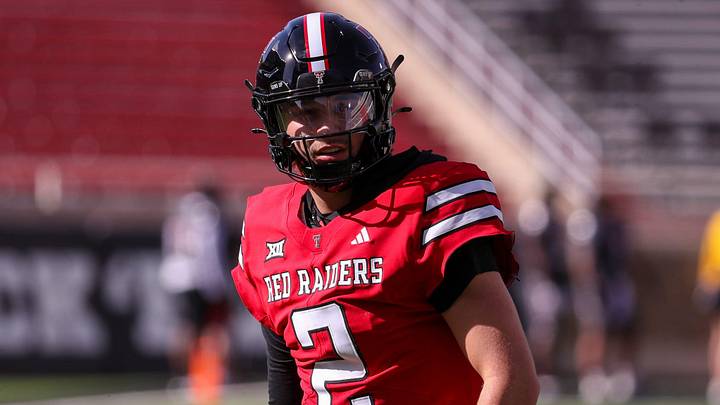
The NCAA sent a memo to Division I conference commissioners Friday asserting that passage of the PCSA would empower the association in the one area where everyone outside Lubbock, Texas, is united: doing something about Sorsby. The Texas Tech quarterback is riding a district court temporary injunction into the eye of a 2026 college football storm, with the ruling overriding his ineligibility for placing thousands of sports wagers in violation of NCAA rules.
The NCAA leveraging the passage of that bill into a weapon against Sorsby (and potentially others who have won recent eligibility court cases) creates another interesting plot twist. Cody Campbell, the disruptor billionaire who has made Texas Tech athletics his vanity project, is among the greatest champions of the PCSA. How would Campbell feel if passage of the act ultimately sidelines the big-dollar transfer quarterback upon whom his Red Raiders’ College Football Playoff hopes rest?
Meanwhile, there are unintended consequences being felt in the Big Ten and Southeastern conferences, who have spent years lobbying for Congressional intervention that would provide an antitrust exemption for college sports. Now that a bipartisan bill has been drafted and is scheduled for markup in the U.S. Senate Committee on Commerce, Science and Transportation this week, the two most powerful leagues in college sports are getting picky. We desperately need a bill. Oh, wait, not that bill.
SEC commissioner Greg Sankey distributed a letter last week to the league’s presidents and chancellors with his feedback on the bill, identifying what he sees as its strengths and problem areas. The primary problem area, of course, is the proposed voluntary pooling of media rights among all FBS conferences. In theory, this would lift all boats in the harbor, but the SEC and Big Ten already float in the most advantageous water. They’re resistant to sharing what’s already theirs.
That led to another in a series of veiled (sometimes unveiled) threats that the SEC and Big Ten could just do their own thing, having their own football playoff, crowning their own champion(s) and fracturing the sport for good. With an eye toward potential lawsuits pushing the SEC into pooled media rights, Sankey wrote: “In practice, this means that if the conferences and universities elect to pool their postseason football rights, it forces the SEC and Big Ten to either play intraconference postseason tournaments or play only other non-pooling conferences or universities in the postseason to replace the [College Football Playoff].”
Always great when the nuclear option is on the table.
But there are miles to go and compromises to make in Congress, starting with that markup session Thursday. Before that is sussed out, keep an eye on the other track—the Big 12 Conference can potentially preempt any NCAA action on Sorsby soon.
A Monday meeting of the league’s full board could be quite interesting. It comes against a backdrop of threatened legal action by Sorsby’s attorney, Jeffrey Kessler, and dueling statements from state attorneys general in the Big 12 footprint. Texas’s Ken Paxton launched the first shot last Thursday and Oklahoma’s Gentner Drummond returned fire Friday.
Paxton asserted that any attempt by the league to sanction Texas Tech for playing Sorsby “would be unlawful and would expose the conference to substantial liability.” Drummond responded by essentially saying that Paxton is full of hot air and urged the Big 12 to move forward with sanctions. “The letter’s citation to generic propositions of antitrust law holds no weight,” Drummond wrote. “If Texas Tech pursues such claims, they will fail.”
In between those two letters, Big 12 commissioner Brett Yormark said in a statement Thursday that “all options remain on the table” for dealing with Sorsby. We’ll see what options are chosen, and what the response from Lubbock may be.
In reality, the Big 12 doesn’t have to rush to a decision. After serving a frankly pathetic two-game suspension handed down by the judge, the earliest Sorsby could play is Friday, Sept. 18, against Houston. (Some weekend that could be in college football, with LSU coach Lane Kiffin returning to Mississippi for an all-time Bitter Bowl the following day.)
Meanwhile, we’ll see what Tech’s appetite is for sustained public villainy, with pretty much the entire rest of the nation aligned against it. Tech’s primary attempt at damage control was a 21-minute video released Thursday night that did not include two key individuals: Campbell and Sorsby. The school is likely trying to present itself as not being controlled by its billionaire booster while shielding its recovering quarterback. But Campbell will never be muzzled, and Sorsby might be the most effective advocate for himself.
A message to the Texas Tech community from our leadership. pic.twitter.com/MpbXtNJakp
— Texas Tech Red Raiders (@TechAthletics) June 12, 2026
Without them, the video effectively addressed some elements of the controversy and miserably failed in other areas. School president Lawrence Schovanec had a whopper of a statement about the NCAA needing to modernize its gambling rules when he voted against a proposal to do exactly that in November—a couple of months before Tech became the home of a star gambling addict quarterback. Amazing what can spur a change of heart.
Bottom line: Although Tech hasn’t explicitly said Sorsby will compete this fall, it seems to be taking a well-worn page out of the college sports controversy playbook by presenting an oversimplified version of how it can handle this situation: Either we play him or we abandon him and he’s cast off like garbage. This is, of course, bunk.
Dozens (maybe hundreds) of schools have tried that canard over the years, posturing as if denying playing time is akin to dumping an athlete on the streets. In reality, Sorsby can remain on scholarship, under counseling and even on the team without being allowed to play. It might, in fact, be the best thing for him—but it would jeopardize the millions of dollars he stands to make and all the victories Tech stands to accumulate.
There is a difference between supporting and enabling. It can be argued that Tech is doing the latter while making it seem like the former.
When Big 12 leaders meet Monday, one extreme option that was discussed last week seems highly unlikely: a refusal by the rest of the conference to play the Red Raiders this season. That would run afoul of contracts with the league’s media partners, who have paid for that inventory and planned for Texas Tech to be the prime draw in the conference.
Instead, the conversation may well turn to whether Tech victories count in the Big 12 race and toward a spot in the league championship game. In other words, forfeits and asterisks could be in play.
Also possible: a massive financial sanction. With league media-rights revenue forecast in the range of $36 million to $40 million per school for fiscal year 2026, could the league vote to withhold the Red Raiders’ share if they go forward with Sorsby at quarterback? Or apply a fine commensurate to that number?
As of last week, the 16-member Big 12 seemed likely to have the needed supermajority of schools in favor of sanctioning Texas Tech. Does the subsequent legal saber-rattling mitigate that desire? We’ll see.
We’ll also see whether the Red Raiders modify their stance on playing Sorsby—which could, in turn, put them at risk of Kessler legal action if the quarterback is benched. That would be yet another journey into the land of unintended consequences.
From the Big 12 boardroom to the halls of Congress, it could be another momentous week on the college sports fault line. Buckle up.
More College Football From Sports Illustrated
Listen to SI’s college sports podcast, Others Receiving Votes, below or on Apple and Spotify. Watch the show on SI’s College YouTube channel.
 Add us as a preferred source on Google
Pat Forde is a senior writer for Sports Illustrated who covers college football and college basketball as well as the Olympics and horse racing. He cohosts the Others Receiving Votes podcast for SI and is a regular contributor to the Tony Kornheiser Show podcast. He previously worked for Yahoo Sports, ESPN and The (Louisville) Courier-Journal. Forde has won 28 Associated Press Sports Editors writing contest awards, has been published three times in the Best American Sports Writing book series, and was nominated for the 1990 Pulitzer Prize. A past president of the U.S. Basketball Writers Association and member of the Football Writers Association of America, he lives in Louisville with his wife. They have three children, all of whom were collegiate swimmers.
Follow ByPatForde