%20%20--%3E%0A%3Csvg%20version%3D%221.1%22%20id%3D%22Layer_1%22%20xmlns%3D%22http%3A%2F%2Fwww.w3.org%2F2000%2Fsvg%22%20xmlns%3Axlink%3D%22http%3A%2F%2Fwww.w3.org%2F1999%2Fxlink%22%20x%3D%220px%22%20y%3D%220px%22%0A%09%20width%3D%2239px%22%20height%3D%2240px%22%20viewBox%3D%220%200%2039%2040%22%20enable-background%3D%22new%200%200%2039%2040%22%20xml%3Aspace%3D%22preserve%22%3E%0A%3Cpath%20fill%3D%22%23FFFFFF%22%20d%3D%22M38.5%2C7H28.2v26h10.3V7z%22%2F%3E%0A%3Cpath%20fill-rule%3D%22evenodd%22%20clip-rule%3D%22evenodd%22%20fill%3D%22%23FFFFFF%22%20d%3D%22M26.1%2C25.5c0%2C5.8-4.1%2C7.5-12.9%2C7.5C3.9%2C33%2C0%2C31.2%2C0%2C25.2v-1.1h11.6%0A%09v2.4c0%2C0.7%2C0.1%2C1.4%2C1.2%2C1.4c1%2C0%2C1.2-0.4%2C1.2-1.3v-0.9c0-1.6-0.9-1.6-3.5-2.2C2.2%2C21.7%2C0%2C19.7%2C0%2C15.3v-0.9C0%2C9.3%2C5.5%2C7%2C12.9%2C7%0A%09c10.2%2C0%2C12.8%2C2.6%2C12.8%2C7.4v1.8h-11v-2.9c0-0.6-0.4-1.1-1.2-1.1c-0.6%2C0-1.2%2C0.4-1.2%2C1.1v0.9c0%2C1.5%2C0.9%2C2%2C3.3%2C2.5%0A%09c8%2C1.6%2C10.5%2C3.3%2C10.5%2C7.5V25.5z%22%2F%3E%0A%3C%2Fsvg%3E%0A)
The End of the 12-Team College Football Playoff Is Near: Looking Forward, Looking Backward
Do you like the 12-team College Football Playoff system?
Well, let’s hope you didn’t get too attached, because it seems to be on its way out.
The CFP is close to a deal to double in size to 24 teams as early as next year, according to a Thursday afternoon report from ESPN’s Pete Thamel. If confirmed, the move will conclude a three-year period where the CFP consisted of 12 teams; it consisted of four teams from 2014 to ’23.
The move is, anecdotally, unpopular with college football fans—a sharp contrast to the warm reception and record ratings the CFP engendered upon its 2014 founding. The simple truth is that sports leagues around the world have raced to add inventory since the disruption of the COVID-19 pandemic, and college football is no exception.
With this in mind, let’s take a look back at how this pastoral sport evolved into a corporate behemoth—and dragged its postseason structure kicking and screaming with it.
1869 to 1991: A state of nature
This may be hard to comprehend now, but for much of college football’s first century, the national championship simply did not matter—at least not as much as winning your conference or beating your rival. As communication and transportation technology advanced, however, interest in weighing (say) Stanford’s merits against Penn’s grew. Thus: polls of coaches and sportswriters that decided a national champion at the end of the regular season (and, later, after an expansive slate of bowl games). Interest in a playoff system—made possible by cheap air travel—grew in the late 20th century, but never stuck ... until the Supreme Court’s decision in NCAA v. Oklahoma (1984) sent television money pouring into the sport.

1992 to ’94: Coalition politics
A famous, oft-forgotten piece of college football lore: Tom Mickle, the then-associate commissioner of the ACC, sketched out the idea for the first-ever structured, multi-conference, national-championship decision system on a cocktail napkin. That system was called the Bowl Coalition, and it brought together a patchwork of teams from six conferences in the Orange, Sugar, Fiesta, Cotton, Gator, Sun and Blockbuster Bowls (Rose and Citrus Bowl contracts with the Big Ten champion, Pac-10 champion and SEC runner-up limited the coalition’s scope). The system generally worked in 1992 and ’93, but ran into trouble in ’94, when Penn State went undefeated and was contracted to the Rose Bowl to play Oregon while Nebraska played Miami for the national title in the Orange Bowl. That, combined with hand-wringing over Notre Dame getting an automatic Fiesta Bowl bid at 6-4-1, led executives to go back to the drawing board for ’95.
1995 to ’97: The Alliance years
Beginning in ’95, college football’s powers-that-be streamlined the Coalition into the Bowl Alliance, a three-bowl system in which the national championship rotated between the Orange, Sugar and Fiesta Bowls. Still missing: the Rose Bowl, the Big Ten champ, and the Pac-10 champ. That caused problems in both ’96, when Arizona State entered the Rose Bowl No. 2, and ’97, when Michigan entered No. 1 (and split the national title with the Cornhuskers). In response, SEC commissioner Roy Kramer, ABC vice president of programming Tony Petitti (remember his name) and others went to the Big Ten and Pac-10 with an idea.

1998 to 2013: BCS mess?
It was called the Bowl Championship Series—a four- (later five-) bowl system that purported to match the No. 1 and No. 2 teams in the country in a true national championship, discarding conference tie-ins. On paper, it was an overwhelming success—printing money, drawing massive television audiences, and providing the sport with some of the best games in its history. Its forward-thinking hybrid human-computer ranking proved unpopular, however, and an explosion of mid-major success in the mid-2000s drew antitrust heat. Controversy in 2011 over Alabama narrowly beating out Oklahoma State for the final national-championship game slot effectively sealed the BCS’s demise.
2014 to ’23: And then there were four
To replace the BCS, college football’s administrators created a simple, generally well-liked system—but buried the seeds of its undoing within it. Having semifinals rotate among six major bowl games badly devalued the four outside the rotation, and the selection committee’s opaque rankings eventually came to rival the BCS formula in unpopularity. Outside power brokers’ direct control, years of semifinal blowouts didn’t help, either. After the disruption of the COVID-19 pandemic, the stars aligned for a new system to emerge.
2024 to ’26: 12 angry teams
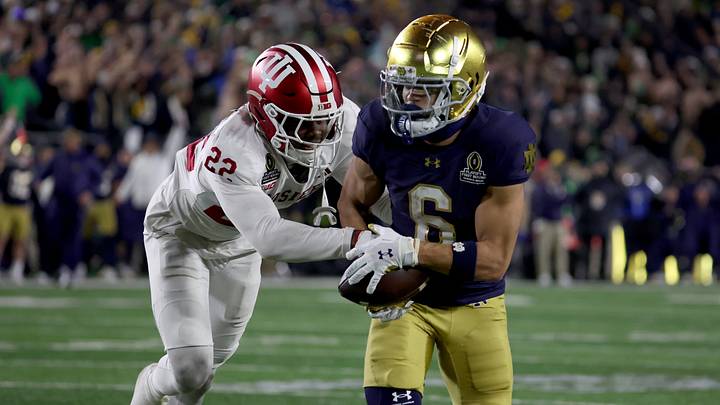
As with the four-team CFP, the 12-team CFP was announced to a positive public reception before obvious problems began to surface. Among them: the implosion of the Pac-12 and defection of Oklahoma and Texas to the SEC creating a top-heavy sport; the pilfering of the Group of 5 (now 6) watering down mid-major leagues; privileging of conference champions creating a crooked bracket; the schedule extending into late January and featuring too many neutral-site games. Those, in tandem with the bottomless greed of college football’s governing class, rendered what may have been a long-lasting format in another era not long for this world. Never mind that the first two 12-team CFPs showcased a slew of high-quality games, along with the greatest story in the sport’s history in 2025 Indiana.
2027 onward: Is bigger better?
The exact logistics of the reported 24-team CFP (spearheaded in part by Petitti, now Big Ten commissioner) remain a mystery, other than the presumed distribution of five spots for conference champions and 19(!) at-large berths. However, it raises existential questions for the future of college football—what happens to conference championships and bowl games? Will fans watch and attend in the numbers administrators hope they do? History has shown the game’s fans are amenable to all kinds of changes; in a year where ratings have dropped, it remains to be seen whether the suits that run college football are capable of pushing too far.
PODCAST: Listen to SI’s college sports podcast, Others Receiving Votes, hosted by Pat Forde, below or on Apple and Spotify. Watch the show on SI’s college YouTube channel or on SI TV.
 Add us as a preferred source on Google
Patrick Andres is a staff writer on the Breaking and Trending News team at Sports Illustrated. He joined SI in December 2022, having worked for The Blade, Athlon Sports, Fear the Sword and Diamond Digest. Andres has covered everything from zero-attendance Big Ten basketball to a seven-overtime college football game. He is a graduate of Northwestern University's Medill School of Journalism with a double major in history .
Follow PAndres2001