%20%20--%3E%0A%3Csvg%20version%3D%221.1%22%20id%3D%22Layer_1%22%20xmlns%3D%22http%3A%2F%2Fwww.w3.org%2F2000%2Fsvg%22%20xmlns%3Axlink%3D%22http%3A%2F%2Fwww.w3.org%2F1999%2Fxlink%22%20x%3D%220px%22%20y%3D%220px%22%0A%09%20width%3D%2239px%22%20height%3D%2240px%22%20viewBox%3D%220%200%2039%2040%22%20enable-background%3D%22new%200%200%2039%2040%22%20xml%3Aspace%3D%22preserve%22%3E%0A%3Cpath%20fill%3D%22%23FFFFFF%22%20d%3D%22M38.5%2C7H28.2v26h10.3V7z%22%2F%3E%0A%3Cpath%20fill-rule%3D%22evenodd%22%20clip-rule%3D%22evenodd%22%20fill%3D%22%23FFFFFF%22%20d%3D%22M26.1%2C25.5c0%2C5.8-4.1%2C7.5-12.9%2C7.5C3.9%2C33%2C0%2C31.2%2C0%2C25.2v-1.1h11.6%0A%09v2.4c0%2C0.7%2C0.1%2C1.4%2C1.2%2C1.4c1%2C0%2C1.2-0.4%2C1.2-1.3v-0.9c0-1.6-0.9-1.6-3.5-2.2C2.2%2C21.7%2C0%2C19.7%2C0%2C15.3v-0.9C0%2C9.3%2C5.5%2C7%2C12.9%2C7%0A%09c10.2%2C0%2C12.8%2C2.6%2C12.8%2C7.4v1.8h-11v-2.9c0-0.6-0.4-1.1-1.2-1.1c-0.6%2C0-1.2%2C0.4-1.2%2C1.1v0.9c0%2C1.5%2C0.9%2C2%2C3.3%2C2.5%0A%09c8%2C1.6%2C10.5%2C3.3%2C10.5%2C7.5V25.5z%22%2F%3E%0A%3C%2Fsvg%3E%0A)
Here’s How the Group of 6 Can Have Its Expanded CFP Cake and Eat It, Too
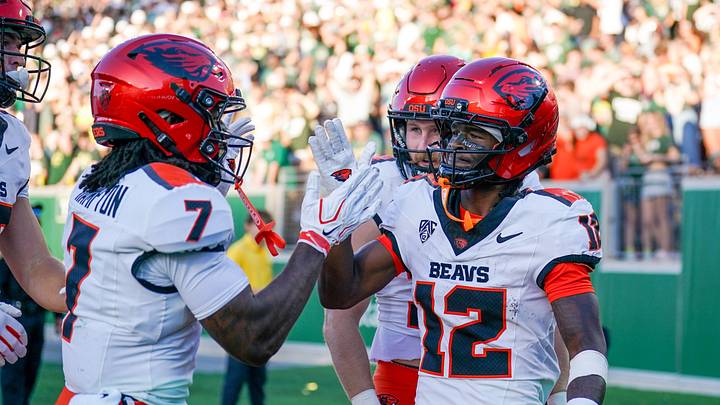
The idea of the Group of 6 conferences seceding from the Power 4 in order to stage their own playoff—and, by extension, crown their own national champion—is a durable fringe school of thought in college football.
Its logic goes something like this: No mid-major-equivalent team has won a national championship since BYU in 1984. The gulf between major-conference schools and mid-majors seems to grow every year, thanks in part to bigger leagues’ capture of mid-major powers like TCU and Utah. Why not simply create a middle division between the Power 4 and FCS, in order to inject new meaning into (say) UTEP’s existence?
According to a Thursday report from Brett McMurphy of On3, coaches are growing more receptive to this idea as long as continued Group of 6 access to the CFP is guaranteed. But what if we took this idea a step further? What if a 24-team CFP and a Group of 6 playoff system walked hand-in-hand instead of existing as awkward, separate entities?
A modest proposal: a Group of 6 CFP baked into the regular season
Whenever the 24-team CFP’s reported 2027 start is confirmed, it is generally expected that conference championship games will be abolished. The regular season will consist of 12 games—no more, no fewer.
With that in mind, here is what the Group of 6 conferences—the American, Conference USA, MAC, Mountain West, Pac-12 and Sun Belt—should do. Every Group of 6 team’s first 10 games of the season should consist of two non-conference and eight conference games. Once each team has played 10 games, the CFP committee should rank the top four Group of 6 teams (both as a part of and apart from the traditional CFP rankings). The top four Group of 6 teams should then play each other, on campus, in a single-elimination tournament with a third-place game.
Now, here’s the kicker. The winner of the tournament will receive the Group of 6’s presumptive automatic bid to the 24-team CFP—while not precluding other Group of 6 teams from making the field. For instance, let’s say Boise State and Memphis enter a hypothetical tournament final with matching 11–0 records (and, to strengthen their CFP cases, wins over passable Power 4 teams). Both the winner and loser could, and probably would, reach the CFP proper. The winner, additionally, would gain another quality win under its belt.
As for the many Group of 6 teams that would miss the four-team tournament—their conferences would work together in order to create two weeks’ worth of flex matchups between teams with comparable records. If this plan sounds familiar, it’s because the Pac-12 is trying a similar one this season.
The Pac-12’s new schedule is the blueprint
This year, the Pac-12 is stopping conference play two weeks before its Dec. 4 championship game. The last week of the regular season will consist of a flex schedule—the conference will unilaterally determine the matchups in a bid to maximize its CFP chances. Only the home teams are set, so every conference team plays four intraconference home games—Colorado State, Fresno State, Utah State and Washington State will host.
“It’s better for our TV partners in terms of the quality of the matchups, the quality of the games,” Pac-12 commissioner Teresa Gould told the AP’s John Marshall in August. “It’s better competitively in terms of strength of schedule and CFP positioning and the way that the flex is going to work. We can kind of manipulate the schedule in a way that it’s the most advantageous to our teams.”
This model does not seem difficult to extrapolate to the rest of the Group of 6. Designate a list of home and road teams for each week before the season (if the tournament necessitates flip-flopping, so be it—give a home team sent on the road an IOU for next year). Broker interesting matchups between evenly matched teams. Profit. Relatively few Group of 6 rivalry games are permanently attached to the last two weeks of the season anyway—Akron and Kent State, for instance, played this past Saturday.
With CFP expansion appearing imminent, and the financial gap between the Power 4 and Group of 6 widening by the day, we don’t have to fear discussions of a Group of 6 playoff anymore—but we don’t have to plan the Group of 6’s obsolescence, either. Done right, a Group of 6 playoff-before-the-playoff could add intriguing stakes to a watered-down regular season—and toughen up mid-major contenders for the CFP in the process.
PODCAST: Listen to Sports Illustrated’s college sports podcast, Others Receiving Votes, hosted by Pat Forde, on Apple and Spotify. Watch the show on SI’s college YouTube channel or on SI TV.
 Add us as a preferred source on Google

Patrick Andres is a staff writer on the Breaking and Trending News team at Sports Illustrated. He joined SI in December 2022, having worked for The Blade, Athlon Sports, Fear the Sword and Diamond Digest. Andres has covered everything from zero-attendance Big Ten basketball to a seven-overtime college football game. He is a graduate of Northwestern University's Medill School of Journalism with a double major in history .
Follow PAndres2001