%20%20--%3E%0A%3Csvg%20version%3D%221.1%22%20id%3D%22Layer_1%22%20xmlns%3D%22http%3A%2F%2Fwww.w3.org%2F2000%2Fsvg%22%20xmlns%3Axlink%3D%22http%3A%2F%2Fwww.w3.org%2F1999%2Fxlink%22%20x%3D%220px%22%20y%3D%220px%22%0A%09%20width%3D%2239px%22%20height%3D%2240px%22%20viewBox%3D%220%200%2039%2040%22%20enable-background%3D%22new%200%200%2039%2040%22%20xml%3Aspace%3D%22preserve%22%3E%0A%3Cpath%20fill%3D%22%23FFFFFF%22%20d%3D%22M38.5%2C7H28.2v26h10.3V7z%22%2F%3E%0A%3Cpath%20fill-rule%3D%22evenodd%22%20clip-rule%3D%22evenodd%22%20fill%3D%22%23FFFFFF%22%20d%3D%22M26.1%2C25.5c0%2C5.8-4.1%2C7.5-12.9%2C7.5C3.9%2C33%2C0%2C31.2%2C0%2C25.2v-1.1h11.6%0A%09v2.4c0%2C0.7%2C0.1%2C1.4%2C1.2%2C1.4c1%2C0%2C1.2-0.4%2C1.2-1.3v-0.9c0-1.6-0.9-1.6-3.5-2.2C2.2%2C21.7%2C0%2C19.7%2C0%2C15.3v-0.9C0%2C9.3%2C5.5%2C7%2C12.9%2C7%0A%09c10.2%2C0%2C12.8%2C2.6%2C12.8%2C7.4v1.8h-11v-2.9c0-0.6-0.4-1.1-1.2-1.1c-0.6%2C0-1.2%2C0.4-1.2%2C1.1v0.9c0%2C1.5%2C0.9%2C2%2C3.3%2C2.5%0A%09c8%2C1.6%2C10.5%2C3.3%2C10.5%2C7.5V25.5z%22%2F%3E%0A%3C%2Fsvg%3E%0A)
Pat Forde: Protect College Sports Act’s New Expansion Provision Could Put ACC on Chopping Block
In this story:
As the Protect College Sports Act continues to progress in the United States Senate, the disconnect between what has truly destabilized the enterprise and the perceived destabilization continues. And attempts to address the bigger problem keep getting mowed down.
Conference realignment and expansion have done more harm to college athletics than escalating athlete salaries, or even athlete movement (though the latter is an issue). The PCSA has plans to curtail further fracturing of geography, tradition and broad-based competitiveness—but those plans were further whittled away Thursday.
Instead of being outraged over a quarterback making $6 million, focus on the realignment piece. Beware the motivations, and where it’s leading. The Big Ten/SEC axis never sleeps.
As it was written before Thursday, the PCSA provided deterrence to further realignment. It capped maximum conference membership at 19 schools, and schools attempting to leave one conference for another would have had to spend five years as an independent. Now, per reports from Capitol Hill, the proposed time on independent probation has been lessened to three years, and—this is probably the more significant part—the entire probationary period “sunsets” after six years.
That would be 2031, conveniently timed for what many foresee will be the next round of realignment tumult. The Big Ten media rights deals expire in 2030; the Big 12 comes up in ’31; the College Football Playoff deal with ESPN expires in ’32, but could be open to revision if/when they bloat the thing to 24 teams next year; the SEC rights deal is a bit later, in ’34; and the contentious ACC deal comes up in ’36.
Three years as an independent is still a long time and a tough slog, in terms of both incoming revenue and the ability to schedule. So reducing that from five might be window dressing as much as anything. More importantly, if the roadblock to realignment is simply removed in six years, then schools outside the Big Ten and SEC have a defined ramp-up period in which to make themselves marketable for a move to a theoretical super league. Instead of a bill curbing spending, it would in all likelihood accelerate it in the mad dash to join The Club.
If the cap at 19 schools per conference remains, the SEC could add three and the Big Ten could add one. If that cap also sunsets in 2031, 20 each and a 40-team conglomerate would seem like a landing spot.
That would, in all likelihood, gut the ACC.
Congressional sources tell Sports Illustrated that the biggest pushback to the realignment and expansion limitations in the bill has come from within the Atlantic Coast Conference. More specifically, from politicians in Florida working on behalf of Florida State and Miami.
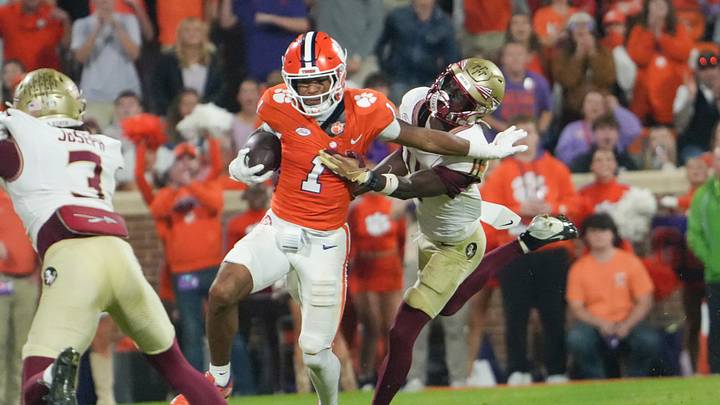
Florida State and Clemson most prominently destabilized the ACC by suing the league, and Miami also has had its eyes on greener pastures. It remains to be seen how attractive any of those schools would be to the SEC and Big Ten. (One industry source familiar with FSU’s finances says the school “doesn’t have a pot to piss in.”) Miami, which is as financially committed to football as almost anyone in any league, could be the exception, particularly with the Big Ten.
But there’s more to it than just those three. Three years ago, those schools plus North Carolina, North Carolina State, Virginia and Virginia Tech explored the potential to break the ACC grant of rights. They were eventually all pulled back into the fold, as commissioner Jim Phillips and league presidents created “success initiatives” that allowed for greater revenue distribution to schools that achieved more in football and men’s basketball and drew higher TV ratings.
All things considered, it was a deft salvage job. But it wasn’t a permanent fix in a conference where the below-market TV rights remain tied up with ESPN for the longest period of time. And there are other ACC schools among the seven who mulled a breakaway who would be attractive expansion candidates—most notably North Carolina and Virginia.
The bill originally was supposed to keep an ACC doomsday scenario from playing out. Senators such as PCSA bill co-sponsor Maria Cantwell from Washington pushed for the anti-expansion provision of the bill—after watching what realignment did to Washington State, for example—but the SEC and Big Ten and eventually Florida senators went into protectionist mode.

Among the reasons the SEC and Big Ten originally opposed the bill: limits on realignment, which at first were ironclad—no more expansion of power leagues. As part of negotiations with those leagues, the number for maximum conference membership moved to 19. They want to keep their options open to further plunder the rest of the nation as they see fit, indifferent to the ruinous effects of their last round of expansion.
The SEC dealt a massive blow to the Big 12 by taking Texas and Oklahoma, then the Big Ten dealt a fatal blow to the Pac-12 by taking its top four schools (USC, UCLA, Oregon and Washington). The Big 12 regrouped as a survivor league, both limited and stabilized by the fact that its current membership doesn’t have great appeal to the Big Ten and SEC. That leaves the ACC, which has higher upside members and greater vulnerability.
Diminishing the ACC would hasten the downward spiral of college sports to a two-conference conglomerate that exists and functions largely as NFL Lite. At the behest of their TV overlords, major-conference realignment already has led college sports into territory where it never belonged.
There are the obvious implications: geographic nonsense that negatively impacts athletes and fans; the destruction of traditional rivalries; the bloating of conferences beyond manageable size. But downstream from there, several of the driving forces toward a 24-team playoff are the aftereffects of realignment.
The further enriching of Big Ten and SEC schools has empowered them to put the squeeze on everyone else—in terms of CFP revenue distributions, governance and College Football Playoff access. Speaking of which: the potential expansion of the playoff to 24 teams—and the basketball tournaments to 76—is partially due to the need to declare more “winners” who have invested heavily to compete in their massive leagues. And uneven conference schedules make it more difficult to know who the best teams are, thus further muddying who should qualify as a playoff team.
Given all that, any legislation intended to “save college sports” from itself ideally would have real disincentives for further realignment. That was the goal going in, but it doesn’t look like the reality coming out of the Senate and potentially heading toward the House of Representatives (which could happen next week). A bill that limits athletes but fails to adequately forestall an eventual super league—a much bigger existential threat to the enterprise—is a failed bill.
Don’t make it easier to tear apart what’s left of the fabric holding together a national sport. Don’t give in to special interests that are trying to make the richest schools richer at the expense of everyone else. They’ve already done enough damage.
PODCAST: Listen to Sports Illustrated’s college sports podcast, Others Receiving Votes, hosted by Pat Forde, on Apple and Spotify. Watch the show on SI’s college YouTube channel or on SI TV.
 Add us as a preferred source on Google
Pat Forde is a senior writer for Sports Illustrated who covers college football and college basketball as well as the Olympics and horse racing. He cohosts the Others Receiving Votes podcast for SI and is a regular contributor to the Tony Kornheiser Show podcast. He previously worked for Yahoo Sports, ESPN and The (Louisville) Courier-Journal. Forde has won 28 Associated Press Sports Editors writing contest awards, has been published three times in the Best American Sports Writing book series, and was nominated for the 1990 Pulitzer Prize. A past president of the U.S. Basketball Writers Association and member of the Football Writers Association of America, he lives in Louisville with his wife. They have three children, all of whom were collegiate swimmers.
Follow ByPatForde