%20%20--%3E%0A%3Csvg%20version%3D%221.1%22%20id%3D%22Layer_1%22%20xmlns%3D%22http%3A%2F%2Fwww.w3.org%2F2000%2Fsvg%22%20xmlns%3Axlink%3D%22http%3A%2F%2Fwww.w3.org%2F1999%2Fxlink%22%20x%3D%220px%22%20y%3D%220px%22%0A%09%20width%3D%2239px%22%20height%3D%2240px%22%20viewBox%3D%220%200%2039%2040%22%20enable-background%3D%22new%200%200%2039%2040%22%20xml%3Aspace%3D%22preserve%22%3E%0A%3Cpath%20fill%3D%22%23FFFFFF%22%20d%3D%22M38.5%2C7H28.2v26h10.3V7z%22%2F%3E%0A%3Cpath%20fill-rule%3D%22evenodd%22%20clip-rule%3D%22evenodd%22%20fill%3D%22%23FFFFFF%22%20d%3D%22M26.1%2C25.5c0%2C5.8-4.1%2C7.5-12.9%2C7.5C3.9%2C33%2C0%2C31.2%2C0%2C25.2v-1.1h11.6%0A%09v2.4c0%2C0.7%2C0.1%2C1.4%2C1.2%2C1.4c1%2C0%2C1.2-0.4%2C1.2-1.3v-0.9c0-1.6-0.9-1.6-3.5-2.2C2.2%2C21.7%2C0%2C19.7%2C0%2C15.3v-0.9C0%2C9.3%2C5.5%2C7%2C12.9%2C7%0A%09c10.2%2C0%2C12.8%2C2.6%2C12.8%2C7.4v1.8h-11v-2.9c0-0.6-0.4-1.1-1.2-1.1c-0.6%2C0-1.2%2C0.4-1.2%2C1.1v0.9c0%2C1.5%2C0.9%2C2%2C3.3%2C2.5%0A%09c8%2C1.6%2C10.5%2C3.3%2C10.5%2C7.5V25.5z%22%2F%3E%0A%3C%2Fsvg%3E%0A)
Six Key Things to Watch in College Football Playoff Selection Committee’s First Rankings
In this story:
We’ve made it.
No, it’s not just that time of the year where political advertisements thankfully no longer appear during game breaks, but that spot on the calendar where every fan base in the country has a reason to get mad at the College Football Playoff selection committee for ranking teams against the conventional wisdom.
As the committee gathers in the suburbs of Dallas to discuss and dissect national title contenders by the thinnest of margins, they will be asking plenty of questions. Here are six we’ll be asking of the group as it unveils its first Top 25 of the season on Tuesday night and the playoff chase becomes more real than ever.
1. Is this an eye test or résumé group?
The first set of CFP rankings is always a decent gauge of how the committee navigates the nebulous way of ranking the best teams. Do they lean more toward the eye test, where an impressive effort by a team like Utah in recent weeks will be enough to outweigh its résumé which is notably lacking marquee, Top 25 wins. How do they view Texas, which has some incredible wins but hasn’t quite put together a full four quarters against an opponent either.
My guess is this committee will go a bit more with the eye test for its first set of rankings and then adjust programs downward based on their résumés. Notre Dame would be perhaps the most obvious candidate for the committee to consider a really good team, but knock it down two or three spots compared to its ranking in the AP poll (No. 4).
2. What’s the SEC pecking order?
More than half of the SEC has a Top 25 ranking in either the AP or coaches’ poll. It will be fascinating how the committee slices and dices the results in the league so far. How do you weigh Mississippi beating LSU at home and then no-showing at Texas? Or Missouri losing to both Mississippi schools but beating Florida like there’s no tomorrow? Where does South Carolina find itself in the rankings with their Jekyll-and-Hyde run the past few weeks where it has looked completely different since a late loss to Kentucky?
About the only thing you probably can count on is Georgia being the highest-ranked team in the conference. After that, you can order teams in about a dozen different ways. As we get deeper into November, the initial snapshot of the SEC forms the basis of résumés that will either give the league an extra bid or ensure a slew of home fields in the first round.

3. How does the committee treat Ohio State?
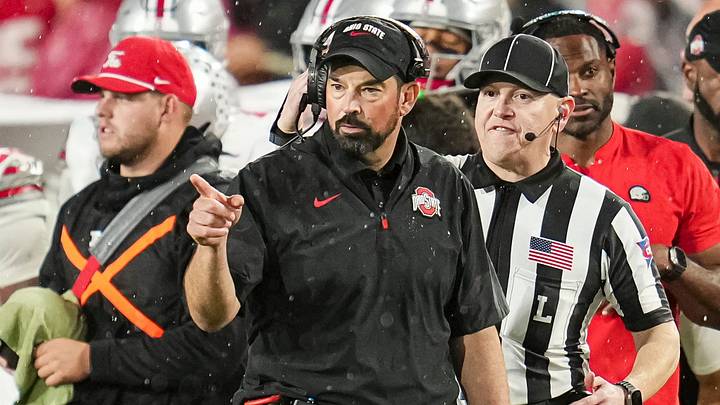
The Buckeyes are no stranger to a quarterback controversy impacting their CFP chances, but in sharp contrast to 2014—and most recently with Florida State three years ago—this year’s Ohio State side will have a healthy amount of games for the committee to evaluate how they play without Julian Sayin. While it’s hard to point directly at new starter Luke Fahey as being the sole reason the team didn’t beat USC while coming off its bye week, it’s clear everyone on the roster will need to step things up with no margin for error. That’s what happens when a recent Heisman finalist and starting QB is injured combined with a crowded field of teams featuring a similar overall record.
Because this first set of rankings is taken directly after a loss and right before the Buckeyes play a tricky game against Oregon, I wouldn’t be surprised if the committee doesn’t drop Ohio State too much based simply on lack of evidence. Yes, the Buckeyes didn’t look good at the Coliseum, but that was a Big Ten road game in the rain and we’ve seen similar performances by teams at full strength not showing up (Alabama at Tennessee just a few weeks earlier). Still, we’ll know how much wiggle room this group will have if it doesn’t make it to the Big Ten title game based on where it is slotted in the initial rankings.
4. How likely are multiple bids from the ACC or Big 12?
This offseason, both the ACC and Big 12 talked a big game about getting multiple teams into the CFP. We’ll get a good sense as to who has the upper hand Tuesday.
For the ACC, that will likely come down to how highly the committee ranks one-loss Wake Forest. If the Demon Deacons are sitting there in the top 15 (or ideally in the top 12), then there’s certainly a chance they could be a CFP contender if they make it to the conference title game at 11–1 with their lone loss to Miami. It will be notable which other teams in the conference get ranked, especially if the committee values Duke, SMU, Louisville and Virginia Tech enough to put them in the Top 25 to provide quality wins for teams at the top of the standings.
Likewise, the Big 12 will pay a lot of attention to where Utah is in relation to any one-loss Big Ten or SEC teams, how high BYU is ranked and whether Texas Tech can overcome a fairly weak strength of schedule to make the cut for a first-round game if it wins out but lose in the Big 12 title game.
5. What does the Group of 6 race look like?
The committee’s task in picking the Group of 6 bid is much different from years past. It no longer has to exclusively be a conference champion, so a team’s overall body of work will have an oversized impact on committee’s pick for the Group of 6 representative. This is not merely a résumé game for various contenders, but also a beauty pageant in who can look like the best team from these ranks.
That got much more difficult the past few weeks. James Madison has faltered from potential undefeated to maybe not even making the Sun Belt title game. The list of contenders in the American includes Memphis with a truly inexplicable loss to Tulane, UTSA which will face its toughest tests of the season this month and North Texas which is prolific on one side of the ball and less so on the other. Toss in Oregon State taking a recent loss and Boise State barely hanging on, and the Group of 6 race is not straightforward.
It’s possible the committee will punt on this entire issue and leave out Boise State or New Mexico from its Top 25 and wait to see how the dust settles among contenders during this stretch run. But if the committee includes a few teams from the Group of 6, that’s the group with the best chance to make the bracket.
6. Who has a margin for error for a November loss?
Every year there’s a team the committee irrationally loves. Maybe it’s because of its résumé, where the committee just can’t get over a certain big win that caused a field storming. Maybe it’s the way a group plays, such as a dominating Georgia defense that then allows them to overlook an offense that isn’t quite as efficient. Sometimes it’s simply Alabama or Ohio State, a blind faith in the talent they have.
Such teams tend to get the benefit of the doubt until proven otherwise, which takes on a different meaning this season given how many closely bunched contenders for the CFP there are. While the margin for error is always thin, some teams might have enough to absorb a close loss and still make the field. That will be a big factor to see if a team can make it in at 9–3, for example, or potentially be the difference in a 10–2 squad, such as Kentucky, becoming a playoff team if it picks up another loss. If the Wildcats are highly regarded, there may be enough breathing room to lose to Tennessee, but if they’re sitting at No. 11 in the first set of rankings, that thinking can be thrown out.
PODCAST: Listen to Sports Illustrated’s college sports podcast, Others Receiving Votes, hosted by Pat Forde, on Apple and Spotify. Watch the show on SI’s college YouTube channel or on SI TV.
 Add us as a preferred source on Google

Bryan Fischer is a staff writer at Sports Illustrated covering college sports. He joined the SI staff in October 2024 after spending nearly two decades at outlets such as FOX Sports, NBC Sports and CBS Sports. A member of the Football Writers Association of America’s All-America Selection Committee and a Heisman Trophy voter, Fischer has received awards for investigative journalism from the Associated Press Sports Editors and FWAA. He has a bachelor’s in communication from USC.
Follow bryandfischer