%20%20--%3E%0A%3Csvg%20version%3D%221.1%22%20id%3D%22Layer_1%22%20xmlns%3D%22http%3A%2F%2Fwww.w3.org%2F2000%2Fsvg%22%20xmlns%3Axlink%3D%22http%3A%2F%2Fwww.w3.org%2F1999%2Fxlink%22%20x%3D%220px%22%20y%3D%220px%22%0A%09%20width%3D%2239px%22%20height%3D%2240px%22%20viewBox%3D%220%200%2039%2040%22%20enable-background%3D%22new%200%200%2039%2040%22%20xml%3Aspace%3D%22preserve%22%3E%0A%3Cpath%20fill%3D%22%23FFFFFF%22%20d%3D%22M38.5%2C7H28.2v26h10.3V7z%22%2F%3E%0A%3Cpath%20fill-rule%3D%22evenodd%22%20clip-rule%3D%22evenodd%22%20fill%3D%22%23FFFFFF%22%20d%3D%22M26.1%2C25.5c0%2C5.8-4.1%2C7.5-12.9%2C7.5C3.9%2C33%2C0%2C31.2%2C0%2C25.2v-1.1h11.6%0A%09v2.4c0%2C0.7%2C0.1%2C1.4%2C1.2%2C1.4c1%2C0%2C1.2-0.4%2C1.2-1.3v-0.9c0-1.6-0.9-1.6-3.5-2.2C2.2%2C21.7%2C0%2C19.7%2C0%2C15.3v-0.9C0%2C9.3%2C5.5%2C7%2C12.9%2C7%0A%09c10.2%2C0%2C12.8%2C2.6%2C12.8%2C7.4v1.8h-11v-2.9c0-0.6-0.4-1.1-1.2-1.1c-0.6%2C0-1.2%2C0.4-1.2%2C1.1v0.9c0%2C1.5%2C0.9%2C2%2C3.3%2C2.5%0A%09c8%2C1.6%2C10.5%2C3.3%2C10.5%2C7.5V25.5z%22%2F%3E%0A%3C%2Fsvg%3E%0A)
Stadium Wonders: How Harvard Stadium Changed Football Forever
In this story:
The first legal forward pass in the history of football was thrown 120 years ago this month by Saint Louis University’s Bradbury Robinson. It fell incomplete (which was a turnover under the rules of the day), but it marked the beginning of football’s transition from a ground-and-pound, rugby-style slog to the wide-open game that has become the country’s most popular sport.
And it might have never happened if not for a concrete structure in Massachusetts.
Football has always been a dangerous game, but it was especially hazardous in the early 20th century. In the 1905 season alone, at least 18 players died as a result of on-field injuries. The game’s brutality was an existential threat, as schools considered disbanding their football teams in response to the rash of deaths and serious injuries. The violence attracted the attention of President Theodore Roosevelt, himself a former Harvard football player, who called a meeting of the sport’s leaders in hopes of making the game safer.
Roosevelt’s meeting led to the formation of the Intercollegiate Athletic Association of the United States, which later became the NCAA. The new association’s first order of business was to reform the rules of football. Several rules that are still in place today came from the committee’s recommendations, like the 60-minute game length (down from 70 minutes), the establishment of a neutral zone and the need to gain 10 yards for a first down (instead of five).
But the crisis of the game’s brutal nature would only be solved by a major rule change. Committee member Walter Camp, the famed former Yale coach, thought he had the solution. Camp proposed that the playing field be widened by 40 feet. A wider field would spread players out, reducing the sorts of gang tackles that had killed and maimed players in the past.
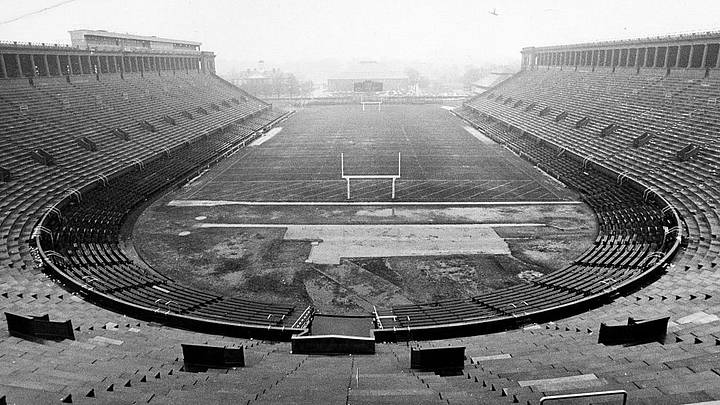
Harvard balked at the suggestion. The dimensions of the new field wouldn’t fit inside Harvard Stadium, which had been built just three years earlier. As one of the sport’s leading programs, Harvard had the influence to shoot down Camp’s proposal. Instead, the committee began to explore other ways to open up the game, eventually deciding to legalize the forward pass.

“The forward pass was instituted based on Harvard Stadium not being able to make the field wider,” Bob Glatz, a former Crimson football player and the executive director of the Harvard Varsity Club, told me as we toured the stadium. “The great game that we have today? Thank you, Harvard Stadium.”
That history alone made Harvard Stadium an obvious choice to be featured as part of Sports Illustrated’s Stadium Wonders video series, but it isn’t the only thing that makes this one of the most fascinating college football venues in the country.
It’s just part of the story of this iconic venue. For more than 100 years, Harvard Stadium has been the home of the Crimson football program, which boasts 20 Ivy League championships and more than 100 All-America selections. It has hosted Harvard soccer, lacrosse, rugby and even ice hockey. The Boston Patriots played one season there. It hosted soccer games during the 1984 Summer Olympics. It’s seen concerts by acts like Janis Joplin and Bob Marley. Even the architecture is historically significant. It was the world’s first vertical structure to be built using reinforced concrete. No wonder it’s one of only four football stadiums that has been named a National Historic Landmark.
It’s the second-oldest football stadium in Division I (only Penn’s Franklin Field, built in 1895, is older) and has seen NFL players (like Ryan Fitzpatrick and Matt Birk), Oscar-winning actors (Tommy Lee Jones) and even a U.S. president (the aforementioned Roosevelt) take the field for the home team. Once every two years, it’s the site of one of the greatest rivalries in American sports: Harvard vs. Yale.
On top of all that, it’s just a marvel to look at. Its neo-classical design is something you simply don’t see anymore. Sitting in the stands, it’s easy to transport yourself back to a bygone era of the sport when the helmets were made of leather, the field was still grass and, of course, only backward passes were permitted.
 Add us as a preferred source on Google
Dan Gartland writes Sports Illustrated’s flagship daily newsletter, SI:AM, and is the host of the “Stadium Wonders” video series. He joined the SI staff in 2014, having previously been published on Deadspin and Slate. Gartland, a graduate of Fordham University, is a former Sports Jeopardy! champion (Season 1, Episode 5).
Follow Dan_Gartland