%20%20--%3E%0A%3Csvg%20version%3D%221.1%22%20id%3D%22Layer_1%22%20xmlns%3D%22http%3A%2F%2Fwww.w3.org%2F2000%2Fsvg%22%20xmlns%3Axlink%3D%22http%3A%2F%2Fwww.w3.org%2F1999%2Fxlink%22%20x%3D%220px%22%20y%3D%220px%22%0A%09%20width%3D%2239px%22%20height%3D%2240px%22%20viewBox%3D%220%200%2039%2040%22%20enable-background%3D%22new%200%200%2039%2040%22%20xml%3Aspace%3D%22preserve%22%3E%0A%3Cpath%20fill%3D%22%23FFFFFF%22%20d%3D%22M38.5%2C7H28.2v26h10.3V7z%22%2F%3E%0A%3Cpath%20fill-rule%3D%22evenodd%22%20clip-rule%3D%22evenodd%22%20fill%3D%22%23FFFFFF%22%20d%3D%22M26.1%2C25.5c0%2C5.8-4.1%2C7.5-12.9%2C7.5C3.9%2C33%2C0%2C31.2%2C0%2C25.2v-1.1h11.6%0A%09v2.4c0%2C0.7%2C0.1%2C1.4%2C1.2%2C1.4c1%2C0%2C1.2-0.4%2C1.2-1.3v-0.9c0-1.6-0.9-1.6-3.5-2.2C2.2%2C21.7%2C0%2C19.7%2C0%2C15.3v-0.9C0%2C9.3%2C5.5%2C7%2C12.9%2C7%0A%09c10.2%2C0%2C12.8%2C2.6%2C12.8%2C7.4v1.8h-11v-2.9c0-0.6-0.4-1.1-1.2-1.1c-0.6%2C0-1.2%2C0.4-1.2%2C1.1v0.9c0%2C1.5%2C0.9%2C2%2C3.3%2C2.5%0A%09c8%2C1.6%2C10.5%2C3.3%2C10.5%2C7.5V25.5z%22%2F%3E%0A%3C%2Fsvg%3E%0A)
Two Things the Protect College Sports Act Gets Right, and Three Things It Doesn’t
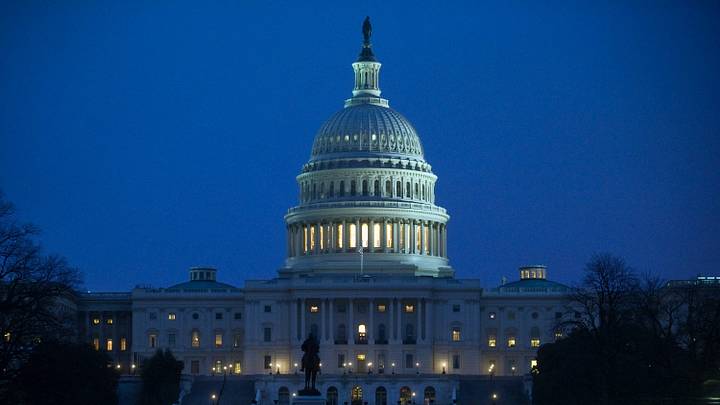
After months of discussion and stumping, the Protect College Sports Act took the first important step toward becoming law when the U.S. Senate voted 77–22 to pass it on Monday night.
The bill, which strives to fix myriad issues plaguing college sports, has been the source of both widespread praise and criticism from figures big and small.
The PCSA now heads to the House of Representatives, where it figures to face both opposition and time constraints to becoming a major law anytime soon. That said, we thought it would be a worthwhile endeavor to take a look at what the bill seeks to achieve, and point out where it may succeed and where it may fall short.
In short, here are a few things the PCSA gets right—and wrong.
What the Protect College Sports Act gets right
Regulation on agents and agent commissions
Agents and the increasingly chaotic transfer portal have gone together like gasoline and a match. Under the current rules, or lack thereof, there is nothing stopping any Tom, Dick or Harry from presenting themselves as an agent. Additionally, there is nothing currently stopping an agent, who is supposed to represent the athletes’ best interests, from hiking up commissions as high as 15% to 20%, perhaps even more than that.
Under the current rules, athletes risk being exploited by their agents. Section 102 of the PCSA caps agent commissions for player endorsement contracts at 5%, in line with what agents representing athletes in professional sports leagues typically make on commissions. Section 103 requires that prospective agents go through a step-by-step process to register and become certified in accordance with state laws and the Intercollegiate Athletics Association.
Not only would this theoretically keep entirely self-interested agents out of the sport, it would also indirectly ensure that a great slice of the pie of an athlete’s contract is actually going into the athlete’s pocket.
Academic and medical protections for athletes
One of the most important parts of the bill concerns the protections, both medical and academic, provided to athletes. Employees of universities cannot pressure an athlete into choosing a certain major, and cannot revoke or reduce scholarships based on poor performance, injury, illness or roster management decisions.
Schools would be on the hook for athletes’ out-of-pocket medical costs related to their sport for five years after the end of their careers, and ex-athletes would have 10 years to return to school and complete their degrees with scholarship support from the university.
Additionally, the bill requires schools to adhere to national standards protecting athletes from sport-related injury or death in instances such as a brain injury and heat-related illness, among others.
While the bill is far from perfect, it would seemingly hold schools accountable for protections they should be administering and most importantly, prevent them from taking advantage of athletes, a far-too-common occurrence in recent years.
What the Protect College Sports Act gets wrong
The way it chooses to restrict transfer activity
Ever since the U.S. Department of Justice reached a settlement with the NCAA in May 2024 preventing the organization from restricting athletes’ transfer eligibility, the transfer portal resembled your local Best Buy in the wee hours of Black Friday.
Thousands of players have entered the portal, some many times in their respective careers, and the resulting en masse created a frenetic free-for-all among universities, mostly the haves over the have-nots.
The Protect College Sports Act limits athletes to one undergraduate transfer without losing eligibility—an athlete must sit out a year after a second transfer—and does include some needed exceptions, such as coach departures, pursuing graduate studies, the athlete’s sport being cut and instances of sexual assault or harassment.
What’s dangerous about this is that the NCAA would be granted exemption from antitrust lawsuits, giving it the power to enforce these transfer rules without the threat of the courts. While that should, in theory, significantly reduce transfer activity, it’s also the NCAA’s way of treating athletes like employees in terms of movement without legally having to treat them as employees in other aspects.
I’ve argued for the restriction of transfer activity while still protecting athletes’ free market rights. There’s no perfect solution here, but giving antitrust exemptions to an organization in the NCAA that hasn’t exactly proved it deserves them feels like a slippery slope that could roll back the rights that athletes have won.
Not advancing the conversation on collective bargaining
On the issue of athlete employment status, the PCSA drops the ball. It includes this line, “This title is neutral on, and does nothing to alter, employee or non-employee status for student-athletes.”
While the policy of neutrality is undoubtedly aimed at helping the bill score some more votes from both sides of the aisle, it’s an extremely unsatisfying development for the people this actually affects: the athletes.
Figuring out a way to collectively bargain thousands of athletes across different state lines with different laws on unionization would be a difficult endeavor, but it’s one that college sports should one day have to reckon with, as it slowly continues to govern its athletes like professionals.
It feels wrong that the athletes, who more closely resemble professionals by the day and are the primary driving force behind the NCAA’s business, have little to no say in the conversation about these issues, unlike their professional peers.
Caving to schools and conferences on the realignment cap
The first version of the PCSA provided seemingly stout restrictions on conference realignment, capping the number of schools in each Power 4 conference at 19 while dinging schools that attempt to leave one conference for another with the prospect of spending five years as an independent, which, unless you’re Notre Dame, means a hefty blow to your earning potential.
After some lobbying from schools, the five-year independent period has shrunk to three years, and the number of teams that a Power 4 conference can command has risen to 20. That would mean that the Big Ten, with 18 teams currently, could potentially add two more schools to the mix while the 16-team SEC could import four more.
And with the three-year waiting period sunsetting after six years, around the time many of the conference media rights deals expire, mass realignment may once again occur. This could all be setting up for another Big Ten–SEC feeding frenzy on the Big 12 and ACC.
Attempting to tackle conference realignment is a worthy endeavor, but slightly pulling back the deterrents while increasing the caps to revenue sharing may have the opposite of the desired effect.
PODCAST: Listen to Sports Illustrated’s college sports podcast, Others Receiving Votes, hosted by Pat Forde, on Apple and Spotify. Watch the show on SI’s college YouTube channel or on SI TV.
 Add us as a preferred source on Google
Tim Capurso is a staff writer for Sports Illustrated, primarily covering MLB, college football and college basketball. Before joining SI in November 2023, Capurso worked at RotoBaller and ClutchPoints and is a graduate of Assumption University. When he's not working, he can be found at the gym, reading a book or enjoying a good hike. A resident of New York, Capurso openly wonders if the Giants will ever be a winning football team again.
Follow TimCapurso