%20%20--%3E%0A%3Csvg%20version%3D%221.1%22%20id%3D%22Layer_1%22%20xmlns%3D%22http%3A%2F%2Fwww.w3.org%2F2000%2Fsvg%22%20xmlns%3Axlink%3D%22http%3A%2F%2Fwww.w3.org%2F1999%2Fxlink%22%20x%3D%220px%22%20y%3D%220px%22%0A%09%20width%3D%2239px%22%20height%3D%2240px%22%20viewBox%3D%220%200%2039%2040%22%20enable-background%3D%22new%200%200%2039%2040%22%20xml%3Aspace%3D%22preserve%22%3E%0A%3Cpath%20fill%3D%22%23FFFFFF%22%20d%3D%22M38.5%2C7H28.2v26h10.3V7z%22%2F%3E%0A%3Cpath%20fill-rule%3D%22evenodd%22%20clip-rule%3D%22evenodd%22%20fill%3D%22%23FFFFFF%22%20d%3D%22M26.1%2C25.5c0%2C5.8-4.1%2C7.5-12.9%2C7.5C3.9%2C33%2C0%2C31.2%2C0%2C25.2v-1.1h11.6%0A%09v2.4c0%2C0.7%2C0.1%2C1.4%2C1.2%2C1.4c1%2C0%2C1.2-0.4%2C1.2-1.3v-0.9c0-1.6-0.9-1.6-3.5-2.2C2.2%2C21.7%2C0%2C19.7%2C0%2C15.3v-0.9C0%2C9.3%2C5.5%2C7%2C12.9%2C7%0A%09c10.2%2C0%2C12.8%2C2.6%2C12.8%2C7.4v1.8h-11v-2.9c0-0.6-0.4-1.1-1.2-1.1c-0.6%2C0-1.2%2C0.4-1.2%2C1.1v0.9c0%2C1.5%2C0.9%2C2%2C3.3%2C2.5%0A%09c8%2C1.6%2C10.5%2C3.3%2C10.5%2C7.5V25.5z%22%2F%3E%0A%3C%2Fsvg%3E%0A)
DraftKings or FanDuel could cost NCAA athletes a year of eligibility
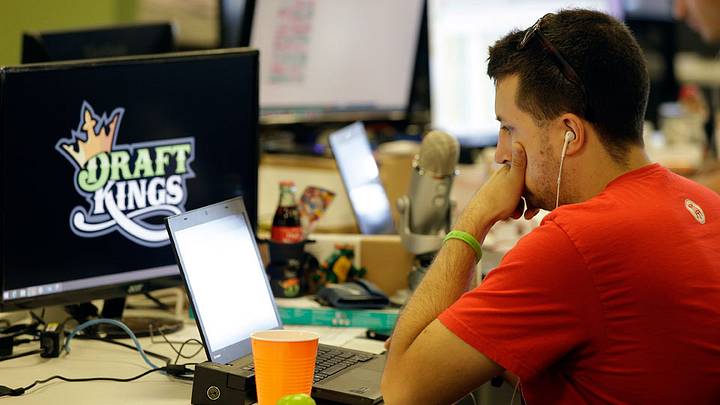
NCAA executive Oliver Luck has reminded people in Dallas that any athlete found to be gambling on college sports (including daily fantasy games such as Draft Kings) will automatically lose a year of eligibility, according to Mississippi State athletic director Scott Stricklin.
The NCAA does not condone sports gambling of any type, citing mental, health and safety issues.
A study by the NCAA in 2012 found that 18.7% of student athletes participated in fantasy leagues with entry fee and prize money. The percentage has increased each year since the first study in 2004.
DraftKings and FanDuel are the two biggest fantasy football sites that offer instant payouts to winners.
• DEITSCH: ESPN rethinks approach to gambling talk


Pac-12 conference president Larry Scott believes that the line between fantasy sports and gambling is too blurred, and his conference will not air ads for the sites on its network.
“The NCAA has taken a position that we can set the rules, and we don’t support it,” Scott told USA Today. “So that’s where we’ve drawn the line.”
On Monday, ESPN decided to put an end to its on-air “cover alerts” — an update on the broadcast that gives bettors a heads up on the score of a game in relation to its point spread – according to the Sports Business Journal's John Ourand and Michael Smith.
“We did it once. I didn’t like it, and we stopped it,” John Wildhack, ESPN’s executive vice president of programming and production, told SBJ. “To me, it was too overt. Part of everything we do has a little bit of trial and error.”
- Christopher Chavez
 Add us as a preferred source on Google
