%20%20--%3E%0A%3Csvg%20version%3D%221.1%22%20id%3D%22Layer_1%22%20xmlns%3D%22http%3A%2F%2Fwww.w3.org%2F2000%2Fsvg%22%20xmlns%3Axlink%3D%22http%3A%2F%2Fwww.w3.org%2F1999%2Fxlink%22%20x%3D%220px%22%20y%3D%220px%22%0A%09%20width%3D%2239px%22%20height%3D%2240px%22%20viewBox%3D%220%200%2039%2040%22%20enable-background%3D%22new%200%200%2039%2040%22%20xml%3Aspace%3D%22preserve%22%3E%0A%3Cpath%20fill%3D%22%23FFFFFF%22%20d%3D%22M38.5%2C7H28.2v26h10.3V7z%22%2F%3E%0A%3Cpath%20fill-rule%3D%22evenodd%22%20clip-rule%3D%22evenodd%22%20fill%3D%22%23FFFFFF%22%20d%3D%22M26.1%2C25.5c0%2C5.8-4.1%2C7.5-12.9%2C7.5C3.9%2C33%2C0%2C31.2%2C0%2C25.2v-1.1h11.6%0A%09v2.4c0%2C0.7%2C0.1%2C1.4%2C1.2%2C1.4c1%2C0%2C1.2-0.4%2C1.2-1.3v-0.9c0-1.6-0.9-1.6-3.5-2.2C2.2%2C21.7%2C0%2C19.7%2C0%2C15.3v-0.9C0%2C9.3%2C5.5%2C7%2C12.9%2C7%0A%09c10.2%2C0%2C12.8%2C2.6%2C12.8%2C7.4v1.8h-11v-2.9c0-0.6-0.4-1.1-1.2-1.1c-0.6%2C0-1.2%2C0.4-1.2%2C1.1v0.9c0%2C1.5%2C0.9%2C2%2C3.3%2C2.5%0A%09c8%2C1.6%2C10.5%2C3.3%2C10.5%2C7.5V25.5z%22%2F%3E%0A%3C%2Fsvg%3E%0A)
Fantasy Football Veteran Winners And Losers From the 2025 NFL Draft
The week following the NFL draft is loaded with analysis about which rookies will or won’t make a fantasy football impact, who landed in the best or worst places, and more.
However, members of the incoming class aren’t the only players affected by the draft. Incumbent veterans are also often impacted by draft decisions by their team’s general managers, whether it’s adding a new youngster or choosing to ultimately stand pat.
Here’s a look at 10 veterans who were positively affected by the result of the NFL draft, and another 10 veterans whose fantasy stock is likely to take a significant tumble next season.
Fantasy Football Winners
Jerry Jeudy, WR, Browns: The entire football world thought the Browns were going to take Travis Hunter with the second overall pick. Instead, they traded the pick to Jacksonville and didn’t draft a single wide receiver. Cleveland also drafted two quarterbacks (Dillon Gabriel, Shedeur Sanders) to go along with the three they already had on their roster, though I still like Joe Flacco to be their Week 1 starter. Regardless, this is good for Jeudy and Cedric Tillman.
D’Andre Swift, RB, Bears: The Bears were heavily linked to Ashton Jeanty in the draft, but he went sixth overall to the Las Vegas Raiders. Instead, Chicago selected Michigan tight end Colston Loveland with the 10th pick and didn’t take a running back until Round 7 (Rutgers’ Kyle Monangai). That leaves Swift to remain their starting running back. Roshon Johnson is still in the mix, but Swift went from being a potential fantasy reserve to remaining an asset.
Baker Mayfield, QB, Buccaneers: Mayfield was one of the best quarterbacks in fantasy land a season ago, and that was without Chris Godwin for half the year. Now, the Buccaneers have even more talent at wide receiver after drafting Ohio State’s Emeka Egbuka with the 19th overall pick. It might not be a great fantasy fit for the rookie, but it sure does load up the Tampa Bay pass attack when you add alpha Mike Evans and Jalen McMillan into the mix.
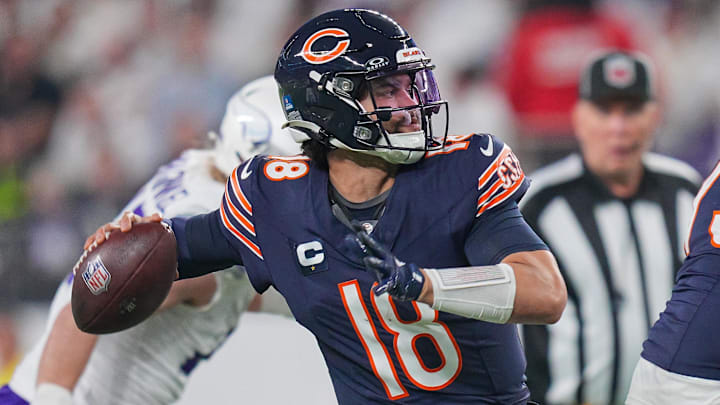
Caleb Williams, QB, Bears: Williams has had a solid offseason, as the Bears improved their offensive line in free agency and then added another lineman in Boston College’s Ozzy Trapilo in the draft. What’s more, general manager Ryan Poles selected a solid tight end prospect in Colston Loveland and a slot man burner in Luther Burden III. Based in part on these moves, Williams should push to become a top-10 fantasy quarterback next season.
Keon Coleman, WR, Bills: Some draft pundits had the Bills selecting a wide receiver in the first round of the draft, even after the team signed veteran Joshua Palmer. General manager Brandon Beane went heavy on the defensive side of the ball instead, picking five straight defenders before taking a tight end (Jackson Hawes) in Round 5. That’s good news for Coleman, who will be on plenty of sleeper/breakout fantasy lists for next season.
Jordan Love, QB, Packers: Love put up disappointing fantasy totals last season, as the team went heavy on Josh Jacobs and the ground attack in the second half. To balance things out, general manager Brian Gutekunst drafted two wideouts (Matthew Golden, Savion Williams) and an offensive lineman (Anthony Belton) with their first three picks. The Packers are now in great shape at receiver, which should help benefit Love as he looks to bounce back.
C.J. Stroud, QB, Texans: Stroud failed to meet lofty fantasy expectations a season ago, so the Texans have focused their offseason on getting him help. The team traded for Christian Kirk, then took two wide receivers (Jayden Higgins, Jaylin Noel) and an offensive lineman (Aireontae Ersery) with their first three picks. Houston already has Joe Mixon and Nico Collins in its offensive arsenal, so Stroud’s prospects for next season are looking better.
Drake Maye, QB, Patriots: Maye is one of my favorite early sleeper candidates for next season, and the Patriots certainly helped that cause in the draft. General manager Eliot Wolf took the best offensive tackle in the class, Will Campbell, then grabbed a high-end running back, TreVeyon Henderson, and wide receiver Kyle Williams. Wolf also grabbed another offensive lineman, Jared Wilson, to further protect Maye in 2025.
Bryce Young, QB, Panthers: Young started to turn things around in the second half of last season, scoring 27-plus fantasy points in two of his final three games. To help him build on his late-season positives, the Panthers added a potential alpha receiver with the eighth overall pick in Arizona’s Tetairoa McMillan. Carolina now has some good young players in T-Mac, Xavier Legette, Jalen Coker and Ja’Tavion Sanders at Young’s offensive disposal.
Aaron Rodgers, QB, free agent: How is Rodgers a winner? Well, the team he’s been closely linked with, the Pittsburgh Steelers, didn’t draft a quarterback until Round 6 (Will Howard). I have a hard time believing general manager Omar Khan is cool with Mason Rudolph as his starter, so I’d be surprised if the Rodgers-to-Pittsburgh chatter didn’t heat back up in the near future. He’d be great for the value of DK Metcalf and George Pickens, too.

Fantasy Football Losers
Najee Harris, RB, Chargers: I loved Harris’ potential when he signed with the Bolts, but the addition of Omarion Hampton put a big dent in his value. It wouldn’t be a “shock” if the rookie earned the starting role in a potential committee with Harris for head coach Jim Harbaugh. Even if he still opens the season as the RB1, Harris’s fantasy ceiling is a heck of a lot lower with Hampton now in the offensive mix.
Rhamondre Stevenson, RB, Patriots: It was a shock to see the Patriots draft Ohio State’s TreVeyon Henderson in the second round due to Stevenson’s presence. After all, the team had recently signed him to a four-year, $36 million contract. Regardless, his stock in all formats, redraft or otherwise, takes a major blow with Henderson on the roster. What’s more, I wouldn’t be surprised if the rookie was in a 50-50 split with Stevenson in 2025.
Travis Etienne Jr., RB, Jaguars: Etienne’s value had already taken a hit with the emergence of Tank Bigsby last season. Now, the addition of Virginia Tech’s Bhayshul Tuten in the fourth round puts this backfield into a further state of confusion for fantasy managers. A back who has drawn comparisons to Isiah Pacheco, Tuten could make this a three-headed mess of a committee. That is, unless the Jaguars decide to deal either Etienne or Bigsby. Stay tuned.
Tyrone Tracy Jr., RB, Giants: Tracy Jr. came out of nowhere to become a fantasy asset during his rookie season, finishing 26th in points among running backs. His status atop the Giants' depth chart is suddenly in question, however, as general manager Joe Schoen picked Cam Skattebo in the fourth round. An old-school bruiser, Skattebo could push for a starting job or, at the very least, short-yardage and goal-line work, as a rookie. That’s bad news for Tracy Jr.
Jalen McMillan, WR, Buccaneers: McMillan was a star during the fantasy postseason, putting up 16-plus points in each of his final five games, including three with at least 19 points. He did his statistical damage with Godwin out of action, however, and now the Bucs have Egbuka in the mix. With Godwin’s return and Egbuka on the roster, it could be difficult for McMillan to build on what was an impressive rookie campaign for fantasy managers.
Quentin Johnston, WR, Chargers: Johnston has not lived up to expectations in his first two NFL seasons. Now he’ll have more competition for targets in the passing game. Not only did the Bolts bring back Mike Williams in free agency, but general manager Joe Hortiz also drafted Tre Harris out of Ole Miss in Round 2. Harris has the size, speed and skill set to earn a starting role, maybe as soon as next season, which takes some of the bloom off Johnston’s rose.
Christian Watson, WR, Packers: The Packers drafted two wide receivers, Matthew Golden and Savion Williams, with their first three picks (somewhere, Aaron Rodgers is screaming). Watson is one of several wideouts on the roster, but I think he gets hurt the most by these additions. He’s failed to live up to his lofty expectations coming out of college, in large part due to injuries, and I can see him being utilized less often in the pass attack next season.
Audric Estime, RB, Broncos: Estime was in line to take over the top spot on the Broncos' depth chart at running back after the departure of Javonte Williams. Unfortunately for his dynasty managers, that projection took a major hit when general manager George Paton drafted RJ Harvey in the second round. Taking a back that high signals to me that Harvey, not Estime, should be seen as the favorite to lead a potential committee next season.
Jerome Ford, RB, Browns: Ford has shown flashes of statistical brilliance as a starter for the Browns, but the addition of Quinshon Judkins and Dylan Sampson will knock Ford down at least a peg on the depth chart. That’s not to say he can’t etch out a role as a pass catcher in the offense, but I’d be shocked if Judkins doesn’t dominate the carries and goal-line work for coach Kevin Stefanski. That leaves Ford to be a potential handcuff at best.
Cole Kmet, TE, Bears: Kmet’s fantasy stock had already fallen after his disappointing 2024 campaign, but the addition of Loveland is likely a deathblow. The Bears selected Loveland 10th overall, ahead of Penn State’s Tyler Warren, so general manager Ryan Poles is obviously a huge fan. We also know how well Sam LaPorta did in the offense of new head coach Ben Johnson during their time together in Detroit, so Kmet’s fantasy value is falling fast.
 Add us as a preferred source on Google
Michael Fabiano is a fantasy football analyst for Sports Illustrated. His weekly rankings and Start 'Em, Sit 'Em articles are must-reads for fantasy players. Before joining SI in August 2020, he worked for CBS Sports, NFL Network and SiriusXM. He also contributes to Westwood One Radio and the Locked on Dynasty Podcast. Fabiano was the first fantasy analyst to appear on one of the four major TV networks and is a member of the Fantasy Sports Writers Association Hall of Fame.
Follow Michael_Fabiano