%20%20--%3E%0A%3Csvg%20version%3D%221.1%22%20id%3D%22Layer_1%22%20xmlns%3D%22http%3A%2F%2Fwww.w3.org%2F2000%2Fsvg%22%20xmlns%3Axlink%3D%22http%3A%2F%2Fwww.w3.org%2F1999%2Fxlink%22%20x%3D%220px%22%20y%3D%220px%22%0A%09%20width%3D%2239px%22%20height%3D%2240px%22%20viewBox%3D%220%200%2039%2040%22%20enable-background%3D%22new%200%200%2039%2040%22%20xml%3Aspace%3D%22preserve%22%3E%0A%3Cpath%20fill%3D%22%23FFFFFF%22%20d%3D%22M38.5%2C7H28.2v26h10.3V7z%22%2F%3E%0A%3Cpath%20fill-rule%3D%22evenodd%22%20clip-rule%3D%22evenodd%22%20fill%3D%22%23FFFFFF%22%20d%3D%22M26.1%2C25.5c0%2C5.8-4.1%2C7.5-12.9%2C7.5C3.9%2C33%2C0%2C31.2%2C0%2C25.2v-1.1h11.6%0A%09v2.4c0%2C0.7%2C0.1%2C1.4%2C1.2%2C1.4c1%2C0%2C1.2-0.4%2C1.2-1.3v-0.9c0-1.6-0.9-1.6-3.5-2.2C2.2%2C21.7%2C0%2C19.7%2C0%2C15.3v-0.9C0%2C9.3%2C5.5%2C7%2C12.9%2C7%0A%09c10.2%2C0%2C12.8%2C2.6%2C12.8%2C7.4v1.8h-11v-2.9c0-0.6-0.4-1.1-1.2-1.1c-0.6%2C0-1.2%2C0.4-1.2%2C1.1v0.9c0%2C1.5%2C0.9%2C2%2C3.3%2C2.5%0A%09c8%2C1.6%2C10.5%2C3.3%2C10.5%2C7.5V25.5z%22%2F%3E%0A%3C%2Fsvg%3E%0A)
After Another Car Crash, Tiger Woods Must Face the Hard Truth: He Is an Addict
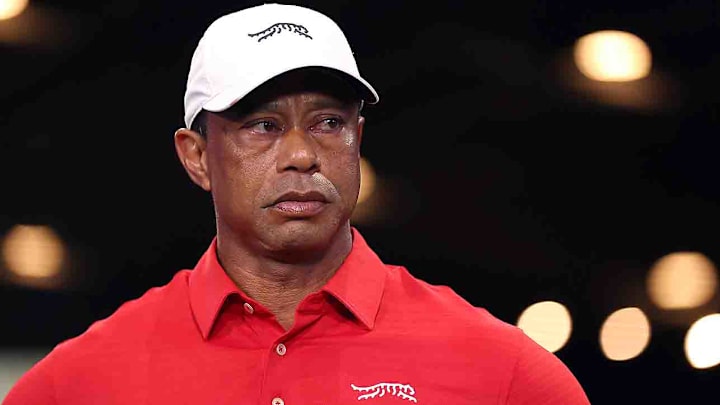
Tiger Woods is fine; Tiger Woods is not fine. Woods drove his Land Rover into another vehicle, rolled the Land Rover over, and walked away, which is a relief, but only a temporary one. Police in Martin County, Fla., took a look at Woods and arrested him under suspicion of driving under the influence.
The rest of us did not need to see Woods to suspect he was driving under the influence. It would be a shock if he wasn’t.
Every single person in Woods’s life should approach every single interaction with him with the understanding that he is an addict. It is the best thing they can do for him. It’s what he needs. It’s what his children deserve. It’s what everybody else who shares a road with him deserves, too.
This is Woods’s second DUI arrest, and it should probably be his third or fourth:
In 2009, after Woods’s then-wife Elin Nordegren discovered evidence of infidelity, he fled and drove into a fire hydrant. When police found him, he was not coherent. Later, there would be reports that Woods had taken Vicodin and sleeping pills, but at the time, police did not treat the one-car accident as a possible DUI.
In 2017, police arrested Woods when they found him asleep at the wheel. Woods said he had an “unexpected reaction” to mixing medications. He had Vicodin, Dilaudid, Xanax, Ambien and THC in his system. He entered an in-patient rehab facility for prescription medication addiction.
In 2021, Woods’s SUV drifted across a median in Southern California, rolled down an embankment and flipped over. Police said he was driving 87 miles per hour in a 45-mph zone. There was an empty, unlabeled pill container in the car. Woods told police he thought he was in Florida. They did not run a toxicology test.

After his 2017 arrest, Woods said, “I will do everything in my power to ensure this never happens again.” At the time, his career appeared to be over after myriad surgeries. He then stunned the whole golf world, and even himself, by getting healthy enough to return to competition and win the ’19 Masters.
He had worked harder to come back from injuries than any golfer in history—and he had succeeded. Think of how good that must have felt. Think of the joy and pride that it brought him.
He still wrecked his car in Southern California, causing the worst injuries of his career. He later said there was talk of amputating his leg. He worked like crazy to come back again, even though he was almost 50, even though winning another major was not realistic, even though he had enough money for a thousand lifetimes.
This week, he returned to action again, in the TGL indoor golf league. He said he was trying to get in shape to play the Masters next month, but wasn’t there yet.
He still wrecked his car in Florida.
Breaking: Tiger Woods involved in rollover crash on Jupiter Island, deputies say https://t.co/EZ27zriGd4
— WPTV (@WPTV) March 27, 2026
Woods has poured every teaspoon of energy into fixing his body, and he still keeps wrecking it. You can be mad at him for putting others in danger. But Woods does not want to put others in danger, just as he did not want to shatter his leg five years ago or roll his car over Friday.
He did it because he thinks he can control his addiction, and that’s not how this works. When you are an addict, your addiction controls you.
Woods did not choose addiction. He has had many surgeries, which led to many painkillers, which led to a reliance on them. But how he got here is not all that important. What matters is where he goes now.
If you paid even a little bit of attention to Woods, if you just listened to him speak, you could see Friday coming. He has talked at length about the injuries from that 2021 accident without acknowledging that he was the one who caused them. He never really discusses that rehab stay in ’17 and has dodged questions about the empty pill bottle in ’21. When he saw a fan in a t-shirt with his DUI mugshot on it, he laughed. He talks and acts like the main challenge in his life is rehabbing from injuries so he can play golf.
Woods is such a singular cultural figure that it can be hard to see him as anything else. Younger players feel lucky that they get to interact with him. He is surrounded by people who are in the Tiger Woods business. The easy conclusion is that almost everyone in Woods’s life is an enabler. But we don’t know that. We are not privy to their conversations.
Addiction is a miserable, unrelenting bastard. This is true whether you are a truck driver or a teenager or a 15-time major champion.
There was a time, long ago, when Tiger was so focused on his career that he seemed oblivious to everything outside of it. He has more balance in his life now. He has more reasons to get up in the morning. He needs to add one more. Tiger Woods should approach every single interaction with everyone in his life with the understanding that he is an addict.
More Golf from Sports Illustrated
 Add us as a preferred source on Google
Michael Rosenberg was a senior writer for Sports Illustrated, covering any and all sports. He writes columns, profiles and feature stories and has covered almost every major sporting event. He joined SI in 2012 after working at the Detroit Free Press for 13 years, eight of them as a columnist. Rosenberg is the author of “War As They Knew It: Woody Hayes, Bo Schembechler and America in a Time of Unrest.” Several of his stories also have been published in collections of the year’s best sportswriting. He is married with three children.
Follow rosenberg_mike