%20%20--%3E%0A%3Csvg%20version%3D%221.1%22%20id%3D%22Layer_1%22%20xmlns%3D%22http%3A%2F%2Fwww.w3.org%2F2000%2Fsvg%22%20xmlns%3Axlink%3D%22http%3A%2F%2Fwww.w3.org%2F1999%2Fxlink%22%20x%3D%220px%22%20y%3D%220px%22%0A%09%20width%3D%2239px%22%20height%3D%2240px%22%20viewBox%3D%220%200%2039%2040%22%20enable-background%3D%22new%200%200%2039%2040%22%20xml%3Aspace%3D%22preserve%22%3E%0A%3Cpath%20fill%3D%22%23FFFFFF%22%20d%3D%22M38.5%2C7H28.2v26h10.3V7z%22%2F%3E%0A%3Cpath%20fill-rule%3D%22evenodd%22%20clip-rule%3D%22evenodd%22%20fill%3D%22%23FFFFFF%22%20d%3D%22M26.1%2C25.5c0%2C5.8-4.1%2C7.5-12.9%2C7.5C3.9%2C33%2C0%2C31.2%2C0%2C25.2v-1.1h11.6%0A%09v2.4c0%2C0.7%2C0.1%2C1.4%2C1.2%2C1.4c1%2C0%2C1.2-0.4%2C1.2-1.3v-0.9c0-1.6-0.9-1.6-3.5-2.2C2.2%2C21.7%2C0%2C19.7%2C0%2C15.3v-0.9C0%2C9.3%2C5.5%2C7%2C12.9%2C7%0A%09c10.2%2C0%2C12.8%2C2.6%2C12.8%2C7.4v1.8h-11v-2.9c0-0.6-0.4-1.1-1.2-1.1c-0.6%2C0-1.2%2C0.4-1.2%2C1.1v0.9c0%2C1.5%2C0.9%2C2%2C3.3%2C2.5%0A%09c8%2C1.6%2C10.5%2C3.3%2C10.5%2C7.5V25.5z%22%2F%3E%0A%3C%2Fsvg%3E%0A)
Bottomless Money in Pro Golf Is Over, and the Correction Is Here
The unsustainable financial issues confronting men’s professional golf met head-on within days of each other over the past two weeks. It was probably a coincidence, but jarring just the same.
How it all plays out will be a talking point for the rest of this year and possibly beyond as a correction appears in order.
First, it was the Public Investment Fund and the possibility that the sovereign wealth fund of Saudi Arabia would no longer subsidize LIV Golf to the tune of billions, perhaps as soon as following the 2026 season.
The reports—not confirmed nor addressed via media by LIV Golf—came as a shock simply because LIV’s expected runway was longer than five years. LIV’s CEO, Scott O’Neil, acknowledged as much earlier this year, saying that the path to profitability was years away.
And yet, with a wealth fund so vast it could consider LIV Golf a rounding error, it made sense that golf, as part of a growing sports interest in the Kingdom, would proceed and LIV Golf would continue its quest for viability. Instead, there is now concern that the funding will be pulled entirely or at least greatly diminished.
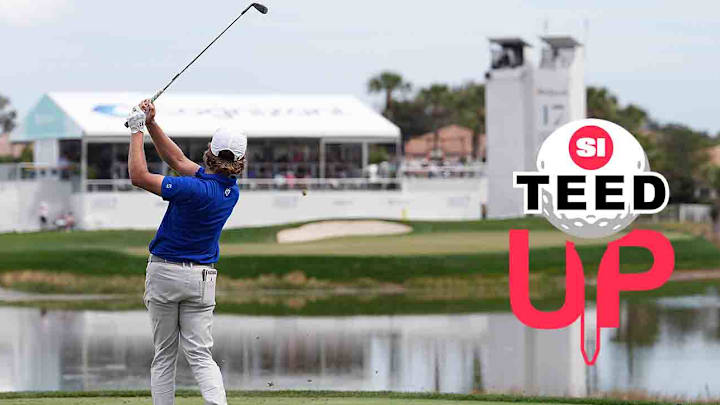
A few days later came word that the PGA Tour had laid off 4% of its workforce, 56 people, with some of the cuts coming to staff at the Cognizant Classic in Palm Beach Gardens, Fla.
Although this was viewed in some places as doom and gloom for the PGA Tour, it was more a reflection of what was inevitable: remember that the Tour went to a for-profit model in 2024 with a big investor called Strategic Sports Group that more than two years ago invested $1.5 billion.
If you know anything about private equity and for-profit entities, it’s probably more surprising that such cuts didn’t happen sooner. The Tour offered buyouts to senior staff last year and has also trimmed in other areas.
With investors to repay and new player-equity grants that will run into the millions of dollars, there is pressure to make money. Along with that comes cutting back, which is difficult due to the livelihoods involved. The PGA Tour for years has been accused of being bloated, and now that is becoming apparent.
How the PGA Tour opened its wallet to respond to LIV Golf
Partly as a reaction to LIV Golf, the Tour greatly boosted something called the Player Impact Program (PIP), which actually began modestly in 2021 (prior to LIV’s launch) with a $40 million pool distributed to players who generated, in essence, the most value for the Tour.
The next year it was increased to $100 million for two years and then in 2024 was pared down to $50 million. In all, $290 million over four years for a program that is difficult to measure any kind of return, all while draining the Tour coffers.
But it did highlight one of Hall of Famer Phil Mickelson’s concerns going back a decade or more: that the PGA Tour had the money to better compensate players, and should have been doing so in the form of enhanced events that attracted the biggest stars.
While that might have been self-serving—Mickelson of course would’ve handsomely benefited—it’s basically what occurred since the Tour launched its signature events in 2023.
They are clearly a nod to the top players, who—this year—are guaranteed five no-cut events with $20 million purses. That’s in addition to the $25 million Players Championship, two no-cut FedEx Cup playoff events with $20 million purses and the $50 million Tour Championship.
All of that is great for the players, but the problem foreseen several years ago when all of this began is that those numbers are not sustainable. The $20 million purses were no coincidence—it’s the same as a LIV Golf individual purse. Unlike LIV, the Tour relies on TV revenue and title sponsors to pay purses, and at least three of the eight title sponsors of signature events were paying less than the asking price.
While the Tour can absorb it, that’s not good business in a for-profit world. Hence, where we are now.

So consider it an adjustment, with CEO Brian Rolapp last year talking about “scarcity”—which likely means fewer tournaments and a model that will see 21 to 26 core events, down from 34. It’s possible that the star players might play for more money overall but it’s hard to envision all of those events outside of the majors and the Players having $20 million purses.
As for the other events? Well, it is also possible as part of the two-tier idea that Rolapp unveiled at the Players Championship last month that they will have reduced purses, too. It only makes sense if they are not going to have top players.
“There is a misconception, I think publicly, about our investors,” Rolapp said at the Players Championship. “I often hear that it is quote-unquote, private equity, and that does not come with a positive connotation.
“I think what people are trying to say, people only worry about the bottom line, people who want to cut costs and get out of their investment in five years. While that might be some people in private equity, I can tell you for sure, that is not our investors.
“The investor group are smart and they’re strategic, and they’re not private equity people; they are long-term investors in sports businesses. John Henry has owned the Red Sox for decades. Arthur Blank, who I’ve known for 23 years, is not selling the Falcons anytime soon. Andy and Steve Cohen are going to be in the Mets for a very long time, and they’re committed to it.”
Perhaps that explains why cuts did not come sooner. But they did come, and it’s possible there will be more as the Tour sorts through a new competitive model that will see more meaningful events.
Already, the Cognizant Classic has shed some staff, including tournament director Todd Fleming. It is unclear how many worked directly with the event or if they were spread across others, but the move was somewhat surprising since the Tour’s management arm, PGA Tour Events, began running it more than two years ago.
The Tour operates several events on its own, either as an outright owner or with the management company, including this week’s Cadillac Championship, the Players Championship, the Tour Championship and the Presidents Cup. The events are viewed as revenue sources for the Tour in addition to the fees it collects for television media rights and title sponsorship fees.
What PGA Tour event restructuring might mean to a Florida mainstay
The change at Cognizant doesn’t mean the event is folding, but that resources will be spread across multiple events. Still, it is fair to wonder what its future might be in a new world with tiered events and five stops in Florida.
The Cognizant dates to 1972 when it was first known as the Jackie Gleason Inverrary Classic. Since moving to PGA National in 2007, Children’s Healthcare Charities has been the 501(c)3 organization that owned and operated the event and is still the main charitable beneficiary even with the Tour’s involvement.
That is the big advantage that PGA Tour events have over LIV Golf. Almost all of them have a local grassroots organization that runs them. The Century Club in San Diego at Torrey Pines, the Salesmanship Club in Dallas at the Byron Nelson, Copperhead Charities outside of Tampa for the Valspar Championship are three examples.
They work year-round to promote and run the event—and take on the cost of doing so, which relieves the Tour of that burden, which is immense.
LIV Golf does not have that luxury. It has not been around enough to establish roots in all of the places it plays, and takes on the cost of running all its tournaments.
That creates quite the financial roadblock for LIV, especially if its funding source is greatly diminished.
For the PGA Tour, it’s simply a different set of financial challenges.
More Golf from Sports Illustrated
 Add us as a preferred source on Google
Bob Harig was a senior writer covering golf for Sports Illustrated. He has more than 25 years experience on the beat, including 15 at ESPN. Harig is a regular guest on Sirius XM PGA Tour Radio and has written two books, “DRIVE: The Lasting Legacy of Tiger Woods” and “Tiger and Phil: Golf’s Most Fascinating Rivalry.” He graduated from Indiana University where he earned an Evans Scholarship, named in honor of the great amateur golfer Charles (Chick) Evans Jr. Harig, a former president of the Golf Writers Association of America, lives in Clearwater, Fla.
Follow bobharig