%20%20--%3E%0A%3Csvg%20version%3D%221.1%22%20id%3D%22Layer_1%22%20xmlns%3D%22http%3A%2F%2Fwww.w3.org%2F2000%2Fsvg%22%20xmlns%3Axlink%3D%22http%3A%2F%2Fwww.w3.org%2F1999%2Fxlink%22%20x%3D%220px%22%20y%3D%220px%22%0A%09%20width%3D%2239px%22%20height%3D%2240px%22%20viewBox%3D%220%200%2039%2040%22%20enable-background%3D%22new%200%200%2039%2040%22%20xml%3Aspace%3D%22preserve%22%3E%0A%3Cpath%20fill%3D%22%23FFFFFF%22%20d%3D%22M38.5%2C7H28.2v26h10.3V7z%22%2F%3E%0A%3Cpath%20fill-rule%3D%22evenodd%22%20clip-rule%3D%22evenodd%22%20fill%3D%22%23FFFFFF%22%20d%3D%22M26.1%2C25.5c0%2C5.8-4.1%2C7.5-12.9%2C7.5C3.9%2C33%2C0%2C31.2%2C0%2C25.2v-1.1h11.6%0A%09v2.4c0%2C0.7%2C0.1%2C1.4%2C1.2%2C1.4c1%2C0%2C1.2-0.4%2C1.2-1.3v-0.9c0-1.6-0.9-1.6-3.5-2.2C2.2%2C21.7%2C0%2C19.7%2C0%2C15.3v-0.9C0%2C9.3%2C5.5%2C7%2C12.9%2C7%0A%09c10.2%2C0%2C12.8%2C2.6%2C12.8%2C7.4v1.8h-11v-2.9c0-0.6-0.4-1.1-1.2-1.1c-0.6%2C0-1.2%2C0.4-1.2%2C1.1v0.9c0%2C1.5%2C0.9%2C2%2C3.3%2C2.5%0A%09c8%2C1.6%2C10.5%2C3.3%2C10.5%2C7.5V25.5z%22%2F%3E%0A%3C%2Fsvg%3E%0A)
How a Two-Tier PGA Tour Could Create Issues for Star Players
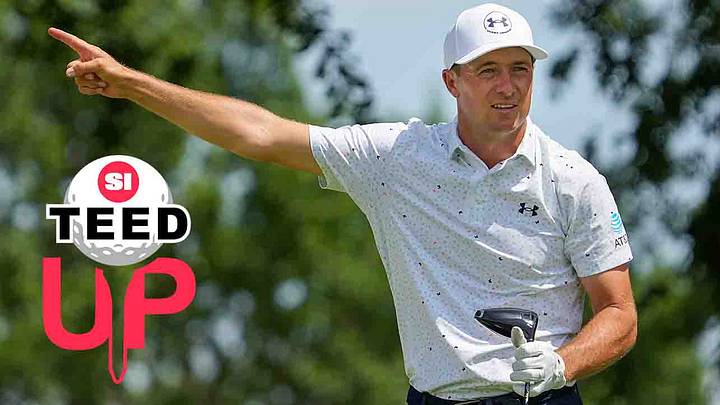
Both Scottie Scheffler and Jordan Spieth are skipping this week’s PGA Tour event at Colonial, probably not a difficult decision for either even though both have local ties and success at the event.
It is simply another example of the crammed schedule and highlights a potential concern going forward when the PGA Tour revamps its lineup to a tier system that has been vaguely revealed by CEO Brian Rolapp.
The signature event model on the PGA Tour that, for now, sees reduced fields and $20 million purses is one that is difficult to pass up on if eligible. For Spieth, who has played seven of the last eight weeks, he is skipping the Fort Worth, Texas, event for the first time in his career.
A week after Colonial is Jack Nicklaus’s Memorial Tournament followed two weeks later by the U.S. Open and then another signature event, the Travelers Championship.
Both players have won the Colonial event in the past. And while Scheffler hasn’t played as often as Spieth—he skipped the Truist Championship prior to the PGA—playing this week would mean four in a row including the PGA. He is the defending champion next week at the Memorial.
Skipping those events is their right and likely will continue to be.
But it does present an interesting issue in a new world that Rolapp is looking to get in place by 2028. What if the top players are required to play in Tier 1 events only?
Golfweek recently reported on this possibility after Rolapp visited with players at the CJ Cup Byron Nelson last week. The CEO is pitching a plan that will see 16 to 18 “signature” events in addition to the four majors, the Players Championship and three playoff events.
That means a full schedule of 24 to 26 events, at least eight fewer than the January-to-late-August model now in place.
These tournaments would have 120-player fields—thus roughly 40 to 50 more playing opportunities each week at the biggest tournaments—and would, in theory, see a majority of the game’s best spread themselves among the core 16 to 18 tournaments.
Someone who only wants to play the minimum 15 events—Rory McIlroy comes to mind—would be looking at playing roughly seven of the signature events, which is roughly what he is doing now.

Scheffler played a total of 20 times in 2025, which means he’d be looking at 12 of the 16 to 18 signature events.
Spieth played 19 last year coming off an injury but didn’t make it to the Tour Championship, thus he’d be looking at 12 of the 16 to 18. Tommy Fleetwood played 19 as well.
The idea is to have more of the “big events” than now but fewer overall so sponsors can know that the majority of the game’s top players will be competing together more often. And that will generally be the case. Instead of missing more than half of the events in the current setup, someone Scheffler would in theory only be skipping four or five.
How second-tier PGA Tour events could pose some issues
And that’s where the Tier 2 events make this interesting.
As Rolapp said at the Players Championship in March: “To be clear, we will have a second track of PGA Tour tournaments which will ladder up to those elevated events.”
What if the second tier of events includes, say, the Colonial? (There is no definitive word at this time on how the events will be slotted.) In theory, those Tier 2 tournaments would have to run concurrently with the Tier 1 events or slot into some of the various off weeks.
The Golfweek story reported that players eligible for Tier 1 either won’t be allowed to play in Tier 2 events or will be “strongly” discouraged from doing so.
On the one side, that makes sense. The signature events will have massive purses and the sponsors who pay for them expect the top players to support those tournaments—which they can’t do if they are playing a lesser event. The top players are going to play only so many weeks. If they choose a “lesser” event it is bound to take away from a “bigger” one.
But… are you really going to tell Scheffler and Spieth—or anyone else, for that matter—that they can’t support their hometown events if they are not part of the Tier 1 schedule? Or tell any player that he must skip a tournament he enjoys? What about dual members of the DP World Tour? They need time to play those events, too.
Both Golfweek and Golf Channel have reported that these new signature events aim to have the same $20 million purses as now, which seems awfully ambitious when the Tour has had trouble getting that kind of commitment out of sponsors with half that number of signature events.
If that happens, you can all but be assured that the Tier 2 tournaments will see a significant drop in purses. It only makes financial sense.
Rolapp has promised an update on all of this following a board meeting at the Travelers Championship next month. It seems there are still some issues to work out.
The PGA of America tries to quietly end the Don Rea saga
At exactly 5 p.m. ET on Friday—the start of a holiday weekend, no less—the PGA of America sent out a news release in which it announced that its president, Don Rea, was being replaced and would not serve the rest of his term, which was to end late this year. The ultimate Friday news dump.
Waiting until nearly a week after the organization’s biggest championship and doing it heading into a weekend was no doubt one way to try to soften the blow of a rather embarrassing tenure that saw Rea in the middle of controversy.
The PGA of America president rises through the ranks and typically serves in other roles before getting to the top spot, a two-year term that sees the person lead the organization’s board of directors.
The PGA has a CEO who oversees the day-to-day operation: Terry Clark, who just recently assumed his duties after replacing Derek Sprague, who resigned earlier this year.
Rea, like the others in the hierarchy, is a PGA of America pro (he is based in Arizona) and represents the interests of more than 30,000 club pros around the country.
In the Friday news release, the PGA said the decision “followed a series of issues over time that, taken together, were determined to be detrimental to the Association.” It said Nathan Charnes would be moved from vice president to acting president until November, when Rea’s two-year term was to have ended.

Rea first drew attention at the 2025 PGA Championship in the pre-tournament news conference where he more or less upstaged then-CEO Sprague.
But the bigger issues stemmed from his public comments at the Ryder Cup, where the PGA of America came under criticism for the handling of poor fan behavior, especially directed at the European team during the Saturday afternoon session.
In an interview on the BBC on Sunday of the Ryder Cup, Rea said: “Well, you got 50,000 people here that are really excited, and, heck, you can go to a youth soccer game and get some people who say the wrong things. We tell the fans booing at somebody doesn’t make them play worse. Typically, it makes them play better. And when our American players have to control the crowds, that distracts from playing.”
He was also asked about fan comments toward Rory McIlroy, which at times were vulgar and included taunts at his wife, Erica, who had drinks thrown on her.
“I haven’t heard some of that,” Rea said. “I’m sure it’s happened. You know, it happens when we’re over in Rome on the other side. And Rory understands. I thought he handled the press conference yesterday amazingly. But yeah, things like that are going to happen. I don’t know what was said. But all I know is golf is the engine of good.”
The following day, Rea sent a letter to PGA of America members apologizing for his comments, and he later also sent one to McIlroy.
Earlier this year, it was confirmed that Rea was no longer a member of the PGA Tour’s policy board, a position held by the reigning president. And Rea was not in a public role at the PGA Championship at Aroniminik where he might otherwise have at least taken part in a pre-tournament news conference.
New CEO Clark appeared at the PGA news conference alongside chief championships officer Kerry Haigh and without representation from the board.
When asked about Rea, Clark said: “I've been asked by the board to help represent the business of the association, and how we think about our membership is something that we continue to have Don focused on from that side. This, I think I'm first of all gratified that I've been asked to take this today and handle with Kerry where we are.”
Later, he said: “Specifically, what we've asked is for Don to keep his focus on the member side, and we've tried to keep the right responsibilities across our distinct leaders in here. So that's it.”
Well, there was more, as we learned on Friday.
Blades Brown’s dilemma
A tie for 14th at the CJ Cup Byron Nelson means 19-year-old Blades Brown has earned special temporary membership status for the rest of the year on the PGA Tour.
In order to do so, Brown needed to earn more than the 150th-place finisher in last year’s FedEx Cup standings. And by achieving that goal he is able to accept unlimited sponsor exemptions for the rest of the season.
And that is where Brown now has some decisions to make.

His ultimate hope is to be fully exempt on the PGA Tour in 2027, and he has two clear paths to that goal.
One is via the PGA Tour and he’ll need to finish among the top 70 points earners. He is inside the top 100 now but barely. And his PGA Tour starts are not guaranteed.
The other is to continue on the Korn Ferry Tour, where he is 12th in points so far, with the top 20 earning a full exemption for the 2027 season.
What to do?
“Good golf takes care of everything,” Brown said after the Byron Nelson, where he needed a 21st-place finish or better in order to secure the special status. “The Korn Ferry Tour is awesome. For me, what it's done for me is it's provided me a pathway to the PGA Tour.
“The cool thing that I think it’s done is it’s taught me to go low. I can’t thank the Korn Ferry Tour enough for teaching me those valuable lessons because everybody out on the PGA Tour, they can go low. Look at Wyndham Clark [who shot 60 on Sunday in winning], look at Scottie [Scheffler], look at Si Woo [Kim], 28 under, 27 under is no joke. Without the Korn Ferry Tour, I would not have had that strength.
“I'm excited for the next couple of weeks and see what's going to happen.”
Brown remains undecided on which path to take—or take both
Brown did not say which path he will take or if he will attempt to do both. He is scheduled to play in a Korn Ferry event this week but could also take spots in PGA Tour events when offered.
The path is probably easier by playing the Korn Ferry, although the prize money is less. Playing PGA Tour events offers more money but also the risk of not finishing among the top 70, and thus not having any status on the PGA Tour next year.
The good news, however, for Brown is that he is all but assured of remaining fully exempt on the Korn Ferry Tour next year, thus he can pick his spots and perhaps try to do both. Either way, it appears Brown has a path to the PGA Tour.
In six starts, he has two top-10 finishes and now added another good result in Dallas.
More Golf from Sports Illustrated
 Add us as a preferred source on Google
Bob Harig was a senior writer covering golf for Sports Illustrated. He has more than 25 years experience on the beat, including 15 at ESPN. Harig is a regular guest on Sirius XM PGA Tour Radio and has written two books, “DRIVE: The Lasting Legacy of Tiger Woods” and “Tiger and Phil: Golf’s Most Fascinating Rivalry.” He graduated from Indiana University where he earned an Evans Scholarship, named in honor of the great amateur golfer Charles (Chick) Evans Jr. Harig, a former president of the Golf Writers Association of America, lives in Clearwater, Fla.
Follow bobharig