%20%20--%3E%0A%3Csvg%20version%3D%221.1%22%20id%3D%22Layer_1%22%20xmlns%3D%22http%3A%2F%2Fwww.w3.org%2F2000%2Fsvg%22%20xmlns%3Axlink%3D%22http%3A%2F%2Fwww.w3.org%2F1999%2Fxlink%22%20x%3D%220px%22%20y%3D%220px%22%0A%09%20width%3D%2239px%22%20height%3D%2240px%22%20viewBox%3D%220%200%2039%2040%22%20enable-background%3D%22new%200%200%2039%2040%22%20xml%3Aspace%3D%22preserve%22%3E%0A%3Cpath%20fill%3D%22%23FFFFFF%22%20d%3D%22M38.5%2C7H28.2v26h10.3V7z%22%2F%3E%0A%3Cpath%20fill-rule%3D%22evenodd%22%20clip-rule%3D%22evenodd%22%20fill%3D%22%23FFFFFF%22%20d%3D%22M26.1%2C25.5c0%2C5.8-4.1%2C7.5-12.9%2C7.5C3.9%2C33%2C0%2C31.2%2C0%2C25.2v-1.1h11.6%0A%09v2.4c0%2C0.7%2C0.1%2C1.4%2C1.2%2C1.4c1%2C0%2C1.2-0.4%2C1.2-1.3v-0.9c0-1.6-0.9-1.6-3.5-2.2C2.2%2C21.7%2C0%2C19.7%2C0%2C15.3v-0.9C0%2C9.3%2C5.5%2C7%2C12.9%2C7%0A%09c10.2%2C0%2C12.8%2C2.6%2C12.8%2C7.4v1.8h-11v-2.9c0-0.6-0.4-1.1-1.2-1.1c-0.6%2C0-1.2%2C0.4-1.2%2C1.1v0.9c0%2C1.5%2C0.9%2C2%2C3.3%2C2.5%0A%09c8%2C1.6%2C10.5%2C3.3%2C10.5%2C7.5V25.5z%22%2F%3E%0A%3C%2Fsvg%3E%0A)
The Rays and Brewers Perfected a Blueprint for Beating Baseball’s Big Spenders
In this story:
Baseball’s two best teams are set to meet in the 2026 World Series. For some reason, that comes as a surprise.
After an offseason dominated by the back-to-back champion Dodgers’ seemingly endless spending spree, the baseball world spent much of 2026 waiting for Los Angeles to waltz to a third title in a row. High-payroll teams like the Yankees, Phillies, Blue Jays and Braves figured to have a say in whether or not that happened.
While baseball fans waited for the richest teams to take over, the Rays and Brewers spent six months proving they belonged. They were contenders hiding in plain sight.
Tampa Bay and Milwaukee have their differences, but they’ve been built in a similar fashion. Neither had the luxury of throwing endless money at its problems. Instead, both constructed rosters capable of beating the teams that did.
The payroll disparity between these clubs and baseball’s biggest spenders is staggering. Milwaukee ranks 19th in payroll for the 2026 season at $146.2 million, while Tampa Bay ranks 28th at a minuscule $95.6 million. If you combined their payrolls, their $241.8 million salary bill would rank eighth in MLB and is nearly $100 million less than the $339.3 million spent by the Dodgers, whom Milwaukee swept out of the National League championship series.
In fact, L.A.’s projected luxury tax bill of more than $180 million could cover the Brewers’ payroll with tens of millions to spare, and is almost double the Rays’ payroll.
Big-spending teams have dominated the World Series over the past decade. Since 2016, eight of the 10 champions have ranked inside the top 10 of CBT payroll, while seven of the last eight have ranked inside the top nine, with the 2021 Braves being the lone exception. Every World Series during that span has featured at least one team ranked inside the top 10 in spending, and five matchups included two.
This is the first time since 1991 that two teams in the bottom half of MLB payroll spending will meet in the World Series.
After the Dodgers beat the Braves to advance to the NLCS, cameras caught manager Dave Roberts saying about his team, “We’re smarter. We’re better. And we’re tougher.” Turns out the Rays and Brewers should have been making that claim.

Milwaukee and Tampa Bay got here by building rosters with smarts, not financial muscle. They are two of the most analytically driven franchises in baseball, and both have long histories of scouting success. Both organizations have earned reputations for trading established players while they’re still affordable and have significant value, often years before they reached free agency. The Brewers famously dealt Josh Hader, Corbin Burnes and Freddy Peralta in that manner, while the Rays traded Chris Archer, Blake Snell, Randy Arozarena and Brandon Lowe before their platform seasons.
Peralta is an interesting case because Milwaukee shipped him to the Mets before the season and he struggled mightily, limping to a 4.99 ERA and a 1.48 WHIP through 22 starts. The Rays saw an opportunity to buy low and pounced. They tweaked his delivery and arsenal, and he has been brilliant. Over his last 10 appearances, Peralta is 7–0 with a 0.89 ERA, 0.91 WHIP and 39 strikeouts while allowing just five earned runs in 50 ⅔ innings. He was named ALCS MVP.
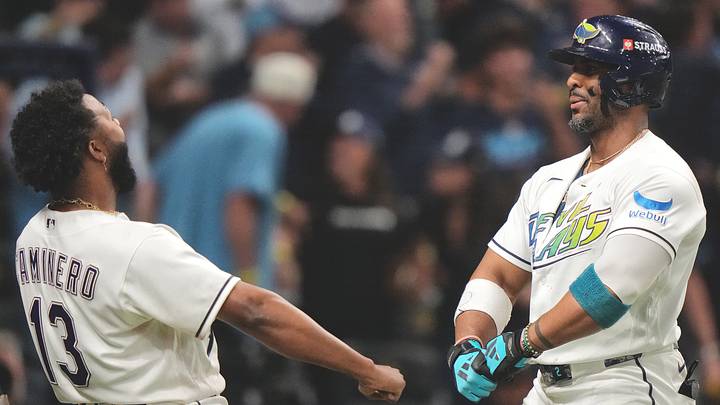
The two teams weren’t built the same way, but a similar philosophy prevailed. The Rays have traded for 16 players on their projected World Series roster, including deals for Junior Caminero and Yandy Díaz from Cleveland and Drew Rasmussen from the Brewers.
Milwaukee, meanwhile, has leaned heavily on the draft and development of homegrown talent. Ten players on its projected World Series roster came through the organization, including draft picks Brice Turang, Jacob Misiorowski, Aaron Ashby and Garrett Mitchell, along with international signees Jackson Chourio and Luis Lara. Those 10 players combined to produce 31.4 bWAR this season, almost identical to the 31.2 generated by Tampa Bay’s 16 trade acquisitions.
Only one player on either team made more than $12 million this season. Christian Yelich’s $26 million salary was more than double anyone else’s in the series, and he wasn’t signed to a big free agent contract. Yelich was acquired from the Marlins via trade in January 2018 and signed a nine-year, $215 million contract extension in 2020 after he had already won an MVP award.
Despite relatively low-cost rosters, the Brewers and Rays were baseball’s best two teams all season. Milwaukee led baseball with 103 wins, while Tampa Bay’s 98 clinched the top seed in the American League. Perhaps most crucially, neither team depended on a single formula for winning games. They are squads built with balanced lineups, elite pitching and deep bullpens.
Unlike most recent champions, they don’t need home runs to win. The Rays’ 169 home runs ranked 22nd during the regular season, while the Brewers’ 154 were 29th. That doesn’t mean they deserve the “small-ball” label. Milwaukee ranked third in wRC+ (107), while Tampa Bay tied for fifth (104), with both teams finishing in the middle of the pack in slugging percentage. The Rays and Brewers are thoroughly modern organizations, but they tailored their offensive approaches to their personnel, emphasizing contact over power. They tied for the MLB lead in batting average at .258. They’ve also prioritized rangy, athletic defenders who have spent this season converting tough outs in the infield and limiting damage in the outfield.
The Tampa Bay-Milwaukee World Series doesn’t prove money is irrelevant to winning championships. The two organizations have shown that there is more than one way to build a championship-caliber team.
Neither the Brewers nor the Rays are a one-season wonder. Since 2018, Milwaukee and Tampa Bay rank fourth and sixth in wins, respectively. They’ve been longtime small-payroll success stories and have proven for years that smart, well-run organizations don’t need to spend big to win big.
Now they’ll face off in a World Series no one saw coming.
We should have.
 Add us as a preferred source on Google

Ryan Phillips is a senior writer on the Breaking and Trending News team at Sports Illustrated. He has worked in digital media since 2009, spending eight years at The Big Lead before joining SI in 2024. Phillips also co-hosts The Assembly Call Podcast about Indiana Hoosiers basketball and previously worked at Bleacher Report. He is a proud San Diego native and a graduate of Indiana University’s journalism program.
Follow rumorsandrants