%20%20--%3E%0A%3Csvg%20version%3D%221.1%22%20id%3D%22Layer_1%22%20xmlns%3D%22http%3A%2F%2Fwww.w3.org%2F2000%2Fsvg%22%20xmlns%3Axlink%3D%22http%3A%2F%2Fwww.w3.org%2F1999%2Fxlink%22%20x%3D%220px%22%20y%3D%220px%22%0A%09%20width%3D%2239px%22%20height%3D%2240px%22%20viewBox%3D%220%200%2039%2040%22%20enable-background%3D%22new%200%200%2039%2040%22%20xml%3Aspace%3D%22preserve%22%3E%0A%3Cpath%20fill%3D%22%23FFFFFF%22%20d%3D%22M38.5%2C7H28.2v26h10.3V7z%22%2F%3E%0A%3Cpath%20fill-rule%3D%22evenodd%22%20clip-rule%3D%22evenodd%22%20fill%3D%22%23FFFFFF%22%20d%3D%22M26.1%2C25.5c0%2C5.8-4.1%2C7.5-12.9%2C7.5C3.9%2C33%2C0%2C31.2%2C0%2C25.2v-1.1h11.6%0A%09v2.4c0%2C0.7%2C0.1%2C1.4%2C1.2%2C1.4c1%2C0%2C1.2-0.4%2C1.2-1.3v-0.9c0-1.6-0.9-1.6-3.5-2.2C2.2%2C21.7%2C0%2C19.7%2C0%2C15.3v-0.9C0%2C9.3%2C5.5%2C7%2C12.9%2C7%0A%09c10.2%2C0%2C12.8%2C2.6%2C12.8%2C7.4v1.8h-11v-2.9c0-0.6-0.4-1.1-1.2-1.1c-0.6%2C0-1.2%2C0.4-1.2%2C1.1v0.9c0%2C1.5%2C0.9%2C2%2C3.3%2C2.5%0A%09c8%2C1.6%2C10.5%2C3.3%2C10.5%2C7.5V25.5z%22%2F%3E%0A%3C%2Fsvg%3E%0A)
The Hidden Problem With Jacob Misiorowski’s Fastball
In this story:
This article is a part of Verducci’s View, a weekly baseball newsletter from Sports Illustrated senior writer Tom Verducci. Every Monday, Tom empties out his notebook over email and covers MLB’s hottest topics, provides in-depth analysis through both text and video breakdowns, looks forward to what’s worth watching during the week and more.
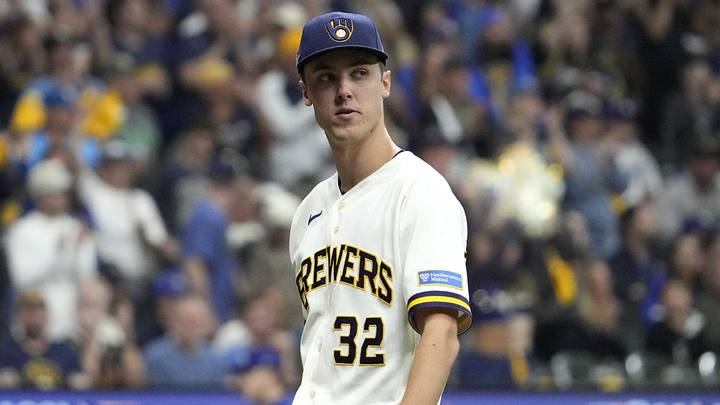
Brewers ace Jacob Misiorowski has not made it through five innings in his two postseason starts. He has done well to limit the Padres to two runs and the Dodgers to one run while those teams taxed him with 50 foul balls combined. His fastball is not the same:
Misiorowski’s Fastball, 2026
Time Period | Whiff % | BA |
|---|---|---|
Regular Season | 40.2% | .174 |
Postseason | 16.1% | .364 |
You might guess it’s a matter of velocity. Misiorowski has thrown 183 innings, an increase of 41 ⅔ innings from last year. But, no, Misiorowski’s heater has a higher average velo this postseason (101.0) than the regular season (100.6). And with his work tapered at the end of the regular season and the bevy of off days in the postseason calendar, Misiorowski will enter World Series Game 1 having thrown only 21 ⅔ innings in the past 45 days. He is well rested.
So, what’s going on? Start with this: hitters are locked in on getting on top of his fastball. They hit .183 in the regular season when Misiorowski landed it in the top third of the strike zone. But in the postseason, when scouting reports deepen and at-bats sharpen, they are hitting .333 on those high heaters.
In addition, Misiorowski has lost a slight bit of his “hop” on fastball. His induced vertical break, a measure of how well a fastball holds its plane, is down by more than an inch. That’s why what used to be swings and misses are turning into foul balls. His fastball also has slightly more arm-side run and slightly less spin. Add it up and you get less life.
Misiorowski’s Fastball
Time Period | Induced Vertical Break | Arm-side Tail | RPM |
|---|---|---|---|
Regular Season | 15.3 | 11.2 | 2,635 |
Postseason | 14 | 11.7 | 2,559 |
He is still pounding the zone with his fastball (54%, right near his regular season rate of 53%). But his dispersal pattern of his fastball is wider:

Misiorowski is not getting hit hard. He’s just not getting the usual swing and miss with his fastball and thus has to work harder to put hitters away.
One thing to look for in Game 1: Misirowski’s deceleration. When Misiorowski is right, his hand after releasing the baseball will continue past his body and hit the mid-thigh of his left leg. Against the Dodgers in NLCS Game 1, he often did not have that same looseness and arm speed.
In that game, Misiorowski gave up three hits to right-handed batters on fastballs, tying a career high. In each of them, his hand was stopping in front of his body, shin-high. You can see here a comparison of Misiorowski’s deceleration in NLCS Game 1 and what it looked like at his regular season best.
 Add us as a preferred source on Google

Tom Verducci is a senior writer for Sports Illustrated who has covered Major League Baseball since 1981. He also serves as an analyst for FOX Sports and the MLB Network; is a New York Times best-selling author; and cohosts The Book of Joe podcast with Joe Maddon. A five-time Emmy Award winner across three categories (studio analyst, reporter, short form writing) and nominated in a fourth (game analyst), he is a three-time National Sportswriter of the Year winner, two-time National Magazine Award finalist, and a Penn State Distinguished Alumnus Award recipient. Verducci is a member of the National Sports Media Hall of Fame, Baseball Writers Association of America (including past New York chapter chairman) and a Baseball Hall of Fame voter since 1993. He also is the only writer to be a game analyst for World Series telecasts. He lives in New Jersey with his wife, with whom he has two children.