
The Cubs Will Lose Some Future Assets By Signing Trevor Rogers
In this story:
Turns out the Chicago Cubs were a sleeping giant.
As the first few big moves of free agency were made, the Cubs remained in the shadows. Some fans started to worry about GM Jed Hoyer's approach, questioning just how aggressive he would be in targeting the top players available. Fast forward to Monday night, however, and Hoyer put most questions to bed.
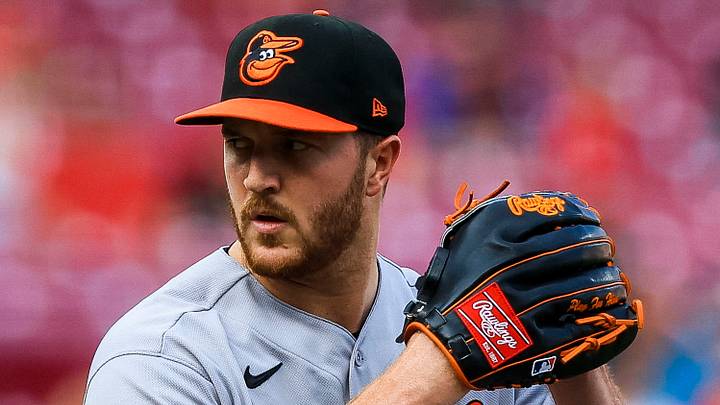
In roughly an 11-hour span, the Cubs made two of the biggest moves yet. They first signed Trevor Rogers to a five-year deal worth $120 million. Among the youngest options on the market with an All-Star appearance under his belt, Rogers is expected to play a substantial role near the top of the Cubs' rotation.
The next major signing for the Cubs brought Teruaki Sato to the North Side. A two-time MVP in Japan, the 27-year-old is known for his tantalizing power swing. The plan will be for him to take over in one of the outfield corner spots, helping Chicago make up for the loss of Seiya Suzuki and Ian Happ (who combined for 50 home runs in 2026). Sato got a six-year, $120.0 million contract.
Both moves undoubtedly come with their fair share of risk, especially when we consider the pricey contracts that each signed. To be sure, that's not a reason to sit out either deal; the Cubs are in win-now mode and have added two players who fill significant roster holes. But it's obviously worth noting that they are now putting a lot of trust in both players, and this is particularly true when we consider the additional assets they had to give up to secure Rogers.
There is an Added Cubs Cost to Signing Trevor Rogers

Trevor Rogers was one of only eight players this offseason who were extended a qualifying offer. The Baltimore Orioles were seemingly hoping to keep him around on a one-year, $23.15 million deal, but Rogers wisely went out to secure a more favorable long-term contract.
Nonetheless, the whole point of extending this QO is to ensure that you can get some added assets in the event that a player leaves. With Rogers doing just that, the Cubs will now have to fork over both draft picks and pool money.
Since the team did pay the luxury tax in 2026, the Rogers deal will cost them both a second and a fifth-round pick in the 2027 MLB Draft. Additionally, they will lose $1.0 million in international bonus pool money.
Do you still do this contract 10/10 times if you're the Cubs? Absolutely. They even got some of the money deferred to open up more financial flexibility in the present. At the same time, giving up those future assets speaks further to the faith Chicago has in Rogers being a core piece, let alone increases the pressure on the lefty to produce from the jump.
After all, this isn't necessarily a Cubs farm system that is overflowing with assets. Bringing in more young talent is undoubtedly a priority, as they have offloaded a handful of their best prospects in trades over the last couple of years. They have also gone far too many years without prioritizing pitching in the minors, which is a trend that finally started to change this past draft.
Again, this isn't reason enough to doubt the Rogers signing. All signs point toward him fitting into this rotation very well. However, most big moves in the Majors don't come without at least some kind of sacrifice, and this was no exception.
Sign up to our free newsletter and follow us on X and Facebook for the latest news
 Add us as a preferred source on Google

Elias Schuster is a sports journalist and content creator from the northern suburbs of Chicago. A graduate from the University of Illinois at Urbana-Champaign, he has covered the Bulls since 2019-20, previously serving as the editor of BN Bulls at Bleacher Nation, where he also covered the Cubs. He has been the Publisher for Bulls On SI since December of 2025-26 and has managed both the Cubs and White Sox in 2026. When he isn't typing away, Elias loves strolling the streets of Chicago for the best cozy bar or restaurant with his wife and far-too-energetic Jack Russell Terrier.
Follow Schuster_Elias