%20%20--%3E%0A%3Csvg%20version%3D%221.1%22%20id%3D%22Layer_1%22%20xmlns%3D%22http%3A%2F%2Fwww.w3.org%2F2000%2Fsvg%22%20xmlns%3Axlink%3D%22http%3A%2F%2Fwww.w3.org%2F1999%2Fxlink%22%20x%3D%220px%22%20y%3D%220px%22%0A%09%20width%3D%2239px%22%20height%3D%2240px%22%20viewBox%3D%220%200%2039%2040%22%20enable-background%3D%22new%200%200%2039%2040%22%20xml%3Aspace%3D%22preserve%22%3E%0A%3Cpath%20fill%3D%22%23FFFFFF%22%20d%3D%22M38.5%2C7H28.2v26h10.3V7z%22%2F%3E%0A%3Cpath%20fill-rule%3D%22evenodd%22%20clip-rule%3D%22evenodd%22%20fill%3D%22%23FFFFFF%22%20d%3D%22M26.1%2C25.5c0%2C5.8-4.1%2C7.5-12.9%2C7.5C3.9%2C33%2C0%2C31.2%2C0%2C25.2v-1.1h11.6%0A%09v2.4c0%2C0.7%2C0.1%2C1.4%2C1.2%2C1.4c1%2C0%2C1.2-0.4%2C1.2-1.3v-0.9c0-1.6-0.9-1.6-3.5-2.2C2.2%2C21.7%2C0%2C19.7%2C0%2C15.3v-0.9C0%2C9.3%2C5.5%2C7%2C12.9%2C7%0A%09c10.2%2C0%2C12.8%2C2.6%2C12.8%2C7.4v1.8h-11v-2.9c0-0.6-0.4-1.1-1.2-1.1c-0.6%2C0-1.2%2C0.4-1.2%2C1.1v0.9c0%2C1.5%2C0.9%2C2%2C3.3%2C2.5%0A%09c8%2C1.6%2C10.5%2C3.3%2C10.5%2C7.5V25.5z%22%2F%3E%0A%3C%2Fsvg%3E%0A)
Enjoy the Final Season of Baseball As We Know It
The 2026 MLB season is off and running, and we should all enjoy it. The game we all love could look much different in a year. That is, if games are being played at all. There’s an overwhelming sense around the league that this is the final season of its era, with massive change coming to the sport.
Over the last 20 years, baseball has transformed into a fully modern game despite resistance from multiple corners. Instant replay has become a seamless staple, embraced by virtually everyone. Analytics, advanced stats and biomechanics have taken hold, becoming the foundation of player development. This generation gave us bat flips, strikeout struts and increasingly elaborate closer entrances. We lived through COVID-ball, learned to speak in spin rates and expected stats, witnessed unprecedented international growth and started streaming games. We watched the sport remake itself in real time, adding a pitch clock, enlarging bases, expanding the playoffs and embracing the shift, then ditching it just as quickly.
The era that gave the game so much is nearing its end. With sweeping changes ahead and a looming labor fight that could reshape the sport, baseball is facing an uncertain future.
Changing of the guard
This period in baseball’s history featured a wave of young, athletic showmen who made the game feel alive in ways we hadn’t seen before. They didn’t just belt homers—they flipped bats, smiled like kids on the last day of school, took extra bases when it felt barely legal and brought joy and flash to a game that sorely needed both. Juan Soto, Ronald Acuña Jr., Fernando Tatis Jr., Vladimir Guerrero Jr. and Julio Rodriguez didn’t just arrive, they took over and rewrote the playbook.
Those young stars aren’t so young anymore. They’re still thrilling, but they’re no longer the reckless bundles of energy they once were. They’ve become baseball’s backbone, not its future. By this time next year, a new wave of players will have taken that mantle, while this group settles into the role of the old guard.
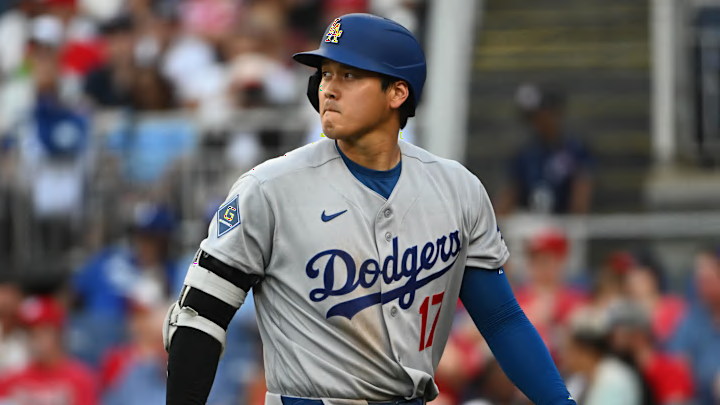
Meanwhile, the two superstars everyone measures themselves against, Shohei Ohtani and Aaron Judge, may soon start to show their age. Both will continue to contend for MVPs, but Judge is 33, and Ohtani will turn 32 in July. They are moving out of their primes, no matter how great they remain.

It’s not just them. The players who defined the last decade—Mike Trout, Bryce Harper, Manny Machado, Mookie Betts, José Altuve, José Ramírez, Francisco Lindor, Nolan Arenado and Freddie Freeman—are much closer to the finishing line than the starting block. Justin Verlander and Max Scherzer may not even be around next season.
A changing of the guard isn’t coming. It’s already here. The league will look much different on the other side.
ABS is a game-changer for the end of an era
For years, a large segment of fans has begged the league to turn the increasingly difficult task of calling balls and strikes over to robots. With rising velocity, higher spin rates and sharper movement on breaking pitches, the job of a home plate umpire has never been more difficult. Yes, I’m being generous to the guys behind the plate, but it isn’t an easy gig these days.
With the introduction of the ABS challenge system this year, the game has changed. Incorrect calls can be changed in real time. And yes, the system is embarrassing umpires around the league on a daily basis, much to the delight of fans, players and managers.
While ABS is great and has been a success so far, it’s likely just the first step toward a fully automated strike zone. That may not happen in the next few years, but within the next decade, home plate umpires will likely be relaying calls, not making them.

TV revenue is changing
For decades, baseball’s economic order has been defined by market size. The biggest teams didn’t just have more resources, they had structural advantages driven by lucrative local TV deals smaller markets couldn’t match—as well as a special tax exemption for the Dodgers borne from their bankruptcy filing under their former owner in 2011.
That system has all but cracked. The collapse of the regional sports network model has destabilized the sport’s foundation, exposing how fragile and uneven the landscape has become.
At the same time, one upstart franchise pushed that imbalance to its limit.
Late Padres owner Peter Seidler spent aggressively in a singular pursuit: bringing San Diego its first major sports championship. On his watch, the Padres handed out seven nine-figure contracts in a five-year span, an unprecedented outlay for a mid-market franchise. It paid off to some extent. In 2022, the team exorcised a demon that had haunted it for more than 50 years, toppling the mighty Dodgers in the NLDS. The balance of power in Southern California had shifted.
The response from the Dodgers was swift and overwhelming.
Already one of the sport’s financial heavyweights, the Dodgers doubled down, committing billions to reassert their dominance, restore order and put down their nouveau riche rivals to the south. The result is a system stretched to its limits, with immense concentration of power at the top and a growing divide below. This has created enormous tension in the sport, which is mirroring the broader economic story of America—as it often has throughout history.
A new CBA likely won’t stop the Dodgers from spending, but it is expected to address the root of the sport’s biggest inequities. Most around the league expect all television revenue to be pooled and distributed evenly among all 30 teams. That wouldn’t eliminate big market advantages, but it could fundamentally reshape the game.
The financial rules that have governed baseball for a generation are no longer stable. This may be the last season played entirely under them, and the next CBA could completely rewrite how teams operate.
Salary cap and floor
Perhaps the most contentious issue in the upcoming CBA negotiations will be the owners’ push for a salary cap, and the players’ steadfast refusal to consider one. Owners want to level the playing field and spend less. Players want unchecked, exponential salary growth. This debate will be difficult to resolve and seems to be the most likely issue to lead to a lockout and lost games on the 2027 schedule.
One thing seems almost certain: some form of salary floor is coming. Most around the league believe that’s one concession owners will make. On the other hand, the players almost certainly won’t accept a hard cap under any circumstances.
With that in mind, the MLBPA will likely have to accept incredibly harsh luxury-tax penalties rather than a true cap. Not just fines, but the loss of high draft picks, locking teams out of international spending and restrictions on trades that add salary. Essentially, an even harsher version of the NBA’s apron system. The top teams will always be able to swallow luxury tax fines, but targeting their player-development arms and roster-building flexibility could be enough to deter outrageous spending.
As with television revenue, the league’s salary structure could look entirely different at this time next year, reshaping how teams add talent and potentially altering the competitive landscape entirely.
Baseball is on the brink of a transformation. It is inevitable and could be sweeping. We may one day look back at the 2026 season with nostalgia as the last of a bygone era. Embrace what’s here and prepare for change. Because it’s coming.
More MLB from Sports Illustrated
 Add us as a preferred source on Google
Ryan Phillips is a senior writer on the Breaking and Trending News team at Sports Illustrated. He has worked in digital media since 2009, spending eight years at The Big Lead before joining SI in 2024. Phillips also co-hosts The Assembly Call Podcast about Indiana Hoosiers basketball and previously worked at Bleacher Report. He is a proud San Diego native and a graduate of Indiana University’s journalism program.
Follow rumorsandrants