%20%20--%3E%0A%3Csvg%20version%3D%221.1%22%20id%3D%22Layer_1%22%20xmlns%3D%22http%3A%2F%2Fwww.w3.org%2F2000%2Fsvg%22%20xmlns%3Axlink%3D%22http%3A%2F%2Fwww.w3.org%2F1999%2Fxlink%22%20x%3D%220px%22%20y%3D%220px%22%0A%09%20width%3D%2239px%22%20height%3D%2240px%22%20viewBox%3D%220%200%2039%2040%22%20enable-background%3D%22new%200%200%2039%2040%22%20xml%3Aspace%3D%22preserve%22%3E%0A%3Cpath%20fill%3D%22%23FFFFFF%22%20d%3D%22M38.5%2C7H28.2v26h10.3V7z%22%2F%3E%0A%3Cpath%20fill-rule%3D%22evenodd%22%20clip-rule%3D%22evenodd%22%20fill%3D%22%23FFFFFF%22%20d%3D%22M26.1%2C25.5c0%2C5.8-4.1%2C7.5-12.9%2C7.5C3.9%2C33%2C0%2C31.2%2C0%2C25.2v-1.1h11.6%0A%09v2.4c0%2C0.7%2C0.1%2C1.4%2C1.2%2C1.4c1%2C0%2C1.2-0.4%2C1.2-1.3v-0.9c0-1.6-0.9-1.6-3.5-2.2C2.2%2C21.7%2C0%2C19.7%2C0%2C15.3v-0.9C0%2C9.3%2C5.5%2C7%2C12.9%2C7%0A%09c10.2%2C0%2C12.8%2C2.6%2C12.8%2C7.4v1.8h-11v-2.9c0-0.6-0.4-1.1-1.2-1.1c-0.6%2C0-1.2%2C0.4-1.2%2C1.1v0.9c0%2C1.5%2C0.9%2C2%2C3.3%2C2.5%0A%09c8%2C1.6%2C10.5%2C3.3%2C10.5%2C7.5V25.5z%22%2F%3E%0A%3C%2Fsvg%3E%0A)
Explaining MLB’s Rules for Domed Stadiums and Retractable Roofs
In this story:
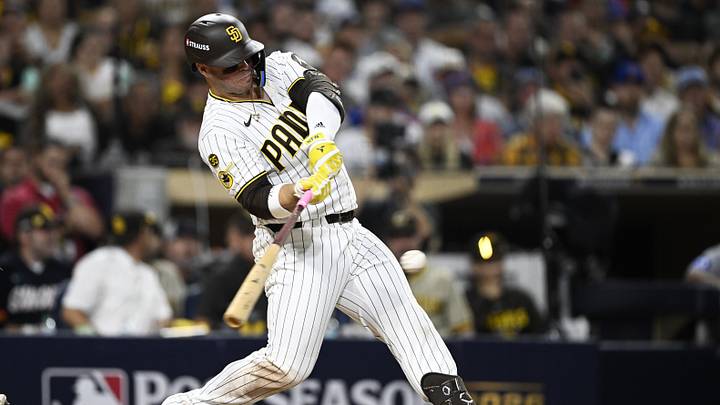
The Padres were the unfortunate victims of the roof at American Family Field on Saturday night. During the ninth inning of a one-run game against the Brewers, Ty France skied a fly ball down the left field line. The ball hit a cable attached to the stadium’s metal roof and came down onto the warning track, into the mitt of left fielder Jackson Chourio.
There’s been plenty of debate regarding the ruling on that play. Based on MLB rules, the umpires handled the situation correctly and made the right call. Put simply, any ball that hits the roof of a stadium over fair territory is a live ball. Chourio made the play at the warning track, so France was ruled out.
Ty France hits a ball that hits a cable and is caught by Jackson Chourio
— Underdog MLB (@UnderdogMLB) October 4, 2026
The ball hit the cable in fair territory, meaning that it's live and ruled an out.pic.twitter.com/9mSGwZpYy7
France, unsurprisingly, wasn’t pleased with how things played out.
“You would think with all the technology and data and everything we have now, you’d be able to make a clear call on that. I don’t know if that’s ever been done before. There should be something put in place right there to––that shouldn’t be an out,” France told reporters after Saturday’s loss.
While France certainly thinks the ball would’ve left the yard had it not come into contact with the roof, that may not have been the case. We’ll never know the true outcome of that batted ball, but in the Statcast era, there have been zero recorded home runs on baseballs hit at roughly the same exit velocity (105.3 mph) and launch angle (49 degrees) as France’s ninth-inning skyscraper from Game 1. Now, that does not mean that France’s hit couldn’t have left the yard if it hadn’t hit the roof, but history would suggest that it’s far from a guarantee that it would’ve reached the seats.
Fair or not, that’s how the rules work within a stadium that features a retractable roof. It was tremendously unfortunate how it played out for the visiting Padres, but nothing about what occurred late in Saturday’s game goes against the rulebook.
With two teams that play in stadiums with a dome or retractable roof still alive in the postseason––the Rays’ Tropicana Field and Brewers’ American Family Field—it’s worth a reminder as to what MLB’s rules are regarding roofs at stadiums and how they impact play.
MLB roof rules
During the regular season, it’s at the discretion of the home team as to whether the roof of the stadium will be open or closed. If the game begins with the roof open, it can only be closed as a result of inclement weather. Alternatively, if the game gets underway with the roof closed, it can only be opened prior to the seventh inning for the purpose of improving fan comfort.
A visiting team has the opportunity to object to a roof being closed or open, but only if they can reasonably suggest it would cause a competitive imbalance. If the visitors object, the decision falls to the umpire crew chief.
That changes during the postseason, however. During the MLB playoffs, it’s at the discretion of the commissioner’s office to determine whether the roof will be open or closed for the game. The MLB commissioner’s office will take full control of the operation of the roof for each game played at a domed stadium, or one with a retractable roof.
As for batted balls that come into contact with the roof, any ball that hits a cable, truss or the roof itself over the field of play, will be considered a live ball. If the ball is caught by a fielder without touching the ground, it is an out and runners can advance at their own risk.
If the ball makes contact with the roof, or anything connected to the roof, over foul territory, it is considered a dead ball. That includes balls that hit the roof in foul territory that are caught by a fielder.
In the extremely uncommon instance that a ball gets lodged into something in the roof and does not fall back into the field of play (or foul territory), the batter will be awarded an automatic two bases. Any runner on base will also be allotted to advance two bases.
While it’s a rare occurrence that the roof impacts a game as significantly as it did on Saturday night, France’s hit to the ceiling wasn’t the only time we’ve seen such a moment in Brewers’ postseason history. Back in 2008, a ball was hit to the roof at what was then known as Miller Park. Off the bat, it appeared destined for the outfield grass, but Milwaukee’s left fielder Ryan Braun saw it hit the roof and immediately pointed towards third base, where Craig Counsell managed to react quickly and make a diving catch for the out.
 Add us as a preferred source on Google
Karl Rasmussen is a staff writer for Sports Illustrated. A University of Oregon alum who joined SI in February 2023, his work has appeared on 12up and ClutchPoints. Rasmussen is a loyal Tottenham, Jets, Yankees and Ducks fan.
Follow Karlras920