%20%20--%3E%0A%3Csvg%20version%3D%221.1%22%20id%3D%22Layer_1%22%20xmlns%3D%22http%3A%2F%2Fwww.w3.org%2F2000%2Fsvg%22%20xmlns%3Axlink%3D%22http%3A%2F%2Fwww.w3.org%2F1999%2Fxlink%22%20x%3D%220px%22%20y%3D%220px%22%0A%09%20width%3D%2239px%22%20height%3D%2240px%22%20viewBox%3D%220%200%2039%2040%22%20enable-background%3D%22new%200%200%2039%2040%22%20xml%3Aspace%3D%22preserve%22%3E%0A%3Cpath%20fill%3D%22%23FFFFFF%22%20d%3D%22M38.5%2C7H28.2v26h10.3V7z%22%2F%3E%0A%3Cpath%20fill-rule%3D%22evenodd%22%20clip-rule%3D%22evenodd%22%20fill%3D%22%23FFFFFF%22%20d%3D%22M26.1%2C25.5c0%2C5.8-4.1%2C7.5-12.9%2C7.5C3.9%2C33%2C0%2C31.2%2C0%2C25.2v-1.1h11.6%0A%09v2.4c0%2C0.7%2C0.1%2C1.4%2C1.2%2C1.4c1%2C0%2C1.2-0.4%2C1.2-1.3v-0.9c0-1.6-0.9-1.6-3.5-2.2C2.2%2C21.7%2C0%2C19.7%2C0%2C15.3v-0.9C0%2C9.3%2C5.5%2C7%2C12.9%2C7%0A%09c10.2%2C0%2C12.8%2C2.6%2C12.8%2C7.4v1.8h-11v-2.9c0-0.6-0.4-1.1-1.2-1.1c-0.6%2C0-1.2%2C0.4-1.2%2C1.1v0.9c0%2C1.5%2C0.9%2C2%2C3.3%2C2.5%0A%09c8%2C1.6%2C10.5%2C3.3%2C10.5%2C7.5V25.5z%22%2F%3E%0A%3C%2Fsvg%3E%0A)
How the Rays Can Battle Back From 2–0 World Series Deficit vs. Brewers
In this story:
The Rays fumbled Game 2 of the World Series on Saturday night, blowing a four-run lead in Milwaukee to fall down 2–0 in the series. It was a disappointing loss for Tampa, as the bats went silent after a big first inning in which they put up four runs on Brewers starter Logan Henderson. After that inning, the team collected just four hits and couldn’t get another run across the plate.
Now, with the series shifting back to Tropicana Field, the Rays have their backs against the wall, and they can’t afford to slip up on their home field in Game 3. But what’s gone wrong for Tampa thus far?
Both games of the series have been decided by just one run. It’s not as if the Rays have been blown out by Milwaukee, but they haven’t been able to manufacture runs when they need them the most. We’re going to look at what’s gone wrong for Tampa thus far, and what they need to fix and clean up in order to get back in the series.
Clean up baserunning mistakes
In both Games 1 and 2, the Rays have made some questionable decisions on the base paths that have ultimately come back to haunt them. In Game 1, the team made a pair of costly mistakes while running the bases. In the fifth inning, Victor Mesa Jr. made an aggressive move in trying to steal third base. With two outs in the inning and one of the best hitters in MLB with runners in scoring position at the plate in Yandy Díaz, Mesa took off for third but was gunned down by William Contreras, who put his throw down to third right on the money. Mesa’s decision to attempt to swipe third was a brutal mistake, as it put an early end to the inning and broke one of baseball’s most fundamental rules; never make the final out at third base. Had the Rays been a bit less aggressive, there’s a chance Díaz, who hit .373 with RISP (fourth-best in MLB), could’ve delivered a big hit, but that opportunity was lost as a result of Mesa getting caught on the base paths.
Later in the game, Jonathan Aranda was on first base with one out in the sixth inning. Chandler Simpson was at the plate and facing a full count. Hoping to pull off a hit-and-run, Aranda took off for second, but Simpson tried and failed at checking his swing at the plate. Aranda isn’t a great runner, and he was gunned down with ease by Contreras. It was a momentum-killing, inning-ending double play. Simpson doesn’t strike out a lot. There’s hardly a player in MLB that puts the ball in play more regularly than he does, but he was sat down by Abner Uribe in this instance, and that left Aranda hung out to dry on the base paths, unable to beat the throw down from Contreras.
After a couple crucial mishaps on the bases in Game 1, one would expect the Rays to clean that up in Game 2. That wasn’t the case, however. In the sixth inning, Liam Hicks attempted to score from second base on a single to left field from Mesa. It was an aggressive send from third base coach Brady Williams, and Hicks was thrown out comfortably by Jackson Chourio. Hicks, a catcher, isn’t a strong runner, but with the Rays desperate for an insurance run, Williams made the brazen call to test Chourio’s arm in left field, a call that quickly backfired.
The Rays are an excellent baserunning team, but this far into the World Series, they have not shown that. These mistakes have been largely uncharacteristic of a team that often causes mayhem on the base paths. The Brewers are an elite defensive team, and Contreras is one of the best in the business when it comes to his duties behind the plate, and so far Milwaukee has had the upper hand in mitigating Tampa’s baserunning threats.
The Rays should continue to be aggressive on the base paths, but they need to do a better job of picking their battles. Their aggressiveness is a key part of their identity as a team, but if they’re going to have success running on Contreras, they’ll need to make some adjustments. For one, it’s much harder to run on fastballs as opposed to offspeed pitches, especially when those fastballs are clocking in the triple digits. The Rays need to hone in on running during counts in which an offspeed pitch is more likely to be thrown, as that will make a throw down more difficult for Contreras, who may have to block a breaking ball in the dirt before popping up. Getting runners in scoring position is critical to the Rays’ success, but it won’t be as easy to do so against the Brewers as it was against teams like the Yankees.
Limit the defensive mishaps
While baserunning woes were the story of Game 1 for the Rays, and in part for Game 2, the team also struggled defensively on Saturday night. Aranda made a couple of woeful defensive mistakes, first dropping a routine pop fly near the netting at first base in foul territory, and then allowing what would’ve been an inning-ending ground ball to go through his legs, which enabled Cooper Pratt to score. Aranda was one of the better defensive first basemen in MLB during the regular season, registering four outs above average which ranked fourth at the position, but he made a pair of costly mistakes in Game 2 which aided the Brewers in their comeback efforts.
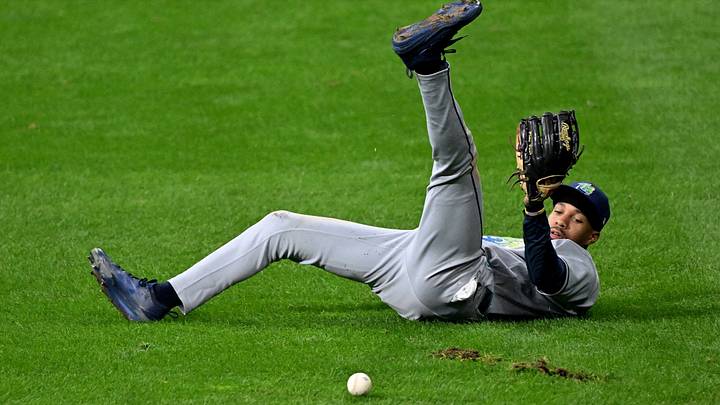
He wasn’t the only one lacking sharpness on defense. Simpson and shortstop Taylor Walls had a miscommunication in the outfield, which led to Simpson taking his eye off the ball on what should’ve been a routine catch in shallow left field. A Christian Yelich blooper was hit between Walls and Simpson, and the Rays left fielder seemed to think Walls was calling him off, though that didn’t appear to be the case. Simpson ended up losing the ball and ultimately having to try to make a diving catch, which he nearly made until the ball popped out of his glove. That play didn’t end up being quite as consequential as Aranda’s error at first base, as the following batter, Contreras, grounded out to end the inning, but it was just another indication that the usually-sound Rays defense isn’t playing to the level which it’s capable.
Getting more from their starting pitching
Through two games of the World Series, Rays starters have pitched a total of 8 2/3 innings. Nick Martinez shook off a rough first and ended up lasting five innings in Game 1, but Drew Rasmussen, the team’s ace, only went 3 2/3 innings in Game 2, getting chased as a result of Aranda’s error at first base which prevented him from getting out of the fourth. It was Rasmussen’s shortest outing since July, and it couldn’t have come at a worse time. The Rays were likely banking on a big outing from the righty in Game 2, but even after granting him a four-run lead in the first inning, Rasmussen didn’t have his best stuff, and the defensive miscues didn’t help. Thus far, the Rays have used seven different relievers and have tasked the bullpen with throwing 7 1/3 innings.
Freddy Peralta will be on the mound in Game 3, and the Rays will need him to get as deep into the game as possible. Peralta hasn’t frequently pitched beyond the sixth inning in his career, and had just two starts of more than six innings in 2026, only one of which came with Tampa. If he can give them some length, the Rays will be able to avoid going to its lower leverage relievers, some of whom have struggled in the postseason. Tampa has one of MLB’s best closers in Bryan Baker, but they have not yet been in a situation in this World Series where they have a late lead and can pass the ball to him to shut the door. Peralta, who has been sharp in October, will need to provide such an opportunity.
The Rays are down, but they’re not out. With three games at the Trop looming, they have a real chance to re-take momentum in the series by getting the job done at their home field. But failure to win Game 3 could prove catastrophic, as it would force them into a situation in which they’d need to win four games in a row to win the World Series. As it stands, only 10 teams in MLB history have overcome a 2–0 deficit in the World Series, and no team has ever overturned a 3–0 deficit in the Fall Classic. That makes Game 3, and Peralta’s start, even more critical for Kevin Cash & Co.
 Add us as a preferred source on Google

Karl Rasmussen is a staff writer for Sports Illustrated. A University of Oregon alum who joined SI in February 2023, his work has appeared on 12up and ClutchPoints. Rasmussen is a loyal Tottenham, Jets, Yankees and Ducks fan.
Follow Karlras920