%20%20--%3E%0A%3Csvg%20version%3D%221.1%22%20id%3D%22Layer_1%22%20xmlns%3D%22http%3A%2F%2Fwww.w3.org%2F2000%2Fsvg%22%20xmlns%3Axlink%3D%22http%3A%2F%2Fwww.w3.org%2F1999%2Fxlink%22%20x%3D%220px%22%20y%3D%220px%22%0A%09%20width%3D%2239px%22%20height%3D%2240px%22%20viewBox%3D%220%200%2039%2040%22%20enable-background%3D%22new%200%200%2039%2040%22%20xml%3Aspace%3D%22preserve%22%3E%0A%3Cpath%20fill%3D%22%23FFFFFF%22%20d%3D%22M38.5%2C7H28.2v26h10.3V7z%22%2F%3E%0A%3Cpath%20fill-rule%3D%22evenodd%22%20clip-rule%3D%22evenodd%22%20fill%3D%22%23FFFFFF%22%20d%3D%22M26.1%2C25.5c0%2C5.8-4.1%2C7.5-12.9%2C7.5C3.9%2C33%2C0%2C31.2%2C0%2C25.2v-1.1h11.6%0A%09v2.4c0%2C0.7%2C0.1%2C1.4%2C1.2%2C1.4c1%2C0%2C1.2-0.4%2C1.2-1.3v-0.9c0-1.6-0.9-1.6-3.5-2.2C2.2%2C21.7%2C0%2C19.7%2C0%2C15.3v-0.9C0%2C9.3%2C5.5%2C7%2C12.9%2C7%0A%09c10.2%2C0%2C12.8%2C2.6%2C12.8%2C7.4v1.8h-11v-2.9c0-0.6-0.4-1.1-1.2-1.1c-0.6%2C0-1.2%2C0.4-1.2%2C1.1v0.9c0%2C1.5%2C0.9%2C2%2C3.3%2C2.5%0A%09c8%2C1.6%2C10.5%2C3.3%2C10.5%2C7.5V25.5z%22%2F%3E%0A%3C%2Fsvg%3E%0A)
The Mariners’ Decision to Move On From Dan Wilson Goes Beyond a Bad Season
In this story:
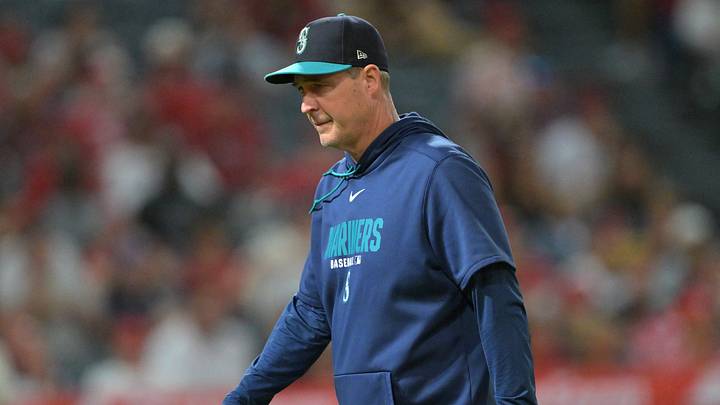
The Mariners announced that Dan Wilson will not be back as the team’s manager next season after a deeply disappointing 2026 campaign. Wilson, who oversaw the club during its deepest-ever postseason run last year, failed to take advantage of a lackluster AL West division that produced zero teams with winning records.
Wilson’s hiring in ‘24 was an eye-opening decision from the organization, who didn’t even go through a full interview process after parting ways with Scott Servais. Wilson had never managed a club at any level, and he was tasked with taking a Mariners team––one that had made just one postseason appearance since 2001––to new heights. And he did just that in his first full season at the helm. Seattle won 90 games under Wilson last year and enjoyed its longest postseason stay in franchise history, pushing the Blue Jays to the brink in the ALCS and coming one win shy of the organization’s first World Series berth.
Unfortunately, that was as good as it got under Wilson’s tutelage. The team won 14 fewer games this year, and its 76–86 record was the its worst since ‘15, which was Lloyd McClendon’s last season as the skipper before the team hired Servais.
Dan Wilson opens with a statement:
— Daniel Kramer (@DKramer_) September 27, 2026
“This season has been very difficult, and of course, the results have not been what any of us have expected.
“As a result, it's concluded that today is my last day as manager of the Seattle Mariners.” pic.twitter.com/AEnjIGjD1y
While some of the blame for the poor season undoubtedly rests with Wilson, it’d be unfair to scapegoat him as the lone problem for the Mariners. For one, many of the moves made by Jerry Dipoto failed to achieve the desired results. One of the team’s biggest offseason acquisitions, infielder Brendan Donovan, was limited to just 39 games on the year after dealing with multiple injuries. After an impressive stint last season, Seattle signed Josh Naylor to a five-year contract, expecting him to be a key piece in ‘26. He struggled throughout the year, however, finishing the campaign with a .667 OPS and -0.2 bWAR. In 152 games, Naylor hit 10 home runs, just one more than he had in 54 games with the team last season.
And while some of the blame for the poor season undoubtedly rests with Wilson, it’d be unfair to scapegoat him as the lone problem for the Mariners. For one, many of the moves made by Jerry Dipoto failed to achieve the desired results. One of the team’s biggest offseason acquisitions, infielder Brendan Donovan, was limited to just 39 games on the year after dealing with multiple injuries. After an impressive stint last season, Seattle signed Josh Naylor to a five-year contract, expecting him to be a key piece in ‘26. He struggled throughout the year, however, finishing the campaign with a .667 OPS and -0.2 bWAR. In 152 games, Naylor hit 10 home runs, just one more than he had in 54 games with the team last season.

It’s hard to succeed when such important components of the lineup aren’t getting the job done. Dipoto tried to add more firepower at the trade deadline. The team brought in Taylor Ward in a deal with the Orioles, but he was abysmal after arriving in Seattle and was perhaps the deadline’s worst acquisition. Across just 32 games with the Mariners, Ward generated -0.9 bWAR and recorded just 11 hits. Ward had 36 home runs and 103 RBIs last year, but in 143 games this season, he hit just seven homers (none for the Mariners) and had a .670 OPS.
The team also experienced regression from its pitching rotation and bullpen. None of the team’s starters had an ERA below 3.57, and key bullpen arms such as Eduard Bazardo and Andres Muñoz struggled.
But underperforming players aren’t the full scope of what went wrong. The Mariners’ front office prioritizes playing an analytical style. Wilson did not. As a player from the 1990s, Wilson managed in a style that was befitting of a team from 30 years ago. That lack of alignment between the front office and the manager certainly played a role in his ousting.
One aspect of Wilson’s managing that frequently drew criticism was his reliance on platoons. Wilson would regularly shuffle the lineup around depending upon the handedness of the opposing pitcher. Regardless of if a player was hot at the plate, Wilson honed in on the platoon mindset. That could be seen with players like Dominic Canzone and Luke Raley, who were often benched against lefties in favor of players performing far worse, such as Rob Refsnyder and Connor Joe. That same tendency was at play when opponents made pitching changes in-game, as Wilson was quick to call upon a pinch-hitter in the middle innings, removing an important piece of the lineup for the later innings of games. Those pinch-hit opportunities often fell flat, and that in turn hurt Seattle’s ability to fight back late in games, as they had regularly replaced some of their better players.
Another area that drew the ire of the front office was Wilson’s failure to buy in to the organization’s piggy-back method. With six capable starting pitchers, Seattle’s front office wanted to utilize the piggy-back approach wherein they’d use two starters in one game, one to handle the early innings and the other to follow suit and pitch multiple innings in relief. That strategy didn’t mesh with Wilson’s managerial style, and it was reportedly poorly communicated to the team, resulting in frustrations from pitchers who felt they were being pulled early from strong starts on the mound. If that was the direction the front office wanted to go with its six-man rotation, it was Wilson’s responsibility to explain that clearly to his team. Wilson reportedly didn’t buy into the piggyback method, which seemingly created instability and frustration within the clubhouse.
Wilson’s managerial shortcomings weren’t limited to this season, either. Evidence of his questionable decision-making could be seen last season, particularly in the ALCS where his bullpen management played a big role in Seattle’s heartbreaking Game 7 loss to the Blue Jays. Wilson opted to bring in Bazardo, who had pitched two innings in Game 6, in a critical spot in the seventh inning. With two runners on and Seattle clinging onto a 3–1 lead, Bazardo surrendered a three-run homer to George Springer, which gave Toronto a 4–3 lead it did not relinquish. With the closer Muñoz available in that situation, having not pitched in Game 6, Wilson still opted to lean upon Bazardo, a decision that lives on in infamy among Mariners fans.
With Wilson out of the picture, it’s fair to expect a vastly different personality in the managerial role next season––someone far more familiar with the analytical approach to baseball. Who that will end up being remains to be seen, though some, including ESPN’s Jeff Passan, have linked Diamondbacks skipper Torey Lovullo to the vacancy. But it’s now clear that Wilson, despite being a widely beloved franchise figure entering his tenure, wasn’t the right fit.
 Add us as a preferred source on Google
Karl Rasmussen is a staff writer for Sports Illustrated. A University of Oregon alum who joined SI in February 2023, his work has appeared on 12up and ClutchPoints. Rasmussen is a loyal Tottenham, Jets, Yankees and Ducks fan.
Follow Karlras920