
Mariners Were Still Teaching Dan Wilson the Job They Had Already Given Him
In this story:
The purpose of the coffee-shop meetings really gives this whole operation away. Last winter, Jerry Dipoto and Dan Wilson met weekly near T-Mobile Park. Part of Dipoto’s mission, according to Adam Jude of The Seattle Times, was to help Wilson catch up with the modern game…Yes.
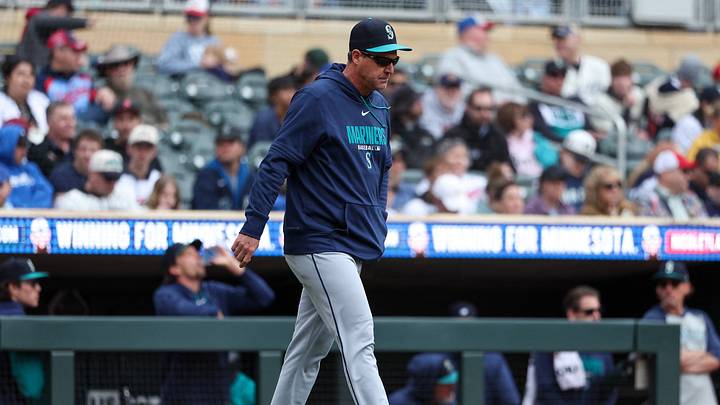
The Mariners had already made Wilson the permanent manager of a team with legitimate championship ambitions. Then they spent the offseason trying to teach him portions of the job. That’s an indictment of how Seattle filled one of the most demanding positions in the sport.
The Mariners Turned a Contender Into a Classroom
Every manager should keep learning. The game changes, data evolves and players require different methods of communication. There’s a difference, however, between sharpening an experienced manager and bringing someone up to speed after he spent nearly two decades away from a major-league dugout.
Wilson had never held a full-time managerial job. His experience consisted largely of player-development work and a brief Triple-A fill-in stint. The Mariners knew that when they gave him the job without an interim tag. But, hey, why not?
Wilson’s history with the organization made the decision emotionally comfortable. He is a Mariners Hall of Famer, a respected former catcher and, by all accounts, a genuinely decent person. None of those qualities automatically prepares someone to run a modern clubhouse, process waves of matchup information or control a season once it starts sliding sideways.
Seattle attempted to cover the gaps with experience around him. Manny Acta helped construct lineups. The pitching coaches and analytics department collaborated on game plans. Advance-scouting information flowed into the dugout. Support is completely normal. Dependence, though? That’s different.
Dan Wilson Still Owns His Part of the Collapse
None of this clears Wilson. The final decisions were his…we think. His preference for a player-led clubhouse became a problem when the players stopped providing enough leadership. During the 2025 breakthrough, Cal Raleigh’s historic season and the team’s success made that arrangement look organic and empowering.
Then Raleigh struggled and spent time away from the club while injured. Other veterans became wrapped up in their own problems. Accountability weakened, urgency disappeared and the Mariners kept waiting for their season to change.
A manager cannot outsource the standards of his clubhouse to his best player. Empowerment only works when someone is prepared to step in the moment those standards begin to slip. Wilson failed to do that consistently enough. If the Mariners move on, he will have earned his share of the consequences.
But Dipoto cannot be allowed to stand outside the wreckage and behave like a detached evaluator. Wilson was his choice. The lack of experience wasn’t uncovered during the 2026 collapse. It was visible the day Wilson was hired.
The 2025 run does complicate the verdict. Wilson managed the Mariners to their first division title since 2001 and brought them within one victory of their first World Series.
But success can also hide structural flaws. In 2025, the talent and momentum carried Seattle forward. In 2026, Wilson had to create direction when the season began drifting. That was when the apprenticeship came out of hiding.
Wilson has not officially been dismissed, but both Seattle and MLB.com reporting indicates that he is unlikely to return in 2027. Dipoto, meanwhile, is expected to remain in charge.
If that is the outcome, the Mariners cannot pretend accountability has been served simply because Wilson takes the fall.
Their next manager must arrive ready to command the clubhouse, translate modern information, establish standards and challenge the front office when necessary.
 Add us as a preferred source on Google
Tremayne Person is the Publisher for Mariners On SI and the Site Expert at Friars on Base, with additional bylines across FanSided’s MLB division. He founded the Keep It Electric podcast in 2023 and covers baseball with a blend of analysis, context, and a little well-timed side-eye just to keep things honest. Tremayne grew up a Mariners fan in Richmond, Va., and that passion ultimately led him to move to Seattle to cover the team closely and become a regular at home games. Through his writing, he connects with fans who want a deeper, more personal understanding of the game. When he’s not at T-Mobile Park, he’s with his dog, gaming, or finding the next storyline worth digging into.
Follow TremaynePerson