
Rangers Need to Decide What Kind of Franchise They Want to Be
In this story:
The Texas Rangers have reached an irritating point in their organizational history. They have the expectations of a team that wants to compete for championships and the financial philosophy of one that seems increasingly uncomfortable with what those ambitions require.
Three years ago, the Rangers won the World Series after ownership made an enormous financial commitment to winning.
Now, the organization appears hesitant to maintain that same aggression despite missing the postseason in every season since.
Something has to give.
The Rangers Need to Pick a Philosophy and Build Around It

There is absolutely nothing wrong with running a successful baseball organization on a limited budget.
The Milwaukee Brewers have built a consistent contender that just went out and won a World Series without relying on the spending power of baseball’s wealthiest franchises. The Tampa Bay Rays have operated under similar restrictions while finding ways to remain competitive.
Those organizations, however, have made player development central to their identities. They understand that sustaining success without enormous payroll commitments requires a constant supply of affordable talent, and their organizational decisions reflect that philosophy.
Texas hasn’t built that kind of team. MLB Pipeline ranked the Rangers’ farm system 20th in August, hardly the position of a franchise prepared to replace expensive veterans with an abundance of big league-ready prospects.
The alternative is to embrace the financial advantages that helped Texas win its World Series in the first place. The Rangers showed what was possible when ownership committed to acquiring elite talent, and there is no obvious reason that philosophy should’ve disappeared after 2023.
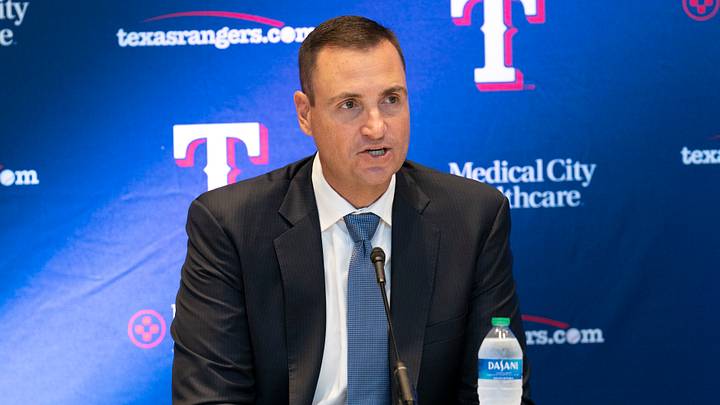
If winning now remains the priority — and the team has signaled for more than four years that it is — Young needs enough freedom to construct a roster around the stars already under contract.
Trading one of those players to create room for another addition risks leaving the Rangers with the same problems in a different part of the lineup.
The Middle Ground Isn’t Working

Ideally, the Rangers would combine both trains of thought. They would develop enough talent to sustain success while continuing to pursue established players when the circumstances demanded it.
The Los Angeles Dodgers pull this off to perfection, demonstrating that nothing about those two approaches makes them mutually exclusive.
But that requires ownership to commit resources to the entire organization, and the latest payroll developments suggest Texas isn’t prepared to do so.
Instead, the Rangers appear determined to operate somewhere between two identities. They want the benefits of a championship-caliber payroll without maintaining the financial commitment, and they want an affordable roster without having developed the organizational depth necessary to support one.
The result has been three straight seasons without October baseball and another winter in which the front office faces questions about whether it has the resources to win at a high level.
Ownership needs to make a decision. Either embrace the developmental model and accept what that transition entails, or invest in a contender without forcing Young to dismantle the roster to finance its improvement.
The Rangers already know what winning a championship requires. The strange part is watching them act so reluctant to pursue it again.
 Add us as a preferred source on Google

Seth Dowdle is a 2024 graduate of TCU, where he earned a degree in sports broadcasting with a minor in journalism. He currently hosts a TCU-focused show on the Bleav Network and has been active in sports media since 2019, beginning with high school sports coverage in the DFW area. Seth is also the owner and editor of SethStack, his personal hub for in-depth takes on everything from college football and MLB to hockey. His past experience includes working in the broadcast department for the Cleburne Railroaders and at 88.7 KTCU, TCU's radio station.